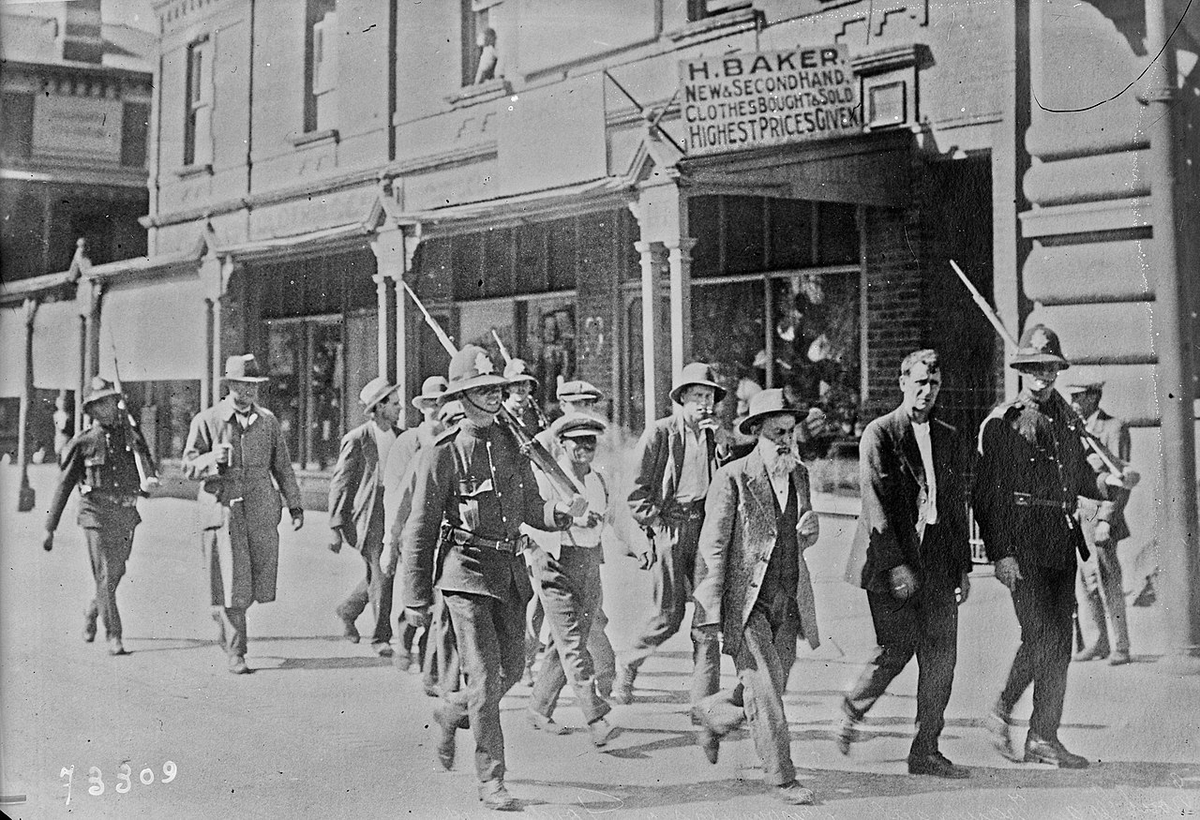
The Rand Rebellion: White Mineworkers Strike for Fair Wages and Conditions
Social Justice
Labor
4 min read
Updated By: History Editorial Network (HEN)
Published:
The Rand Rebellion emerged as a response to the troubling working conditions and meager wages faced by white mineworkers in South Africa. The discontent among the labor force had been simmering for some time, fueled by a combination of economic hardships and rising living costs. The mining industry, a crucial sector in the country's economy, was dominated by wealthy mine owners who prioritized profit over the well-being of their workers.
The strike, led mainly by white laborers, represented a significant shift in the labor dynamics of the time, challenging the prevailing notion that only black workers were prone to industrial action. The rebellion sparked fierce clashes between the striking miners and the government forces, resulting in a violent confrontation that claimed the lives of many on both sides.
The repercussions of the Rand Rebellion reverberated throughout the country, exposing the deep-seated inequalities and injustices prevalent in South African society. The event highlighted the need for reforms in the labor sector and raised awareness about the plight of workers in the mining industry. While the rebellion ultimately ended in defeat for the strikers, it laid the groundwork for future labor movements and paved the way for improved rights and conditions for workers in the years to come.
The Rand Rebellion remains a poignant chapter in South Africa's history, symbolizing the struggles faced by workers in their fight for fair treatment and representation in the workplace. It serves as a reminder of the power of collective action and solidarity in addressing systemic injustices and advocating for social change.
#RandRebellion #SouthAfricaLabor #WorkerRights #MiningIndustry #LaborHistory

Explore the Life Moments of
 AI Twin