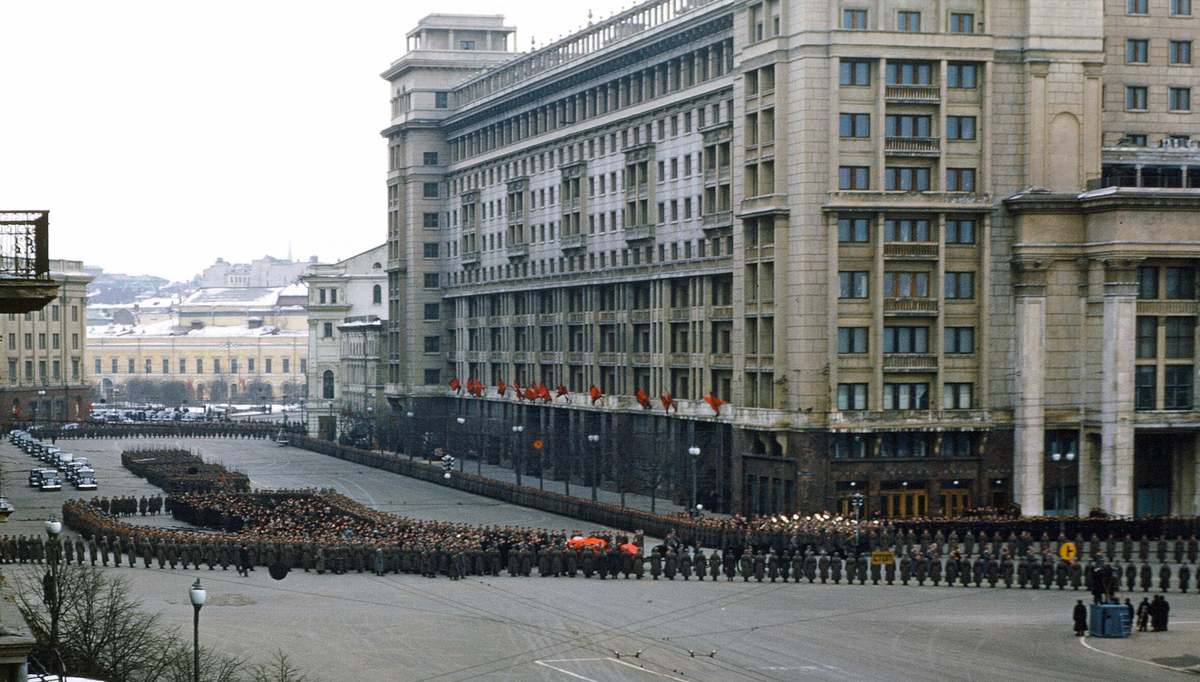
The death of Joseph Stalin
Russia
Politics
4 min read
Updated By: History Editorial Network (HEN)
Published:
Updated:
The death of Joseph Stalin marked a pivotal moment in Soviet history, leading to a significant power struggle within the Communist Party. Following his passing, various factions within the party vied for control, resulting in a period of uncertainty and political maneuvering. Nikita Khrushchev, who had been a prominent figure in the party, ultimately emerged as the new leader. His rise to power was characterized by a departure from Stalin's oppressive policies and a shift towards a more collective leadership approach. This transition was not only a change in leadership but also a transformation in the ideological direction of the Soviet Union. Khrushchev's leadership style and policies began to reshape the political landscape, moving away from the intense repression that had characterized Stalin's rule.
In 1956, Khrushchev took a bold step by denouncing the "personality cult" that had developed around Stalin during his regime. This denunciation occurred during the 20th Congress of the Communist Party of the Soviet Union, where Khrushchev criticized Stalin's methods and the impact of his leadership on the party and the nation. The speech had profound implications, as it encouraged a wave of de-Stalinization across the Soviet Union and its satellite states. This period saw a reduction in state repression, the release of political prisoners, and a re-evaluation of Stalin's legacy. The power vacuum left by Stalin's death and the subsequent changes initiated by Khrushchev significantly influenced the trajectory of Soviet politics and society, setting the stage for future reforms and challenges within the Communist regime.
#mooflife
#MomentOfLife
#Stalin
#Khrushchev
#SovietUnion
#CommunistParty
#De-stalinization

Explore the Life Moments of
 AI Twin