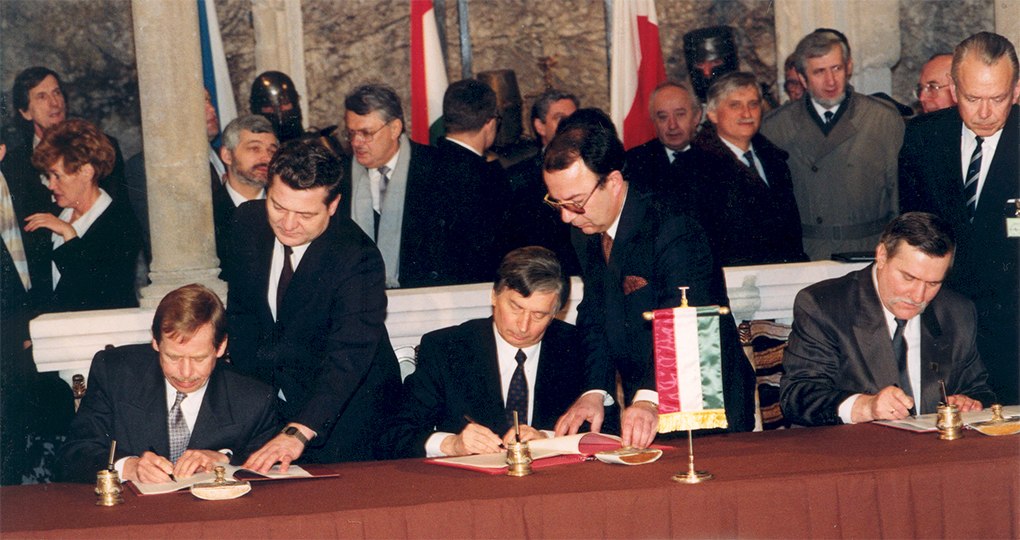
Visegrád Agreement: Bohemia, Poland, and Hungary Treaty
Slovakia

Political
Global Trade
6 min read
Updated By: History Editorial Network (HEN)
Published:
Updated:
In a strategic move to enhance cooperation within Central Europe, representatives from Bohemia, Poland, and Hungary convened at Visegrád, Slovakia. This assembly marked the signing of the Visegrád Agreement, a pact aimed at fostering closer political, economic, and cultural collaboration among these nations.
The historical context leading to this agreement was rooted in the collapse of the Soviet Union's influence in Eastern Europe. As these nations sought to navigate the post-Soviet landscape, a unified approach was seen as beneficial for achieving stability and facilitating European integration. The decision to sign the agreement in Visegrád harkened back to a historical meeting between the Kings of Hungary, Poland, and Bohemia in 1335, highlighting the enduring significance of the location in Central European diplomacy.
Under the terms of the agreement, the countries pledged to cooperate in transitioning from centrally-planned to market economies, improve environmental standards, and support each other's ambitions of joining Western institutions, including NATO and the European Union. This regional alliance was expected to accelerate the modernization efforts of their economies, strengthen their international position, and enhance their security environment.
The impact of the Visegrád Agreement was multifaceted. Economically, the countries benefitted from increased trade and investments, as they collectively pursued reforms and sought to harmonize their legislative frameworks with those of Western Europe. Politically, it reinforced their commitment to democracy and a pluralistic society, crucial at a time when many post-communist countries were experiencing political flux. Additionally, the agreement boosted cultural exchange among the countries, promoting mutual understanding and cooperation.
The formation of the Visegrád Group also culminated in the creation of the International Visegrád Fund, aimed at supporting initiatives that foster closer cooperation among these nations and support their integration into the European Union.
The collaborative spirit encapsulated by the Visegrád Agreement has continued to influence the policies and relationships within Central Europe, reflecting a shared commitment to overcoming historical challenges and shaping a stable, prosperous region. The signing of this agreement was a pivotal step in bridging past alliances with contemporary geopolitical realities, laying the groundwork for a cooperative future.
#VisegrádAgreement #CentralEuropeanCooperation #PostSovietTransformation #EuropeanIntegration #MoofLife

Explore the Life Moments of
 AI Twin