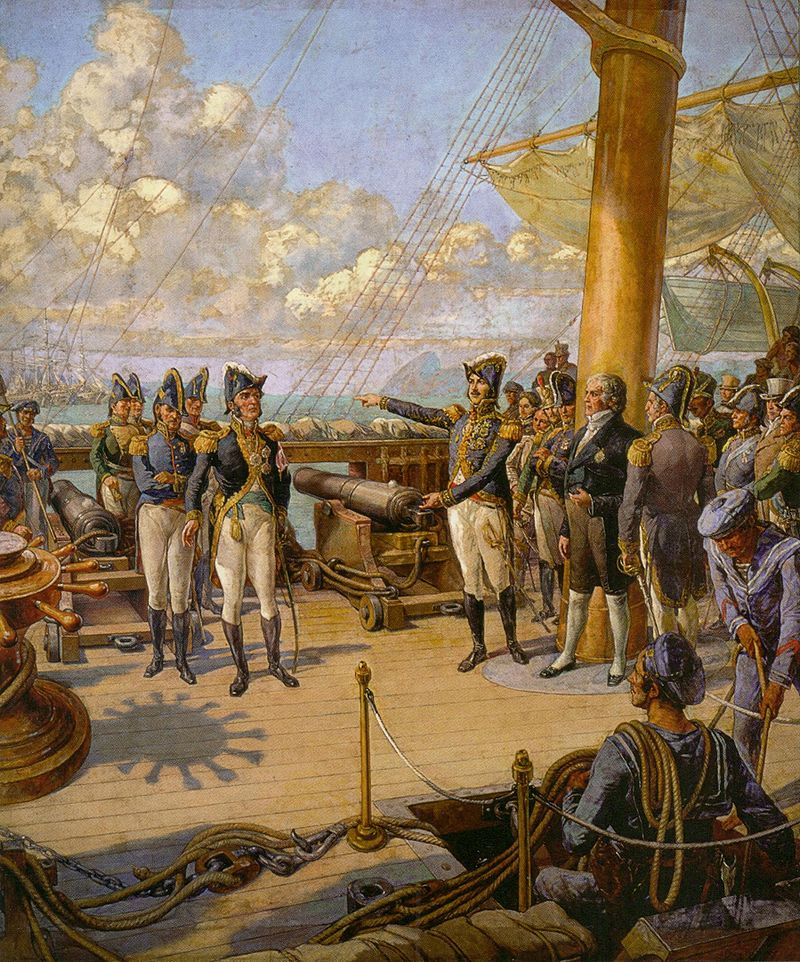
Brazil's independence acknowledged after breaking away from colonial rule by Portugal.
Portugal
Political
3 min read
Updated By: History Editorial Network (HEN)
Published:
After years of Portuguese colonial rule, Brazil declared its independence. The process was triggered by political and economic tensions between the two countries. Dom Pedro, the prince regent of Portugal, played a key role in leading the movement for independence. With increasing support from the Brazilian elite and population, Dom Pedro proclaimed Brazil's autonomy.
The recognition of Brazil's independence had a profound impact on the nation's history. It marked the end of centuries of colonial dominance and paved the way for the establishment of a sovereign state. The recognition also led to the creation of the Brazilian Empire, with Dom Pedro becoming the first emperor of Brazil.
The newfound independence brought about significant changes in Brazil's political, social, and economic landscape. It allowed for the development of a distinct Brazilian identity and culture, separate from its Portuguese roots. The country began to assert itself on the international stage, forging new diplomatic relationships and trading partnerships.
The independence of Brazil from Portugal is a milestone in Brazilian history, symbolizing the country's struggle for self-determination and freedom. It remains a celebrated event, highlighting Brazil's resilience and determination to shape its own destiny. #BrazilianIndependence #DomPedro #PortugueseColonialRule

Explore the Life Moments of
 AI Twin