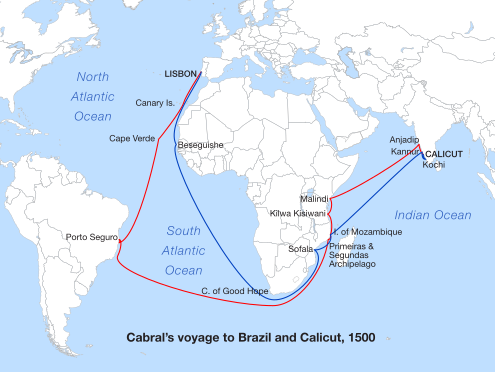
Pedro Alvares Cabral's discovery voyage to Brazil, a significant historical event.
Portugal

Global Trade
3 min read
Updated By: History Editorial Network (HEN)
Published:
In the early 16th century, Portuguese explorer Pedro Alvares Cabral set sail with a fleet of 13 ships, aiming to establish trade routes to India. Sailing west to avoid unpredictable weather, Cabral discovered a vast landmass, which he named Vera Cruz. This land was Brazil, rich in resources and inhabited by indigenous tribes. The discovery marked the beginning of Portuguese colonization in South America.
The arrival of the Portuguese had a profound impact on the region, leading to the exploitation of its natural wealth, including brazilwood and later sugar plantations. The indigenous populations suffered greatly from diseases brought by the Europeans and forced labor practices. Despite initial conflicts, the Portuguese eventually established control over the territory, setting the stage for centuries of colonial rule.
The discovery of Brazil by Pedro Alvares Cabral reshaped the course of history, shaping the cultural, social, and economic landscape of the region. The event also played a crucial role in the broader Age of Exploration, as European powers sought to expand their empires across the globe.
#PortugueseExploration #Colonization #ImpactofDiscovery

Explore the Life Moments of
 AI Twin