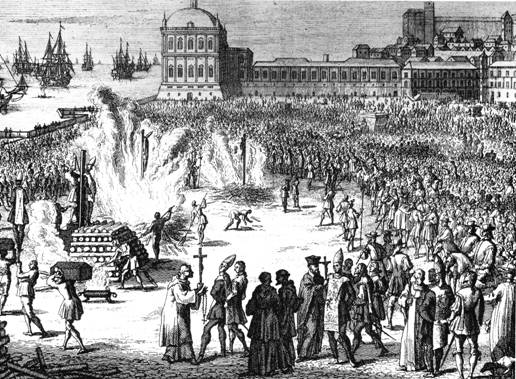
Establishment of the Inquisition in Portugal under King John III for religious persecution.
Portugal

Political
3 min read
Updated By: History Editorial Network (HEN)
Published:
King John III of Portugal established the Portuguese Inquisition as a response to pressure from Spain and concerns about the spread of Protestantism in his kingdom. The Inquisition aimed to maintain Catholic orthodoxy and eliminate any perceived threats to the faith. It was initially under the control of the Spanish Inquisition but later became independent.
The impact of the Portuguese Inquisition was profound, leading to the persecution and expulsion of thousands of individuals, especially Jews, Muslims, and conversos. Those accused of heresy or religious nonconformity faced torture, imprisonment, and execution. The Inquisition also had far-reaching social and economic effects, as many fled the country to escape persecution, resulting in a loss of skilled professionals and merchants.
Despite its brutal methods, the Portuguese Inquisition was largely successful in achieving its goal of enforcing religious conformity and suppressing dissent. Its legacy continued well into the colonial period, influencing attitudes towards religious minorities in Portuguese colonies.
The establishment of the Portuguese Inquisition reflects a dark chapter in the history of Portugal, marked by religious intolerance and persecution. It serves as a reminder of the dangers of unchecked power and the impact of religious extremism on society. #PortugueseInquisition #ReligiousPersecution #Intolerance.

Explore the Life Moments of
 AI Twin