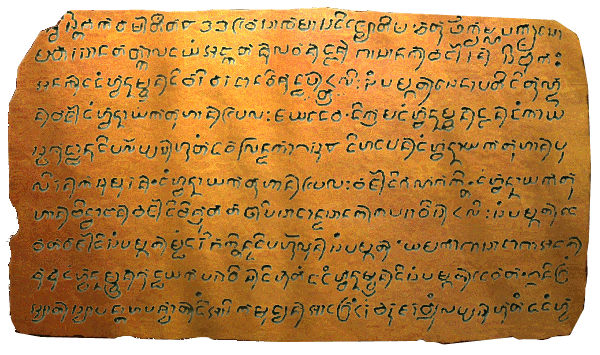
Ancient Legal Document Found Near Laguna de Bay
Philippines
Archaeology
4 min read
Updated By: History Editorial Network (HEN)
Published:
Discovered near Laguna de Bay, the Laguna Copperplate Inscription is a legal document inscribed in 900 CE on a copper plate. The inscription mentions names and places in the Philippines such as Tondo and Pila, shedding light on the ancient societies that existed in the region.
This inscription is significant as it provides valuable insight into the legal and societal practices of early Philippine civilizations. It reveals details about political structures, economic activities, and social customs of the time. The mention of Tondo and Pila suggests that these areas were already important centers of trade and governance during that period.
The discovery of the Laguna Copperplate Inscription has had a profound impact on Philippine historiography. It has challenged previous assumptions about the level of sophistication of early Philippine societies and has opened up new avenues for research and exploration into the country's past. The inscription also serves as tangible evidence of the advanced state of civilization in the region during the pre-colonial era.
The text on the copperplate is written in Old Kawi script, an ancient script used in the Philippines, Indonesia, and Malaysia. The content of the inscription suggests that it was a legal document related to debt forgiveness. This provides valuable information about the legal and economic systems in place at the time.
Overall, the Laguna Copperplate Inscription is a significant archaeological find that has deepened our understanding of early Philippine history. It serves as a testament to the rich and complex societies that thrived in the region long before the arrival of European colonizers. By studying and analyzing this inscription, historians and archaeologists continue to unravel the mysteries of the past, contributing to a more comprehensive narrative of Philippine heritage.
#LagunaCopperplateInscription #PhilippineHistory #AncientCivilizations

Explore the Life Moments of
 AI Twin