Butuan's Emergence as a Trading Hub
Philippines
Global Trade
Economic Prosperity
4 min read
Updated By: History Editorial Network (HEN)
Published:
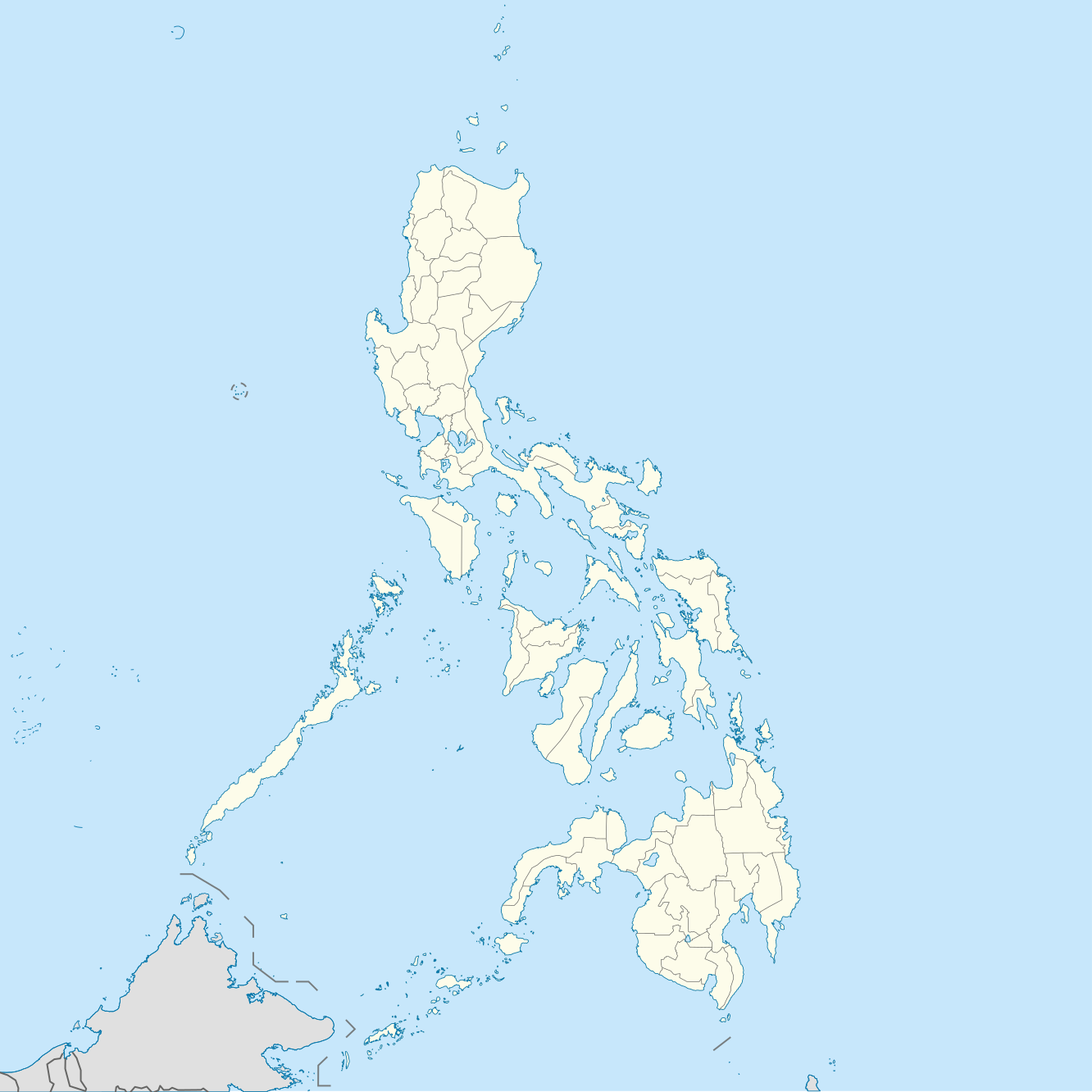
In the 12th century, the Kingdom of Butuan emerged as a prominent trading hub in the Philippines. Situated strategically on the northern coastline of the island of Mindanao, Butuan flourished due to its access to various trade routes in the region. The kingdom's location enabled it to engage in maritime trade with neighboring polities, as well as with merchants from distant lands such as China, India, and even the Middle East.
Butuan's economic prosperity was fueled by the abundance of local resources like precious metals, timber, and agricultural products. The kingdom's skilled artisans also produced high-quality goods such as pottery, metalwork, and textiles that were highly sought after in the trading networks of Southeast Asia. As a result, Butuan became a pivotal center for the exchange of goods, ideas, and cultural influences.
The rise of Butuan as a major trading center had a profound impact on the region. The kingdom's wealth and influence grew significantly, attracting migrants and settlers from other parts of the archipelago and beyond. This influx of people led to the development of a cosmopolitan society in Butuan, characterized by a rich tapestry of languages, customs, and traditions.
The Kingdom of Butuan's reputation as a trading powerhouse endured for centuries, even after the decline of its political power. The legacy of Butuan's commercial prowess can still be seen today in the archaeological artifacts unearthed at sites like the Butuan Silver Strip, which attest to the kingdom's vibrant trade relations with distant civilizations.
#KingdomOfButuan #TradingHub #PhilippineHistory #CulturalExchange #EconomicProsperity

Explore the Life Moments of
 AI Twin