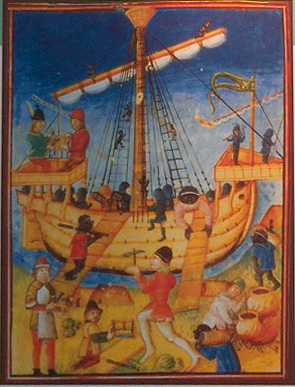
Exploration of Lagos by the Portuguese

Global Trade
4 min read
Updated By: History Editorial Network (HEN)
Published:
In 1472, Portuguese explorers arrived in Lagos, a bustling coastal town in what is now modern-day Nigeria. Led by the renowned navigator, Rui de Sequeira, the Portuguese expedition marked the beginning of European contact and trade in West Africa. The explorers were in search of new trade routes and valuable resources, such as gold and spices, which were abundant in the region.
The arrival of the Portuguese in Lagos had a profound impact on the local economy and society. It introduced new goods, technologies, and ideas to the region, transforming the trading landscape along the West African coast. The Portuguese established trade partnerships with local leaders, exchanging European goods like textiles, beads, and firearms for African commodities like gold, ivory, and slaves.
The influx of European merchants brought wealth and prosperity to Lagos, making it a key hub for trade in the region. The Portuguese presence also led to cultural exchanges between Europe and Africa, influencing art, language, and religious practices in the area. However, it also had negative consequences, such as the spread of diseases like smallpox and the rise of the transatlantic slave trade.
Overall, the arrival of the Portuguese in Lagos marked a significant turning point in the history of West Africa, paving the way for centuries of European colonial rule in the region. It laid the foundation for the transatlantic slave trade and the exploitation of African resources, shaping the socio-economic and political dynamics of the continent for years to come.
#PortugueseExplorers #WestAfricanTrade #CulturalExchange #EuropeanColonization #TransatlanticSlaveTrade
Primary Reference
History of Lagos - Wikipedia

Explore the Life Moments of
 AI Twin