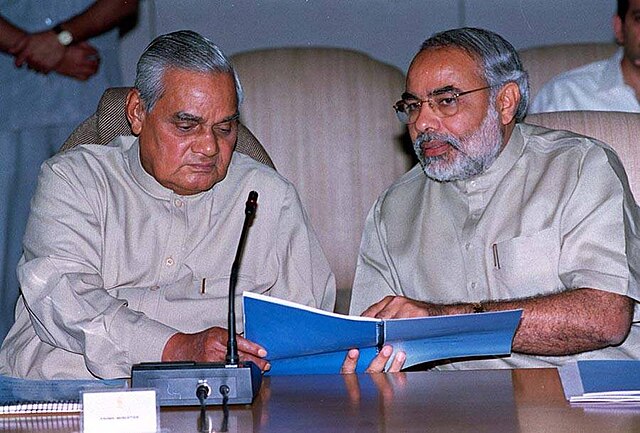
Re-elected as Chief Minister of Gujarat
India
Political
Leadership
4 min read
Updated By: History Editorial Network (HEN)
Published:
Narendra Modi was re-elected as the Chief Minister of Gujarat after leading the Bharatiya Janata Party (BJP) to a landslide victory in the state assembly elections. The victory came in the aftermath of the 2002 Gujarat riots, a period of intense communal violence in the state. Modi's handling of the riots had drawn both praise and criticism, with allegations of state complicity in the violence.
Despite the controversy surrounding the riots, Modi's popularity remained strong among a significant portion of the electorate in Gujarat. His focus on economic development and infrastructure projects had earned him a reputation as a dynamic and efficient leader. The BJP's campaign emphasized these achievements, as well as Modi's image as a strong and decisive leader.
The election results reflected the electorate's approval of Modi's governance style. The BJP secured a comfortable majority in the state assembly, with Modi himself winning his seat by a significant margin. The victory was seen as a validation of Modi's leadership and policies by the people of Gujarat.
Modi's re-election as Chief Minister had implications beyond the borders of Gujarat. It solidified his position as a rising star within the BJP and set the stage for his eventual ascension to the national stage. The victory also sparked debate and discussions about the role of identity politics and governance in Indian democracy.
Overall, Modi's re-election as Chief Minister of Gujarat was a defining moment in his political career. It showcased his ability to connect with voters and deliver results, despite facing significant challenges and controversies. The event set the tone for Modi's future political trajectory and laid the foundation for his eventual rise to the position of Prime Minister of India.
#NarendraModi #GujaratElections #BJP #PoliticalLeadership
Primary Reference
Ministry of Home Affairs | Government of India
Explore the Life Moments of
 AI Twin