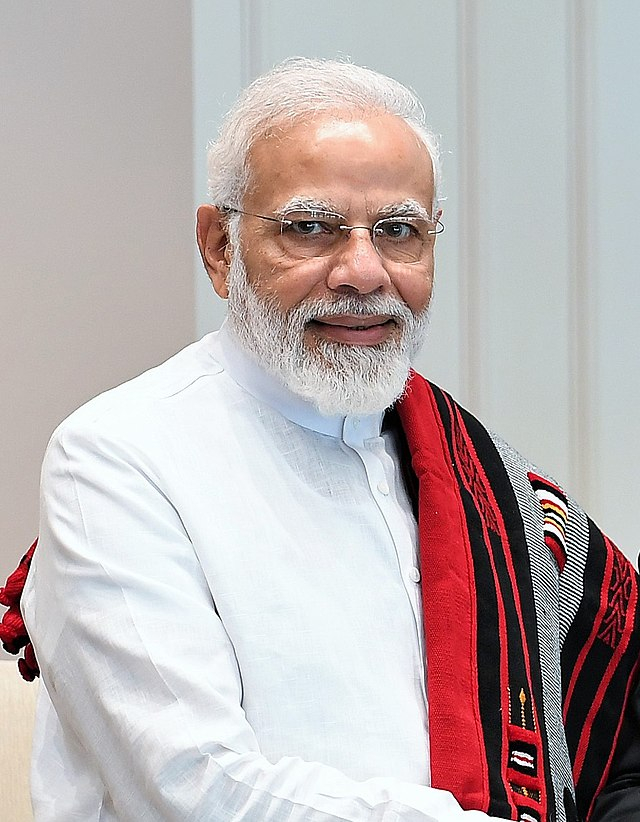
Re-elected as Prime Minister with a larger majority
India
Political
Global Trade
5 min read
Updated By: History Editorial Network (HEN)
Published:
In a historic re-election, Prime Minister Narendra Modi secured a larger majority, solidifying his position as the leader of the world's largest democracy. The 2019 election in India was marked by high stakes and intense campaigning among political parties vying for power. Modi's Bharatiya Janata Party (BJP) ran an aggressive campaign focusing on national security, economic development, and Hindu nationalism.
Modi's first term as Prime Minister was marked by controversial economic policies, such as demonetization and the implementation of a nationwide goods and services tax. Despite criticism, Modi remained popular among many Indians, particularly for his strong stance on national security issues, such as the handling of the Pulwama terror attack and subsequent airstrikes in Pakistan.
The 2019 election saw Modi's popularity reach new heights, with the BJP winning a landslide victory. The party secured a larger majority in the Lok Sabha, the lower house of India's parliament, giving Modi a strong mandate to continue his agenda of economic reforms and national security measures.
The impact of Modi's re-election with a larger majority was felt not only in India but also on the global stage. Investors welcomed the continuity and stability provided by Modi's government, leading to a surge in the stock market and increased foreign direct investment. Modi's strong mandate also signaled a shift towards a more assertive foreign policy, particularly in dealing with neighboring countries like Pakistan and China.
Domestically, Modi's re-election gave a boost to his ambitious initiatives such as Swachh Bharat Abhiyan (Clean India Mission) and Make in India, aimed at improving sanitation and boosting manufacturing in the country. The BJP's increased majority also paved the way for controversial legislation, such as the revocation of Article 370 which granted special status to Jammu and Kashmir, leading to significant changes in the region's governance.
Overall, Modi's re-election as Prime Minister with a larger majority was a defining moment in Indian politics, solidifying his status as a dominant and influential leader both at home and abroad. The implications of this victory are likely to shape India's trajectory in the coming years, as Modi continues to push forward his vision for a more developed, secure, and assertive India.
#NarendraModi #ReElection #LandslideVictory #EconomicReforms #NationalSecurity #GlobalImpact
Explore the Life Moments of
 AI Twin