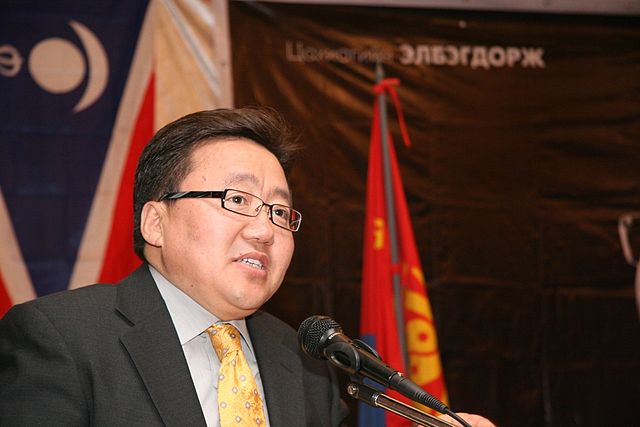
Tsakhiagiin Elbegdorj elected President of Mongolia.
Mongolia

Political
Democratic Reform
6 min read
Updated By: History Editorial Network (HEN)
Published:
Tsakhiagiin Elbegdorj, a prominent figure from the Democratic Party, was elected as the President of Mongolia on June 1. This election marked a significant shift in the political landscape of Mongolia, a nation transitioning from decades of single-party rule under the Mongolian People's Revolutionary Party (MPRP) to a burgeoning democracy.
Elbegdorj, known for his role in the 1990 Democratic Revolution in Mongolia, which led to the fall of the communist regime, returned to the spotlight with his presidential victory. He campaigned on platforms emphasizing anti-corruption, transparency in government, and the strengthening of democratic institutions. With a voter turnout of approximately 73.5%, Elbegdorj secured 51.21% of the votes, reflecting the public’s desire for change and reform.
The election's impact on Mongolia was multifaceted. Internationally, it was seen as a further consolidation of democratic processes in a region often dominated by authoritarian regimes. Domestically, the victory signaled a potential shift in economic policies, particularly regarding Mongolia's vast mineral resources. Elbegdorj's administration promised to renegotiate deals related to the extraction of copper, coal, and gold to ensure that the benefits were more evenly distributed among the Mongolian populace.
Additionally, his win was perceived as a step towards reducing the endemic corruption that plagued the nation. During his campaign, Elbegdorj had criticized the incumbent MPRP for corruption and inefficiency, a sentiment echoed by many citizens frustrated with the slow pace of economic progress despite the country's rich natural resources.
This change in leadership also underscored a generational shift, with younger voters increasingly demanding more transparency and efficiency from their government. The election was not just a procedural victory but also a measure of the growing political maturity among the Mongolian electorate.
The tenure of Elbegdorj also promised potential improvements in human rights and press freedom, areas where Mongolia had faced significant challenges. His previously held positions as both Prime Minister and leader of the Democratic Party endowed him with experience and a robust understanding of the legislative process, which could facilitate the implementation of his reformative agenda.
This moment in Mongolia’s history heralded a possible new era of political, economic, and social reforms aimed at fostering a more inclusive and transparent government.
#MongolianPolitics #DemocraticReform #ElbegdorjPresidency #MoofLife
Primary Reference
Elections: Mongolian Presidency 2017 Round 2 - IFES Election Guide

Explore the Life Moments of
 AI Twin