Rise of the Khitan Empire
Mongolia

5 min read
Updated By: History Editorial Network (HEN)
Published:
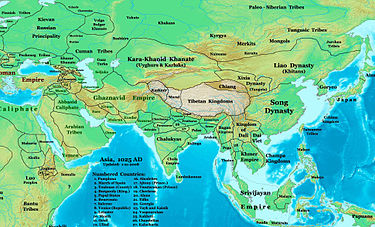
The Khitan people, originally a nomadic group in the region now known as Mongolia and parts of Northern China, laid the foundation for their own empire, known as the Liao Dynasty. This moment marked a pivotal shift in the power dynamics of East Asia. The Khitan Empire, or Liao Dynasty, emerged in the wake of the decline of the Tang Dynasty amid increasing regional fragmentation and political instability. Understanding the historical context is crucial: prior to this, the region had seen various tribal coalitions and shifts in power, with nomadic groups often vying for dominance.
The Khitans, leveraging their superior cavalry and strategic acumen, managed to subdue numerous neighboring tribes and states. This coalition-building and territorial expansion facilitated the rise of their empire. They established a centralized administrative system that incorporated both Khitan traditional governance and Chinese bureaucratic practices. This dual administrative approach enabled more effective control over a diverse population, integrating agricultural and sedentary communities with nomadic groups.
The establishment of the Khitan Empire also brought about several important changes. Economically, it fostered increased trade along the Asian steppes, linking more distant regions in strategic and commercial networks. Politically, it provided a model of governance that would influence neighboring states and later dynasties, including the Jin and Yuan.
Culturally, the Liao Dynasty became known for its patronage of both Buddhism and its native shamanistic traditions, which had a lasting impact on the spiritual landscape of the region. Additionally, the introduction of Khitan script provided a unique written form for their language, solidifying their cultural and administrative identity.
The significance of the Khitan Empire's formation extends far beyond its immediate geopolitical impact. It laid the groundwork for future empires and contributed to the broader historical narrative of nomadic groups establishing lasting states. The dual governance system and cultural integrations practiced by the Khitans would resonate through subsequent centuries, illustrating the complex interplay between nomadic and settled civilizations.
#Khitans #LiaoDynasty #MongoliaHistory #NomadicEmpires #AsianSteppes #DualGovernance #CulturalIntegration #MoofLife
Primary Reference
Liao dynasty - Wikipedia

Explore the Life Moments of
 AI Twin