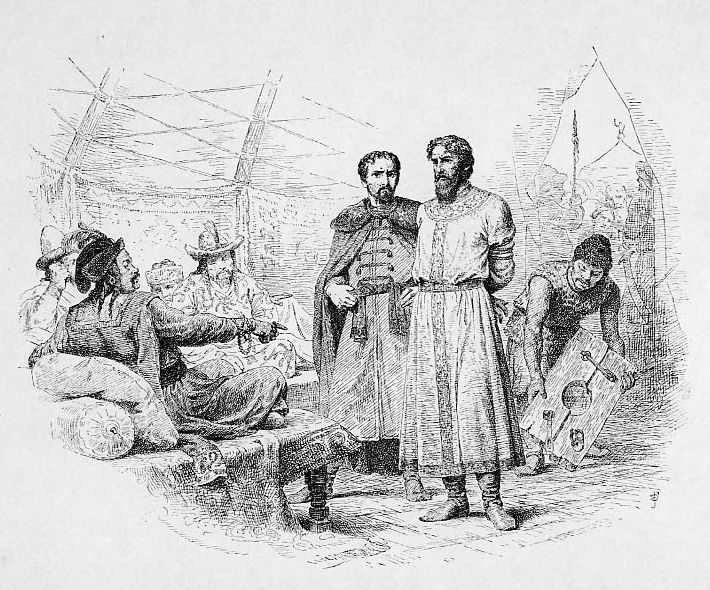
Öz Beg Khan's Enthronement and Islamization in the Golden Horde
Mongolia

Cultural Integration
5 min read
Updated By: History Editorial Network (HEN)
Published:
Öz Beg Khan ascended to the throne of the Golden Horde, a Mongol and later Turkicized khanate that had emerged from the fragmentation of Genghis Khan's empire. Prior to his enthronement, the region comprised a diverse population, including various Turkic tribes, Mongols, and a range of settled peoples. The khan's rise to power marked a significant shift both politically and culturally.
Öz Beg Khan, influenced by his upbringing and alliances, converted to Islam, advocating for the spread of the religion across his dominion. This conversion was supported by his consolidation of power, as he eliminated potential threats from rivals within the khanate, including members of his own family. This move towards Islamization was part of a broader trend within the region, reflecting a strategic alignment with various Muslim states and trading networks which had begun to establish themselves as powerful entities.
The imposition of Islam on the Golden Horde brought structural and administrative changes. Öz Beg Khan's policies facilitated the integration of Islamic law and cultural practices into the governance of the state. This created stronger ties with other Muslim regions, expanding trade networks, and fostering economic growth. Additionally, his support for Islamic scholars and the establishment of religious institutions helped to spread Islamic cultural and educational practices across the territory.
Despite these efforts, the Islamization of the Golden Horde did not fundamentally alter its nomadic nature; rather, it blended Islamic practices with local traditions. The khanate under Öz Beg Khan continued to exert power over vast territories, including parts of modern-day Russia, Ukraine, and Kazakhstan.
The impact of Öz Beg Khan's reign can be quantitatively seen in the increased prominence of Islamic culture and administration within the Golden Horde. This period saw an influx of Islamic scholars, the establishment of madrassas, and the construction of mosques, contributing to a cultural transformation that would influence the region for centuries.
#History #ÖzBegKhan #Islamization #GoldenHorde #MongolianEmpire #CulturalIntegration #PoliticalChange #MoofLife
Primary Reference
Özbeg Khan - Wikipedia

Explore the Life Moments of
 AI Twin