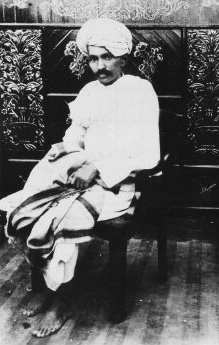
Gandhi's Role in Resolving Wage Dispute between Ahmedabad Mill-Owners and Workers
India
Political
Economic Downturn
5 min read
Updated By: History Editorial Network (HEN)
Published:
In a period marked by industrial unrest in Ahmedabad, a critical conflict emerged between mill-owners and mill-hands over wage disputes. The economic conditions had led to a significant cost of living increase, and mill workers demanded a rise in wages to match these challenges. Mill-owners, citing economic constraints, were reluctant to comply. This brewing tension necessitated a neutral arbitrator to mediate.
Mahatma Gandhi, renowned for his advocacy of non-violent resistance and emphasis on justice, was appointed to arbitrate the dispute. Gandhi's involvement was pivotal, given his commitment to fair labor practices and profound influence on both the working class and the industrialists. He took a balanced approach, considering the plight of the laborers and the business realities faced by the mill-owners.
Negotiations under Gandhi's arbitration were rigorous. The mill-workers initially sought a 50% wage increase, while the mill-owners were willing to offer 20%. Gandhi, aiming to establish a middle ground, suggested a 35% increase as a fair compromise. This solution, although not fully satisfying either party, was accepted due to Gandhi's moral authority and persuasive skills.
The arbitration had immediate and lasting impacts. It averted a potential strike which could have crippled the textile industry in Ahmedabad, safeguarding the livelihoods dependent on this sector and maintaining industrial stability. Additionally, this event reinforced the importance of non-violent negotiation and labor rights in India's socio-economic landscape. Gandhi's role exemplified the growing acceptance of his methods in resolving industrial disputes, setting a precedent for future labor relations in India.
This moment in history underscored the critical intersection of labor rights and industrial governance. Gandhi's balanced resolution facilitated a cooperative environment, fostering mutual respect between labor and management. The incident also contributed to amplifying Gandhi's influence in India's struggle for social justice and economic reform.
#Arbitration #LaborRights #IndustrialDispute #Gandhi #NonViolentNegotiation #AhmedabadIndustry #EconomicReform #MoofLife
Primary Reference
Gandhi Timeline - Life Chronology of Mahatma Gandhi
Explore the Life Moments of
 AI Twin