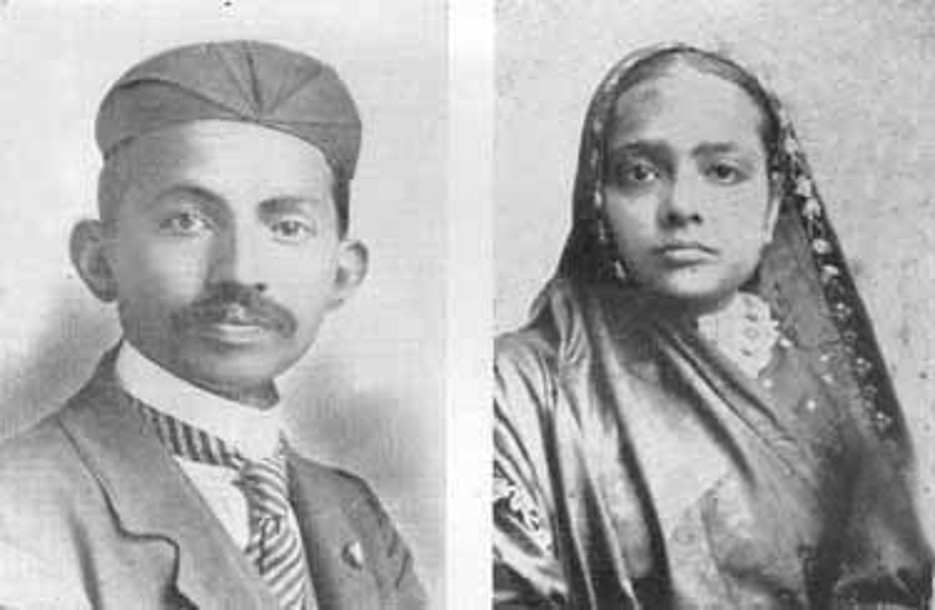
Early Marriage to Kasturbai
India
Social Norms
5 min read
Updated By: History Editorial Network (HEN)
Published:
In the latter part of the 19th century, Mohandas Karamchand Gandhi, a young boy from a modest Gujarati family, entered into an arranged marriage with Kasturbai Makhanji Kapadia, who was also 13 years old. The marriage took place when such unions were typical in Indian society, reflecting the customs and social norms of the time.
Gandhi’s father, Karamchand Gandhi, served as the Dewan (Chief Minister) of Porbandar, and it was customary for families of his standing to arrange marriages for their children at an early age. This practice was rooted in societal expectations and cultural traditions, which emphasized early marriage to secure familial alliances and ensure social stability.
The union had profound implications for Gandhi’s life. Kasturbai, often known as Kasturba, became a pivotal figure in Gandhi's personal and public life. Over time, their relationship evolved from an arranged partnership into a strong alliance that greatly influenced Gandhi’s perspectives on social issues, particularly gender roles and women's rights. Kasturba supported Gandhi through various phases of his political journey and played a crucial part in his advocacy for social reform.
The norms governing their early marriage were reflective of the broader socio-cultural landscape in India, where child marriages were prevalent due to a combination of traditional beliefs, socio-economic factors, and a lack of formal education. Efforts to change these practices were largely ineffective until the early 20th century when social reform movements began to emerge more vigorously.
The personal experiences and the challenges faced by Gandhi and Kasturba in their marriage significantly shaped Gandhi's later work, including his campaigns for women's education and against child marriage. These efforts were part of the broader tapestry of his mission to address social injustices and advocate for Indian independence from colonial rule.
By reflecting on Gandhi’s marriage at the tender age of 13, one can discern the intricate interplay between individual experiences and larger socio-cultural transformations. This union not only marked the beginning of a lifelong partnership but also set the stage for pivotal social activism.
#Gandhi #EarlyMarriage #SocialNorms #ChildMarriage #IndianHistory #GenderRoles #WomenRights #MahatmaGandhi #MoofLife
Primary Reference
Gandhi Timeline - Life Chronology of Mahatma Gandhi
Explore the Life Moments of
 AI Twin