
kyocera

Technology and Manufacturing Company
Related Lives

Alibaba Group
Connecting Commerce, Creating Change

BYD
Build Your Dreams

World Health Organization
Global authority on public health
The Walt Disney Company
The Magic Kingdom Empire

UNHCR
United Nations Refugee Agency
Rolls-Royce Motor Cars
Luxury Automobile Manufacturer

The Ritz-Carlton Hotel Company
Luxury Hospitality Company

1998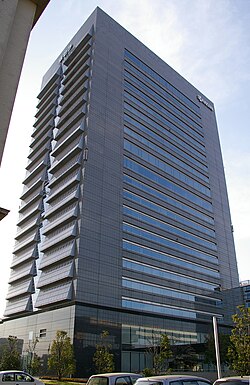
In August 1998, Kyocera Corporation opened its new corporate headquarters in Fushimi-ku, Kyoto, Japan, consolidating its central corporate operations in a purpose-built office complex incorporating environmental technologies, including solar power generation. The headquarters building reflected Kyocera's established involvement in photovoltaic technology and provided a new administrative base for the company's expanding international manufacturing, electronics, and telecommunications businesses.
Kyocera was founded on 01/04/1959 in Kyoto by Kazuo Inamori and seven founding partners. Originally named Kyoto Ceramic Co., Ltd., the company began with ¥3 million in capital and 28 employees, manufacturing fine ceramic insulating components for television equipment. During the following four decades, it expanded into electronic components, semiconductor-related materials, telecommunications equipment, industrial products, and solar energy technology.
The new headquarters was constructed in the Takeda Tobadono-cho area of Fushimi Ward, south of central Kyoto. Its development provided Kyocera with facilities suited to coordinating a larger and more diversified organization. By the late 1990s, the company operated manufacturing, sales, and technical businesses across Japan, North America, Europe, and other international markets.
A distinctive feature of the headquarters was the integration of photovoltaic solar panels into the building. Kyocera had begun researching solar cell technology in 1975 through its involvement in Japan Solar Energy Corporation. During the following decades, the company developed and commercialized multicrystalline silicon solar cells and photovoltaic modules for electricity-generation applications.
The headquarters incorporated solar power technology as part of its building infrastructure, demonstrating a practical application of Kyocera's photovoltaic products in a commercial office environment. Solar panels generate electricity by converting sunlight into electrical energy through semiconductor materials. Integrating these systems into buildings allows a portion of electricity demand to be supplied through on-site generation.
Kyocera's headquarters also incorporated other environmental design considerations intended to improve resource and energy management. The building became associated with the company's approach to environmental technology, combining corporate administrative functions with examples of products developed through its energy-related research and manufacturing activities.
The headquarters relocation occurred during a period of continued corporate expansion. In the 1990s, Kyocera had acquired AVX Corporation, developed cellular telephone manufacturing, and established Kyocera Communication Systems Co., Ltd. in September 1995. These developments increased the range of businesses managed within the Kyocera Group and contributed to the need for facilities supporting its corporate operations.
The new headquarters also became the location of Kyocera's corporate offices and facilities associated with the company's history and technology. The building remains identified with Kyocera's presence in Kyoto, the city where its manufacturing business began in 1959.
Kyocera's official records provide additional details about the building's environmental features. The headquarters was equipped with 1,896 solar panels, installed on its roof and south-facing exterior walls, with a combined generating capacity of 214 kilowatts. The building also incorporated a natural gas cogeneration system, which generated electricity while recovering waste heat for other building functions. Additional technologies included thermal storage air conditioning and energy-efficient ventilation systems.
The headquarters also included approximately 3,300 square meters of publicly accessible outdoor space, landscaped with trees and seasonal plants. Kyocera later established the Kyocera Gallery and the Kyocera Museum of Fine Ceramics inside the headquarters, providing exhibitions connected to art, ceramic technology, and the company's activities.
View detailsIn 1997, Kyocera Corporation introduced the DataScope DS-110 in Japan, combining mobile communication capabilities with personal information management and computing functions. The device appeared during the early development of mobile data technology, when manufacturers were exploring ways to bring electronic organizers, messaging, and network connectivity into portable telecommunications equipment. The DataScope DS-110 represented Kyocera's continuing development of mobile communications products beyond conventional voice-oriented cellular telephones.
Kyocera had entered the cellular telephone business in 1991, introducing its HP-111 handset for the Japanese market. The company had previously developed electronic components, telecommunications equipment, and portable computing technology, including the Kyotronic 85 computer in 1983. This experience provided a background for developing mobile devices that combined communications functions with information processing.
The DataScope DS-110 was designed for use with Japan's Personal Handy-phone System (PHS), a digital wireless communications technology introduced commercially in 1995. PHS provided voice communication and supported data services through a network of relatively small radio base stations. The technology was used in Japan for portable telephones and certain mobile data applications, offering an alternative to conventional cellular networks.
The DataScope concept combined telecommunications with functions normally associated with electronic organizers and handheld computers. These included managing personal information and accessing communication services through a portable electronic device. Such capabilities were being explored across the electronics industry during the 1990s as manufacturers developed products positioned between mobile telephones and personal digital assistants.
The DS-110 belonged to an early generation of connected handheld devices developed before modern touchscreen smartphones became widespread. At the time, mobile data networks offered more limited bandwidth than later third-generation and fourth-generation cellular systems. Device manufacturers therefore had to design products around constraints involving processing power, display size, battery capacity, and wireless data transmission speeds.
Kyocera's development of the DataScope DS-110 also reflected Japan's role in the early commercialization of mobile information services. During the second half of the 1990s, Japanese telecommunications operators and electronics manufacturers introduced products that supported messaging, data communication, and portable information management. These developments preceded the introduction of NTT DoCoMo's i-mode mobile internet service in February 1999.
The DataScope DS-110 was part of Kyocera's broader mobile communications business, which continued expanding during the following years. In February 2000, Kyocera acquired Qualcomm Incorporated's cellular telephone handset business, strengthening its capabilities in CDMA technology and increasing its presence in international handset markets. The company subsequently developed additional mobile phones, smartphones, and specialized communications devices.
The exact release date, initial retail price, production quantity, and complete technical specifications of the DataScope DS-110 are not established in the information available here. Its 1997 introduction is therefore best understood within the broader development of mobile computing and wireless data products rather than as evidence of any specific market performance.
View details1995
In September 1995, Kyocera Corporation established Kyocera Communication Systems Co., Ltd. (KCCS) in Japan, creating a subsidiary focused on information technology, telecommunications, and business solutions. The new company extended Kyocera's activities beyond electronic components and communications hardware into software, information systems, and technology-related services for corporate customers. Its establishment formed part of Kyocera's diversification into information and communications technology during the 1990s.
Kyocera Corporation was originally founded as Kyoto Ceramic Co., Ltd. on 01/04/1959 in Kyoto, Japan, by Kazuo Inamori and seven founding partners. The company began with ¥3 million in capital and 28 employees, manufacturing fine ceramic insulating components for television equipment. Over the following decades, it expanded into semiconductor-related components, industrial materials, telecommunications equipment, and electronic devices. In October 1982, the company adopted the name Kyocera Corporation following a merger involving four affiliated businesses.
By 1995, Kyocera had developed substantial experience in telecommunications-related technologies. In 1984, Inamori helped establish Daini Denden Kikaku Co., Ltd., a predecessor of KDDI Corporation, which entered Japan's competitive telecommunications services market. Kyocera also began manufacturing cellular telephones in 1991, expanding its involvement in mobile communications equipment. These developments provided business experience relevant to the establishment of a subsidiary specializing in information and communications systems.
Kyocera Communication Systems was created to provide technology services and business solutions rather than concentrating exclusively on physical electronic products. Its activities developed around information systems, telecommunications infrastructure, software integration, and services supporting corporate operations. These fields required capabilities in systems engineering, network management, software development, and the operation of information technology platforms.
The subsidiary was established during a period when Japanese businesses were increasingly adopting computer networks, enterprise information systems, and digital communications. In the mid-1990s, organizations were expanding the use of networked computers and software to manage financial information, production processes, customer relationships, and internal communications. Demand for systems integration and telecommunications services created opportunities for technology companies capable of supporting complex corporate computing environments.
Kyocera Communication Systems developed services that combined information technology and communications infrastructure. Its subsequent business activities included systems integration, enterprise software, information security, network-related services, and management consulting. The company also became associated with the application of Kyocera's Amoeba Management approach, which organizes business operations into smaller units with responsibility for monitoring financial and operational performance.
Over time, KCCS expanded into additional technology-related activities, including cloud services, data center operations, digital business solutions, and telecommunications engineering. These services complemented Kyocera's manufacturing businesses by providing technical support and information systems to corporate and institutional customers.
The creation of Kyocera Communication Systems established a separate organizational structure for developing IT and telecommunications services within the Kyocera Group. While Kyocera continued manufacturing advanced ceramics, electronic components, and communications devices, KCCS concentrated on software, information systems, and service-based business activities.
The exact day in September 1995 on which the subsidiary was established, along with its initial employee count and founding capital, has not been independently confirmed in the information available here.
View details1991
In 1991, Kyocera Corporation began manufacturing cellular telephones for the Japanese market, expanding its telecommunications business from electronic components and communications equipment into mobile handsets. The move introduced Kyocera to the production of portable consumer communications devices during the early development of Japan's commercial mobile telephone industry.
Kyocera had been founded on 01/04/1959 in Kyoto, Japan, by Kazuo Inamori and seven founding partners. Originally named Kyoto Ceramic Co., Ltd., the company initially specialized in fine ceramic insulating components for television equipment. During the following decades, it diversified into semiconductor-related components, electronic devices, industrial equipment, and telecommunications technologies. In October 1982, the company adopted the name Kyocera Corporation following a merger involving four affiliated businesses, including Cybernet Electronics Corporation.
Kyocera's entry into cellular telephone manufacturing followed its earlier involvement in Japan's telecommunications sector. In June 1984, Inamori helped establish Daini Denden Kikaku Co., Ltd., which subsequently became Daini Denden Inc. (DDI), a telecommunications operator competing in Japan's newly liberalized communications market. Although DDI operated telecommunications services and Kyocera manufactured electronic products, both developments reflected Inamori's involvement in the growing communications industry.
Japan's commercial cellular telephone services had begun before Kyocera entered handset manufacturing. Nippon Telegraph and Telephone Public Corporation introduced an automobile telephone service in Tokyo in December 1979, and handheld cellular telephones became commercially available in Japan during the 1980s. By 1991, manufacturers were developing smaller and more portable handsets as mobile telecommunications networks expanded.
Manufacturing cellular telephones required capabilities extending beyond Kyocera's traditional fine ceramics business. Mobile handsets combined radio-frequency circuits, antennas, microphones, speakers, batteries, displays, and electronic control systems within compact enclosures. Their production required electronic design, component integration, telecommunications engineering, and assembly processes suitable for consumer devices.
Kyocera's existing electronics experience provided a foundation for this expansion. The company had developed electronic components and communications-related products, while its earlier acquisition of Cybernet Electronics added expertise in telecommunications equipment. Its broader manufacturing operations also included precision materials and components used in electronic systems.
The 1991 entry into cellular telephone production established a product category that Kyocera continued developing during the following decades. The company subsequently manufactured handsets for different mobile communications standards and markets, including devices sold in Japan and North America. Its mobile phone business expanded further in February 2000 when Kyocera acquired the cellular telephone handset business of Qualcomm Incorporated, strengthening its presence in CDMA mobile technology.
Kyocera later developed additional mobile devices, including feature phones, smartphones, and rugged handsets designed for demanding working environments. These products reflected the continued development of the company's communications equipment operations beyond the initial cellular telephones introduced in 1991.
The exact day and month when Kyocera began cellular telephone manufacturing in 1991, along with the initial production volume and specific first handset model, are not established in the information available here.
View details1990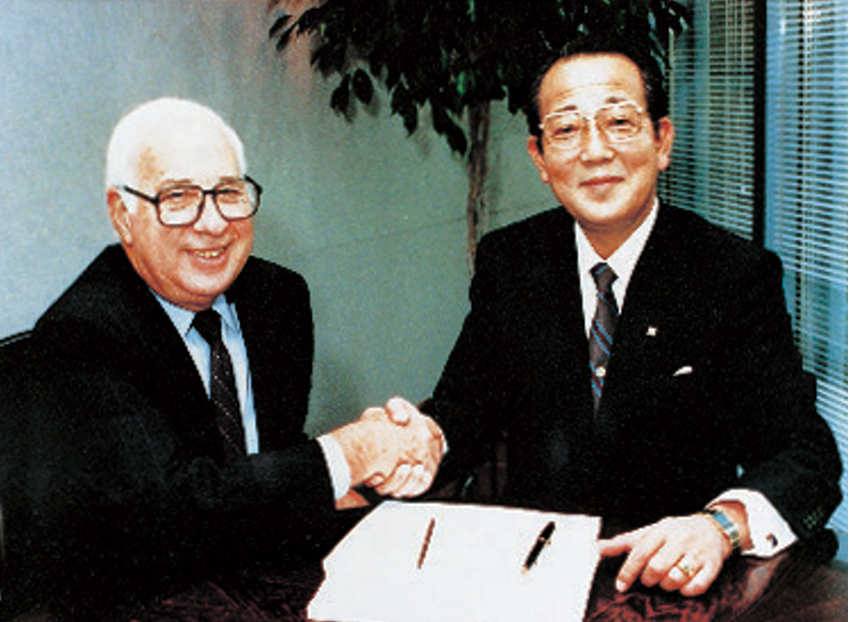
In January 1990, Kyocera Corporation acquired AVX Corporation through a share exchange, bringing the United States-based electronic components manufacturer into the Kyocera Group. The transaction expanded Kyocera's international manufacturing capabilities and strengthened its position in the passive electronic components industry, particularly in capacitors and related electronic technologies. The acquisition followed Kyocera's 1989 purchase of Elco International Corporation, which had expanded its electronic connector business.
Kyocera was founded on 01/04/1959 in Kyoto, Japan, by Kazuo Inamori and seven founding partners. Originally named Kyoto Ceramic Co., Ltd., the company began with ¥3 million in capital and 28 employees, manufacturing fine ceramic insulating components for television equipment. Over the following three decades, it diversified into semiconductor-related components, industrial ceramics, telecommunications equipment, optical products, and other electronic technologies.
AVX Corporation wa
View details1989
In August 1989, Kyocera Corporation acquired Elco International Corporation, a United States-based manufacturer of electronic connectors, bringing the Elco Group into the Kyocera Group and expanding the Japanese company's electronic components business. The acquisition gave Kyocera an established presence in the electronic connector market, adding a new product category to its existing operations in fine ceramics, semiconductor-related components, and electronic devices. Kyocera's official corporate history identifies August 1989 as the month Elco joined the group.
Kyocera was founded on 01/04/1959 in Kyoto, Japan, by Kazuo Inamori and seven founding partners. Originally named Kyoto Ceramic Co., Ltd., the company began with ¥3 million in capital and 28 employees, manufacturing fine ceramic insulating components for television equipment. During the following three decades, Kyocera diversified into ceramic integrated circuit packages, industrial materials, telecommunications equipment, optical products, and other electronic technologies.
By the late 1980s, Kyocera had established manufacturing and sales operations in several international markets. Its North American activities began with a representative office in California in August 1968, followed by the establishment of Kyocera International, Inc. in July 1969. The company also entered Europe through a joint venture in West Germany in January 1971. These developments provided an international business structure into which additional electronics operations could be incorporated.
Elco International specialized in electronic connectors, which establish electrical connections between circuits, components, cables, and electronic assemblies. Connectors are used in computers, telecommunications equipment, industrial machinery, and other electronic systems. Their design requires precise mechanical dimensions, reliable electrical contact, and materials capable of maintaining performance during repeated use or exposure to different operating conditions.
The Elco acquisition expanded Kyocera's activities into a field that complemented its existing electronic component technologies. While Kyocera already manufactured ceramic substrates and electronic packaging materials, connector products provided another means of supplying components to electronics manufacturers. The addition of Elco enabled the group to participate in more categories of electronic assembly and interconnection technology.
The transaction also formed part of Kyocera's broader diversification strategy during the 1980s. In 1982, the company had merged with four affiliated businesses, including Cybernet Electronics Corporation, and adopted the name Kyocera Corporation. In October 1983, it merged with Yashica Co., Ltd., expanding its camera and optical equipment operations. The Elco acquisition continued this pattern of entering additional technology markets through corporate acquisitions and integration.
Following its acquisition, Elco's operations became part of Kyocera's electronic components business. The business was subsequently associated with the Kyocera Elco Corporation and Kyocera Connector Products Corporation names, reflecting later organizational changes within the group. Kyocera's historical financial filings identify the Elco acquisition as the company's entry into the electronic connector market.
The acquisition preceded another expansion of Kyocera's international electronic components business. In January 1990, the company brought AVX Corporation, an American manufacturer of capacitors and other passive electronic components, into the Kyocera Group through a share exchange. Together, these transactions broadened Kyocera's portfolio of components supplied to electronics manufacturers worldwide.
Historical Significance
The 1989 Elco acquisition established electronic connectors as a business area within Kyocera, complementing its existing fine ceramics and electronic component operations. It also formed part of a sequence of acquisitions that expanded Kyocera's manufacturing capabilities and international product portfolio during the late 1980s and early 1990s.
View details1984
In June 1984, Kazuo Inamori, founder of Kyocera Corporation, helped establish Daini Denden Kikaku Co., Ltd. in Japan, creating a new telecommunications business that later became part of KDDI Corporation. The company was formed during Japan's telecommunications liberalization process, which opened opportunities for private businesses to compete in services previously dominated by Nippon Telegraph and Telephone Public Corporation (NTT).
Kyocera had been established on 01/04/1959 in Kyoto, Japan, by Inamori and seven founding partners. Originally named Kyoto Ceramic Co., Ltd., it began as a manufacturer of fine ceramic components for television equipment before expanding into electronics, industrial materials, and communications-related technologies. By the early 1980s, Kyocera had developed international operations and diversified its business activities. Inamori's involvement in Daini Denden extended his entrepreneurial activities into telecommunications network services.
During the early 1980s, Japan was preparing reforms to its telecommunications industry. NTT operated the country's principal domestic telecommunications network under a public corporation structure. Legislative changes introduced competition into telecommunications services, and NTT was reorganized as a private-sector corporation on 01/04/1985. These changes created opportunities for new telecommunications operators to provide services alongside the former monopoly.
Daini Denden Kikaku was established in June 1984 in anticipation of these reforms. The business was subsequently known as Daini Denden Inc., commonly abbreviated as DDI. Its objective was to develop telecommunications services that could compete with the established operator, particularly in long-distance communications. Building such a business required substantial investment in network infrastructure, switching equipment, technical systems, and commercial operations.
Inamori was involved in organizing support for the new company and attracting participation from businesses interested in Japan's emerging competitive telecommunications market. His experience leading Kyocera provided a background in corporate management, industrial technology, and long-term business investment. DDI's establishment nevertheless represented a distinct telecommunications venture rather than simply another ceramic or electronic component product line.
Following its establishment, DDI developed telecommunications infrastructure and began offering long-distance telephone services in 1987. The company operated in a market that included other new telecommunications providers competing with NTT. Its development took place alongside technological changes in digital switching, fiber-optic transmission, and telecommunications network management.
During the 1990s, DDI expanded its activities into mobile telecommunications and related services. Japan's communications market continued evolving as mobile phone adoption increased and network operators developed new digital services. DDI's business became part of a broader industry that combined fixed-line, mobile, and international telecommunications operations.
On 01/10/2000, DDI merged with KDD Corporation and IDO Corporation to form DDI Corporation, combining domestic long-distance, international, and mobile telecommunications operations. The merged company adopted the name KDDI Corporation on 01/04/2001. This consolidation brought together businesses that had developed in different parts of Japan's telecommunications industry.
KDDI subsequently became one of Japan's principal telecommunications operators, providing mobile, fixed-line, internet, and enterprise communications services. The company's development can be traced in part to the establishment of Daini Denden Kikaku in June 1984 and the subsequent expansion of DDI under the competitive telecommunications framework introduced in Japan during the 1980s.
View details1983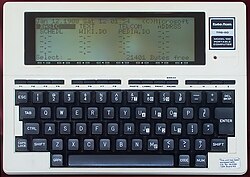
In 1983, Kyocera Corporation developed the Kyotronic 85, an early battery-powered portable computer that was subsequently marketed internationally under several different brand names, including the Radio Shack TRS-80 Model 100. The compact computer combined a built-in keyboard, liquid-crystal display, battery operation, and integrated software in a portable design. Its development extended Kyocera's activities beyond advanced ceramic components into the manufacture of complete personal computing devices.
Kyocera Corporation, originally founded as Kyoto Ceramic Co., Ltd. on 01/04/1959 by Kazuo Inamori and seven partners, had built its early business around fine ceramic materials used in television equipment, computers, and industrial electronics. During the 1970s, the company diversified into electronic devices and telecommunications-related products. Its development of the Kyotronic 85 reflected this broader involvement in finished electronic equipment.
The Kyotronic 85 used an 8-bit processor from the Intel 8085 family and incorporated a liquid-crystal display capable of showing eight lines of 40 characters. It included a full-size keyboard and software stored in read-only memory, allowing users to perform basic computing tasks without loading programs from external disks. The system supported functions such as text editing, BASIC programming, and personal information management.
One of the computer's defining characteristics was its portability. Unlike many desktop computers of the early 1980s, which required an external monitor and a continuous electrical supply, the Kyotronic 85 could operate on ordinary batteries. Its compact, integrated construction allowed users to work away from a fixed office or home computing environment. This made the design suitable for activities such as writing, note-taking, and working with information while traveling.
The computer became better known internationally through versions distributed by other companies. In the United States, Tandy Corporation marketed the design as the Radio Shack TRS-80 Model 100, introduced in 1983. Other related versions included the NEC PC-8201 and Olivetti M-10, although the machines differed in certain design and software details. These commercial relationships brought Kyocera's portable computer platform to customers through established electronics brands.
The TRS-80 Model 100 was particularly associated with journalists, writers, and professionals who needed portable text-entry equipment. Its keyboard, battery operation, built-in text editor, and ability to store documents made it useful for preparing written material outside a traditional office. With suitable telecommunications equipment and connections, users could also transmit files or text remotely, supporting workflows such as submitting reports from locations away from a newsroom.
The software environment associated with the Model 100 family included contributions from Microsoft. Its built-in applications included BASIC and productivity software developed for the platform. The system is also associated with Bill Gates, who participated in Microsoft's early software development activities for the machine.
The Kyotronic 85 and its related commercial versions appeared during a period when personal computing manufacturers were experimenting with smaller and more portable designs. Although these machines did not use the hinged display arrangement that later became common in notebook computers, they demonstrated how a computer could combine a keyboard, screen, software, and independent power supply in a single portable unit.
View details1982
In October 1982, Kyoto Ceramic Co., Ltd. officially changed its name to Kyocera Corporation, following the merger of four affiliated companies into the Kyoto-based manufacturer. The corporate restructuring consolidated several business operations under a single organization and reflected the company's expansion beyond its original specialization in fine ceramics. The name Kyocera was derived from Kyoto Ceramic, preserving a connection to the company's founding identity while representing its wider range of products and technologies.
Kyoto Ceramic Co., Ltd. had been established on 01/04/1959 in Kyoto, Japan, by Kazuo Inamori and seven founding partners. The company began with ¥3 million in capital and 28 employees, initially manufacturing fine ceramic insulating components for television equipment. Over the following two decades, it expanded into electronic components, semiconductor-related ceramic materials, industrial products, and other advanced manufacturing applications.
During the 1960s and 1970s, Kyoto Ceramic developed an increasingly diversified business structure. In 1966, it secured an order from IBM for ceramic substrates used in general-purpose computers. The company subsequently established Kyocera International, Inc. in the United States in July 1969 and entered the European market through a joint venture with Feldmühle AG in January 1971. Its international financial presence also expanded, including a listing of American Depositary Receipts on the New York Stock Exchange in May 1980.
The October 1982 restructuring involved the absorption of four affiliated companies into Kyoto Ceramic. Among them was Cybernet Electronics Corporation, a telecommunications equipment manufacturer in which Kyoto Ceramic had invested in September 1979. Cybernet's inclusion brought additional expertise in electronic equipment and communications technology into the consolidated organization, complementing Kyoto Ceramic's established materials and component manufacturing operations.
The merger also reflected a broader effort to integrate different business activities within a common corporate structure. By the early 1980s, Kyoto Ceramic was involved in areas including precision ceramics, electronic components, industrial cutting tools, medical and dental materials, solar energy technology, and telecommunications-related equipment. These activities extended considerably beyond the company's original production of ceramic insulating components.
Adopting the name Kyocera Corporation provided a corporate identity that was not limited to ceramics alone. Although advanced ceramics remained a central part of the company's manufacturing expertise, the new name accommodated its development into electronic devices, finished equipment, and other industrial technologies. The renaming did not represent the founding of a new company, but rather the continuation of Kyoto Ceramic under a revised corporate name following the merger.
The restructuring occurred while Kyocera was expanding its business interests in Japan and overseas. In subsequent years, the company developed additional telecommunications activities, including its involvement in the establishment of Daini-Denden Kikaku Co., Ltd. in 1984, a predecessor of KDDI Corporation. Kyocera also expanded into office equipment and printing technology, including its acquisition of Mita Industrial Co., Ltd. in 2000, which strengthened its document solutions business.
Kazuo Inamori continued to influence the company's management and organizational development after the name change. His approach to corporate management, including the Amoeba Management system, remained associated with Kyocera's operational structure. The company continued operating from its headquarters in Kyoto while expanding its manufacturing, research, sales, and service activities internationally.
View details1980
In May 1980, Kyoto Ceramic Co., Ltd., now known as Kyocera Corporation, listed its American Depositary Receipts (ADRs) on the New York Stock Exchange in New York, United States. The listing extended the Japanese manufacturer's presence in international capital markets and provided American investors with a means of trading securities representing ownership interests in the company. It followed Kyocera's earlier listings on Japanese stock exchanges and its expansion into North American and European electronics markets.
Kyoto Ceramic was founded on 01/04/1959 in Kyoto, Japan, by Kazuo Inamori and seven founding partners. Beginning with ¥3 million in capital and 28 employees, the company initially manufactured fine ceramic insulating components for television equipment. During the following two decades, it expanded into precision ceramic substrates, semiconductor-related components, industrial materials, and other electronic applications.
Kyoto Ceramic entered Japan's public securities markets on 01/10/1971, when its shares were listed on the Second Section of the Osaka Stock Exchange and the Kyoto Securities Exchange. In September 1972, the company obtained a listing on the Second Section of the Tokyo Stock Exchange. Its shares were subsequently promoted to the First Sections of the Tokyo and Osaka stock exchanges in February 1974. These developments established the company's domestic public-market presence before its entry into the United States securities market.
An American Depositary Receipt is a negotiable certificate issued by a depositary bank that represents shares in a foreign company. ADR programs allow investors to trade interests in overseas businesses through American financial markets, generally using U.S. dollars. For Kyoto Ceramic, the NYSE listing created an additional trading venue accessible to American institutional and individual investors without requiring them to purchase ordinary shares directly on Japanese exchanges.
The May 1980 listing occurred after Kyoto Ceramic had established substantial commercial relationships outside Japan. In 1966, the company received an order from IBM for ceramic substrates used in general-purpose computers. It opened a California representative office in August 1968 and established Kyocera International, Inc. in July 1969. In January 1971, it also formed a European joint venture with Feldmühle AG in West Germany. These activities had already connected Kyoto Ceramic with international electronics manufacturers and industrial markets.
By 1980, the company was diversifying beyond its original ceramic component business. Its activities included electronic materials, industrial products, solar energy research, and investments in electronics-related businesses. In September 1979, Kyoto Ceramic invested in Cybernet Electronics Corporation, a Japanese communications equipment manufacturer. The NYSE listing took place during this period of expanding business operations and international commercial relationships.
The listing increased the accessibility of Kyoto Ceramic securities to investors in the United States and introduced the company to a broader international investment audience. However, the precise day in May 1980 on which trading began, the initial ADR trading price, and any proceeds from an associated securities offering are not established in the information available here. An ADR listing does not, by itself, establish that new capital was raised.
Kyoto Ceramic continued its corporate expansion after the NYSE listing. In October 1982, it merged with Cybernet Electronics Corporation and three other affiliated companies and adopted the name Kyocera Corporation. The company's businesses subsequently expanded into telecommunications, printing equipment, electronic devices, industrial components, and other technology-related fields.
View details1979
In September 1979, Kyoto Ceramic Co., Ltd., now known as Kyocera Corporation, made a capital investment in Cybernet Electronics Corporation, a Japanese manufacturer of telecommunications equipment. The investment expanded Kyocera's business interests beyond fine ceramics and electronic components into finished electronic equipment and communications technology. It also established a corporate relationship that led to Cybernet's merger with Kyoto Ceramic in October 1982, as part of the formation of Kyocera Corporation.
KYOCERA
+2
Kyoto Ceramic had been founded on 01/04/1959 in Kyoto, Japan, by Kazuo Inamori and seven founding partners, with ¥3 million in capital and 28 employees. The company initially manufactured fine ceramic insulating components for television equipment. During the 1960s, it expanded into ceramic integrated circuit packages, precision electronic components, and other advanced materials used in computer and industrial applications.
By the late 1970s, Kyoto Ceramic had developed a broader manufacturing and international business structure. It established production facilities in Shiga and Kagoshima, received an order from IBM for computer-related ceramic substrates in 1966, and created sales operations in North America and Europe. Its shares were listed on Japanese stock exchanges during the early 1970s. The company also diversified into products such as industrial cutting tools, medical and dental ceramics, jewelry materials, and solar energy technology.
Cybernet Electronics operated in a different part of the electronics industry, concentrating on communications equipment rather than primarily supplying ceramic materials and components. Its technical expertise offered Kyoto Ceramic an opportunity to participate more directly in the development and manufacture of electronic equipment. This represented a diversification into a business requiring additional capabilities in electronic system design, assembly, and finished-product manufacturing.
According to Kyocera's historical accounts, Cybernet was among the companies that approached Inamori for business assistance. Inamori's decision to support the company was influenced by the circumstances facing its employees and management. Kyocera's official Inamori Library identifies the Cybernet investment as part of a period in which the company expanded into business areas that were not direct extensions of its original ceramic manufacturing technology.
The September 1979 investment established a financial and corporate relationship between Kyoto Ceramic and Cybernet Electronics. However, the exact investment amount, ownership percentage, and transaction date within September are not specified in the cited corporate history. The investment should therefore be distinguished from the subsequent corporate merger, which occurred three years later.
In October 1982, Cybernet Electronics Corporation and three other affiliated companies merged with Kyoto Ceramic Co., Ltd., forming Kyocera Corporation under its new corporate name. This restructuring incorporated Cybernet's communications equipment operations into Kyocera's broader business organization. Personnel and technical capabilities associated with Cybernet subsequently contributed to Kyocera's development in communications equipment.
Kyocera continued expanding its telecommunications-related activities during the 1980s. In June 1984, it participated with other Japanese companies in establishing Daini-Denden Kikaku Co., Ltd., a predecessor of today's KDDI Corporation. Kyocera later entered the mobile phone business, developing its first mobile phone in 1991. These developments followed the company's earlier diversification into electronic and communications equipment.
View details1975
In 1975, Kyoto Ceramic Co., Ltd., now known as Kyocera Corporation, began its involvement in photovoltaic technology through the establishment of Japan Solar Energy Corporation (JSEC). The company was created to develop solar cells and related photovoltaic technologies, extending Kyoto Ceramic's activities beyond its established fine ceramics and electronic components businesses. This initiative began during a period when Japan was increasing research into alternative energy sources following the international oil crisis of 1973.
Kyoto Ceramic had been founded on 01/04/1959 in Kyoto, Japan, by Kazuo Inamori and seven founding partners. Beginning with ¥3 million in capital and 28 employees, the company initially manufactured ceramic insulating components for television equipment. During the 1960s and early 1970s, it expanded into precision ceramic substrates, semiconductor-related components, and other industrial applications. Its established experience in advanced materials and manufacturing provided a technical background for diversification into solar energy technology.
Japan Solar Energy Corporation was established to pursue the development and commercialization of solar cells, which convert sunlight directly into electricity through the photovoltaic effect. At the time, solar electricity was primarily associated with specialized applications because photovoltaic manufacturing costs remained high compared with conventional electricity generation. Developing solar cells suitable for wider use required improvements in material processing, conversion efficiency, manufacturing consistency, and production costs.
The 1975 initiative took place in the context of Japan's efforts to diversify its energy resources. Following the 1973 oil crisis, the Japanese government launched the Sunshine Project in 1974 to support research and development in alternative energy technologies, including solar power, geothermal energy, coal conversion, and hydrogen energy. Solar photovoltaic research formed part of these broader national efforts to reduce dependence on imported fossil fuels.
Kyoto Ceramic's involvement in Japan Solar Energy Corporation connected the company with the early development of commercial photovoltaic technology in Japan. Solar cell manufacturing required knowledge of semiconductor materials, electrical characteristics, and precision industrial processes. These areas overlapped with aspects of Kyoto Ceramic's existing work in electronic materials and components, although photovoltaic technology introduced different manufacturing and engineering requirements.
Kyocera subsequently developed photovoltaic products and expanded its solar energy activities. In 1982, the company began mass production of multicrystalline silicon solar cells, a technology intended to make photovoltaic manufacturing more practical for commercial applications. Over the following decades, Kyocera supplied solar modules for residential, commercial, industrial, and other electricity-generation systems.
The establishment of Japan Solar Energy Corporation in 1975 is recorded in Kyocera's corporate history. However, the precise founding day, original capitalization, initial workforce, and exact location of the corporation's first facilities are not established in the information available here.
View details1972
In September 1972, Kyoto Ceramic Co., Ltd., now known as Kyocera Corporation, listed its shares on the Second Section of the Tokyo Stock Exchange in Tokyo, Japan. The listing expanded the company's presence in Japan's public equity markets, following its initial stock exchange listings in Osaka and Kyoto on 01/10/1971. It provided an additional trading market for Kyoto Ceramic's shares as the company continued developing its domestic manufacturing operations and international electronics business.
Kyoto Ceramic was founded on 01/04/1959 in Kyoto by Kazuo Inamori and seven founding partners, with ¥3 million in capital and 28 employees. Its initial manufacturing activities concentrated on fine ceramic insulating components for television equipment. During the 1960s, the company expanded into precision ceramic products for computers, electronic circuits, and industrial applications, building on its expertise in electrical insulation, heat resistance, and engineered ceramic materials.
The Tokyo Stock Exchange was one of Japan's principal securities markets, providing a venue for companies to have their shares traded by public investors. At the time, the exchange operated separate First and Second Sections, with the Second Section serving as a market for companies that had not yet qualified for First Section listing. Kyoto Ceramic's admission expanded the venues in which investors could trade its shares and increased its exposure to Japan's broader investment community.
The Tokyo listing occurred during a period of geographic and commercial expansion. In 1963, Kyoto Ceramic established its Shiga manufacturing plant to increase production capacity. In 1966, the company received an order from IBM for ceramic substrates used in general-purpose computers, involving approximately 25 million components and a reported contract value of ¥140 million. These developments supported the company's transition from a manufacturer of television-related ceramic parts into a supplier of specialized materials for computer and electronics applications.
Internationally, Kyoto Ceramic had opened a representative office in California in August 1968 and established Kyocera International, Inc. in July 1969 as its North American sales company. In January 1971, it also entered the European market through a joint venture with Feldmühle AG in West Germany. These overseas operations were already in place when the company obtained its Tokyo Stock Exchange listing.
The September 1972 listing did not replace Kyoto Ceramic's existing exchange listings. Instead, it added Tokyo as another market for the company's shares. The precise day of the September listing, initial Tokyo trading price, and any associated share issuance proceeds are not established in the information available here.
Following the Tokyo listing, Kyoto Ceramic continued its corporate development. In February 1974, its shares were promoted to the First Sections of both the Tokyo and Osaka stock exchanges, reflecting its progression within Japan's exchange listing system. The company officially changed its name to Kyocera Corporation in October 1982 as its business expanded into a wider range of electronic and industrial technologies.
View details1971
In October 1971, Kyoto Ceramic Co., Ltd., now known as Kyocera Corporation, listed its shares on the Second Section of the Osaka Stock Exchange in Osaka, Japan. The listing brought the Kyoto-based fine ceramics manufacturer into Japan's public equity market approximately 12 years after its establishment. It provided the company with access to public-market financing as it expanded its manufacturing operations, electronic component business, and international commercial activities.
Kyoto Ceramic was founded on 01/04/1959 by Kazuo Inamori and seven founding partners, beginning with ¥3 million in capital and 28 employees. Its original products included fine ceramic insulating components used in television equipment. During the 1960s, the company developed additional applications for its ceramic technology, including precision components used in computers and electronic assemblies.
The Osaka Stock Exchange was one of Japan's established securities markets, serving companies seeking to trade shares publicly and attract investment. Its Second Section provided a market for listed companies that had not yet entered the exchange's First Section. Kyoto Ceramic's admission to this market created a public trading venue for its shares and introduced additional requirements associated with being a listed company, including financial reporting and shareholder accountability.
The listing followed several developments in Kyoto Ceramic's business. In May 1963, the company completed its Shiga manufacturing plant, expanding production beyond its original Kyoto operations. In 1966, it received a substantial order from IBM for ceramic substrates used in general-purpose computers. The company subsequently opened a representative office in California in August 1968 and established Kyocera International, Inc. in July 1969 to support its North American sales activities.
Kyoto Ceramic also entered the European market through a joint venture with Feldmühle AG in West Germany in January 1971. By the time of its Osaka Stock Exchange listing, the company had established commercial operations in North America and a corporate partnership in Europe, alongside its manufacturing activities in Japan.
A public stock exchange listing can provide companies with additional opportunities to raise capital through share issuance and establish a market valuation. For Kyoto Ceramic, the October 1971 listing created a financial framework that could support its continuing expansion. However, the exact proceeds from any associated share offering, the initial trading price, and the number of shares issued are not established in the information available here.
Following the listing, Kyoto Ceramic continued developing its manufacturing and international operations. In 1972, its shares were listed on the First Section of the Osaka Stock Exchange and the Second Section of the Tokyo Stock Exchange. The company later adopted the name Kyocera Corporation in 1982, reflecting its broader business activities beyond its original fine ceramics products.
View detailsIn January 1971, Kyoto Ceramic Co., Ltd., now known as Kyocera Corporation, established a joint venture with Feldmühle AG in West Germany, extending the Japanese ceramics manufacturer's international business activities into Europe. The agreement provided Kyocera with a corporate partnership in the European market as it continued developing its business in fine ceramic components for electronic and industrial applications.
Kyoto Ceramic had been founded on 01/04/1959 in Kyoto, Japan, by Kazuo Inamori and seven founding partners. The company began with ¥3 million in capital and 28 employees, initially manufacturing fine ceramic insulating components for television equipment. During the 1960s, it expanded its production facilities and developed precision ceramic products for computers, semiconductor applications, and other electronic equipment.
The European joint venture followed Kyocera's earlier expansion into the United States. In August 1968, the company opened a representative office in California, and in July 1969, it established Kyocera International, Inc. as its North American sales company. These operations gave Kyoto Ceramic a direct commercial presence outside Japan and supported relationships with international electronics manufacturers.
Feldmühle AG was an established German industrial company with activities that included ceramic materials. Its partnership with Kyoto Ceramic provided a means of combining local European business experience with the Japanese manufacturer's technical expertise in fine ceramics. Germany offered access to an industrial market that included electronics, electrical engineering, machinery, and manufacturing companies requiring specialized materials and components.
The joint venture formed part of Kyocera's efforts to develop a business presence in Europe rather than relying exclusively on exports from Japan. A local partnership could support customer relationships, market development, and coordination of commercial activities within the European industrial sector. The specific ownership percentages, initial investment, workforce size, and production capacity associated with the January 1971 agreement are not established in the information available here.
Fine ceramics were relevant to European manufacturers because of their electrical insulation, heat resistance, wear resistance, and dimensional stability. These properties allowed engineered ceramic materials to be used in electronic components, industrial equipment, and applications involving demanding operating conditions. Kyocera's existing experience in manufacturing ceramic substrates and insulating components provided a technical basis for entering these markets.
The partnership with Feldmühle preceded Kyocera's later expansion of its European operations. The company continued developing its international sales and manufacturing network during the 1970s and subsequent decades, while broadening its product portfolio into semiconductor-related components, electronic devices, industrial equipment, and other technologies. In 1982, Kyoto Ceramic Co., Ltd. officially adopted the name Kyocera Corporation.
View details1969
In July 1969, Kyoto Ceramic Co., Ltd., now known as Kyocera Corporation, established Kyocera International, Inc. in California, United States, as its North American sales company. The new subsidiary provided a formal corporate structure for the Japanese manufacturer's business activities in the United States, supporting sales of fine ceramic components to American electronics and semiconductor manufacturers. Its establishment followed the opening of Kyocera's California representative office in August 1968.
Kyoto Ceramic had been founded on 01/04/1959 in Kyoto, Japan, by Kazuo Inamori and seven founding partners, with ¥3 million in capital and 28 employees. The company initially manufactured fine ceramic insulating components for television equipment. During the 1960s, it expanded into precision ceramic products for electronic applications, including substrates used in computer systems and semiconductor-related equipment.
One of the company's earlier international business developments occurred in 1966, when it received an order from IBM for ceramic substrates used in general-purpose computers. The contract, reportedly valued at ¥140 million and involving approximately 25 million substrates, demonstrated the company's capacity to supply precision ceramic components to a major American computer manufacturer. This commercial relationship preceded Kyocera's establishment of a permanent business presence in the United States.
Kyocera International began as a small sales operation with two employees, focusing on developing customer relationships in North America's electronics industry. California was an important location for this activity because of the concentration of semiconductor and electronics companies in the region commonly known as Silicon Valley. The subsidiary provided a local organizational base for customer communication, product sales, and coordination with Kyoto Ceramic's manufacturing operations in Japan.
The subsidiary's early activities centered on fine ceramic components, including products requiring electrical insulation, heat resistance, and dimensional accuracy. Such materials were used in electronic packaging and other industrial applications where conventional materials could not always meet operating requirements. As semiconductor and computer technologies developed, Kyocera continued supplying specialized ceramic materials for electronic manufacturing.
The creation of Kyocera International also distinguished the company's American operations from its earlier representative-office arrangement. A separately incorporated sales company provided an organizational foundation for managing business activities in North America and developing longer-term relationships with customers and distributors.
During the following decades, Kyocera expanded its operations internationally and diversified into additional product categories. In 1982, Kyoto Ceramic Co., Ltd. officially changed its name to Kyocera Corporation. Its North American business subsequently developed beyond the original sales operation to include manufacturing, research, technical support, and other commercial activities across multiple technology sectors.
View details1968
In August 1968, Kyoto Ceramic Co., Ltd., now known as Kyocera Corporation, established a representative office in California, United States, creating a direct business presence in the American market. The office represented an early stage of the Japanese manufacturer's international expansion, following its development as a supplier of fine ceramic components for electronic equipment and computer systems.
Kyoto Ceramic had been founded on 01/04/1959 in Kyoto, Japan, by Kazuo Inamori and seven founding partners. Beginning with ¥3 million in capital and 28 employees, the company initially manufactured specialized ceramic insulating components for television equipment. During the 1960s, it expanded its production facilities and developed ceramic materials for increasingly sophisticated electronic applications.
By 1968, the United States was an important market for computer technology, semiconductors, and electronic components. American companies required materials capable of providing electrical insulation, mechanical support, and thermal stability in electronic assemblies. Kyocera's fine ceramic products, particularly substrates and other precision components, were suited to these technical applications.
The establishment of the California representative office followed Kyocera's 1966 order from IBM for ceramic substrates used in general-purpose computers. That contract involved approximately 25 million substrates and a reported value of ¥140 million. The IBM relationship had connected Kyoto Ceramic with a major American computer manufacturer and introduced demanding requirements for precision, product consistency, and high-volume production.
A representative office provided Kyocera with a local point of contact for American customers and business partners. Its presence in California supported communication across the Pacific, coordination of commercial activities, and the development of relationships in the United States. At this stage, the office was a representative operation rather than the separate American subsidiary established the following year.
In 1969, Kyoto Ceramic established Kyocera International, Inc. in the United States, creating a more formal corporate structure for its American business activities. This development followed the 1968 representative office and formed part of the company's continuing expansion beyond Japan. During subsequent decades, Kyocera increased its international manufacturing and sales operations while diversifying into electronic components, semiconductor-related products, industrial equipment, and other technologies.
The precise day in August 1968 when the representative office opened, its original street address, staffing level, and initial operating budget are not established in the information available here.
View details1966
In 1966, Kyoto Ceramic Co., Ltd., now known as Kyocera Corporation, received a major order from IBM for ceramic substrates used in general-purpose computers, expanding the Japanese manufacturer's involvement in the international computer industry. The order concerned ceramic components for IBM's System/360 computer technology and demonstrated the application of Kyocera's fine ceramic materials in advanced electronic systems.
Founded on 01/04/1959 in Kyoto, Japan, by Kazuo Inamori and seven partners, Kyoto Ceramic initially manufactured ceramic insulating components for television equipment. The company began with ¥3 million in capital and 28 employees. By 1966, it had expanded its manufacturing operations, including the establishment of a factory in Shiga Prefecture in 1963, and was developing ceramic products for increasingly demanding electronic applications.
IBM's System/360 family of mainframe computers, introduced on 07/04/1964, used integrated-circuit-based hybrid modules and required specialized materials for electronic packaging. Ceramic substrates provided mechanical support and electrical insulation for circuit assemblies while offering thermal stability. These properties made them suitable for computer components requiring precision, reliability, and consistent performance.
The IBM order involved approximately 25 million ceramic substrates, with a reported contract value of ¥140 million, equivalent to roughly one-quarter of Kyoto Ceramic's annual sales at the time. The scale of the order created substantial manufacturing requirements for a company that had been established only seven years earlier. Kyocera's historical accounts describe a seven-month development and approval process associated with the substrates before mass production could proceed.
To fulfill the order, the company organized an approximately 80-person production team working in three shifts. Manufacturing operations were directed toward achieving a production rate of around one million substrates per month. Meeting these requirements involved controlling ceramic material properties, maintaining dimensional accuracy, and producing components consistently at industrial scale.
The order strengthened Kyoto Ceramic's commercial relationship with a major American computer manufacturer and provided experience in supplying precision components for international electronics production. It also expanded the company's business beyond its earlier focus on television-related ceramic insulation products.
In the following years, Kyoto Ceramic continued developing ceramic components for electronic and semiconductor applications. In 1969, the company established Kyocera International, Inc. in the United States, creating a permanent corporate presence in the American market. Its product portfolio subsequently expanded into electronic devices, industrial equipment, and other technology-related fields. The company officially adopted the name Kyocera Corporation in 1982.
View details1963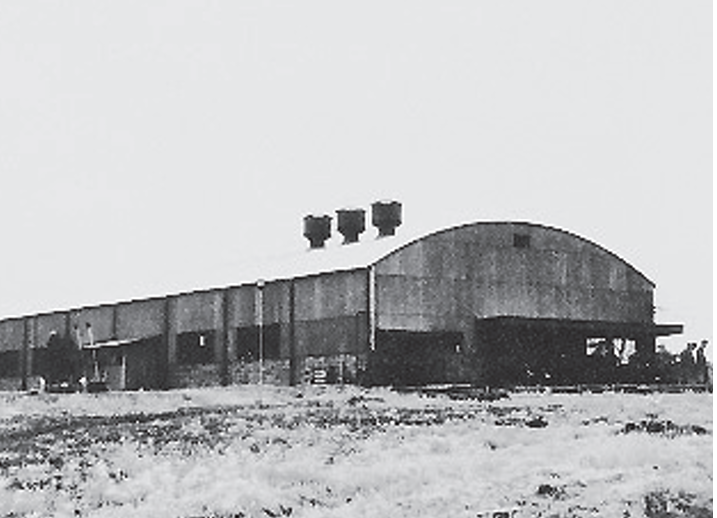
In May 1963, Kyoto Ceramic Co., Ltd., now known as Kyocera Corporation, established its Shiga manufacturing plant in Shiga Prefecture, Japan, expanding its production operations beyond its original base in Kyoto. The new facility supported the company's growing manufacturing activities in fine ceramics, which were used as insulating and structural components in electronic equipment. The plant was established approximately four years after Kyoto Ceramic's founding on 01/04/1959.
Kyoto Ceramic was founded by Kazuo Inamori and seven partners with ¥3 million in capital and 28 employees. Its early operations concentrated on specialized ceramic components, particularly insulating materials used in television equipment. These products required consistent manufacturing quality and material properties, including electrical insulation, heat resistance, and dimensional stability.
The establishment of the Shiga Plant expanded the company's manufacturing infrastructure at a time when Japan's electronics industry was developing rapidly. During the early 1960s, increasing production of televisions and other electrical equipment created demand for precision components and specialized industrial materials. Fine ceramics were particularly useful in applications requiring components capable of withstanding high temperatures and maintaining reliable electrical insulation.
Shiga Prefecture, located east of Kyoto, provided a location for expanding industrial operations while remaining within the wider Kansai region. Establishing a manufacturing facility there allowed Kyoto Ceramic to increase its production presence outside its original Kyoto operations. The new plant formed part of the company's early development of a broader manufacturing network within Japan.
Fine ceramic production involves several technical processes, including raw material preparation, forming, high-temperature firing, and precision finishing. These processes require controlled manufacturing conditions to achieve consistent product characteristics. Additional manufacturing facilities supported Kyocera's ability to develop and produce ceramic components for increasingly specialized industrial applications.
The Shiga Plant's establishment preceded several further developments in the company's history. In 1966, Kyoto Ceramic received an order from IBM for ceramic substrates used in general-purpose computers. In 1969, the company established Kyocera International, Inc. in the United States, expanding its international business presence. Kyoto Ceramic subsequently diversified into semiconductor-related components, electronic devices, and other industrial products before adopting the corporate name Kyocera Corporation in 1982.
The precise day in May 1963 on which the plant began operations, along with its original production capacity, investment cost, and initial employee count, is not established in the information available here.
View details1960
In April 1960, Kyoto Ceramic Co., Ltd., now known as Kyocera Corporation, established an office in Tokyo, Japan, extending its business presence beyond its original headquarters in Kyoto. The Tokyo office was established approximately one year after the company's founding on 01/04/1959 and supported the development of its domestic sales network and relationships with customers in Japan's electronics manufacturing industry.
Kyoto Ceramic had been founded by Kazuo Inamori and seven partners with ¥3 million in capital and 28 employees. The company initially specialized in fine ceramics, manufacturing insulating components for television equipment and other electronic applications. Its products used engineered ceramic materials valued for their electrical insulation, thermal resistance, and dimensional stability.
The establishment of a Tokyo office gave Kyoto Ceramic a business presence in Japan's principal commercial center. Tokyo was home to corporate headquarters, electronics manufacturers, trading companies, and other organizations involved in the country's expanding industrial economy. A local office provided a practical base for sales activities, customer communication, and the development of business relationships outside the Kyoto region.
The expansion took place during a period of growth in Japan's electronics industry. Domestic production of televisions and other electrical equipment increased during the late 1950s and early 1960s, creating demand for specialized components and industrial materials. Kyoto Ceramic's fine ceramic products were relevant to manufacturers requiring reliable insulation and components capable of operating under demanding electrical and thermal conditions.
Opening the Tokyo office also represented an early step in building the company's organizational structure beyond its original manufacturing location. While Kyoto remained the center of its headquarters and technical operations, the Tokyo presence supported commercial activities in another important Japanese business region. The precise street address, initial staffing, and operating budget of the office have not been established in the available information.
Kyoto Ceramic continued expanding during the 1960s. In 1966, it secured an order from IBM for ceramic substrates used in computer equipment, and in 1969, it established Kyocera International, Inc. in the United States. These subsequent developments extended the company's customer relationships and operations beyond Japan. In 1982, Kyoto Ceramic Co., Ltd. adopted the name Kyocera Corporation.
View details1959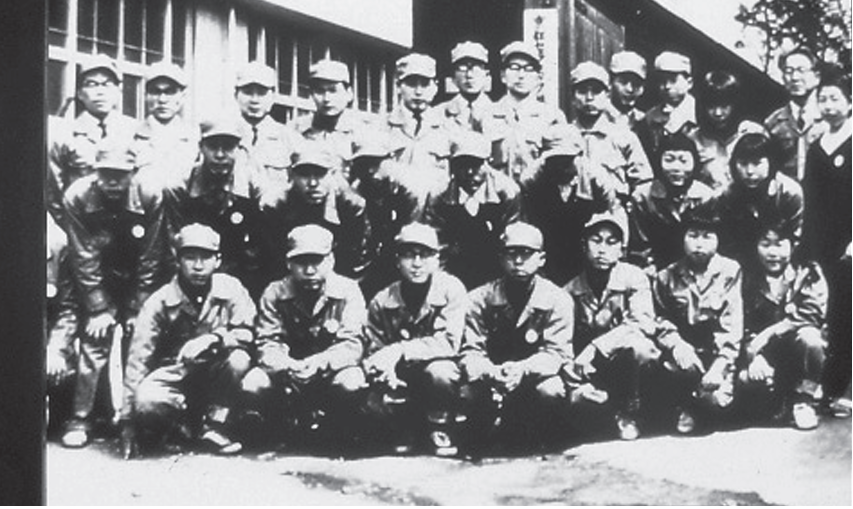
On 01/04/1959, Kazuo Inamori and seven founding partners established Kyoto Ceramic Co., Ltd. in Kyoto, Japan, with an initial capital investment of ¥3 million and a workforce of 28 employees. The company, which later became Kyocera Corporation, specialized in fine ceramics, initially producing precision insulating components for television equipment. Inamori was 27 years old when the company was founded, bringing technical knowledge of ceramic materials developed during his earlier employment in Japan's ceramics industry.
Before establishing Kyoto Ceramic, Inamori worked at Shofu Industries, a Kyoto-based ceramics manufacturer, where he conducted research into advanced ceramic materials. His work included the development of specialized insulating ceramics suitable for electronic applications. This experience provided the technical foundation for the new business, which focused on manufacturing components with specific electrical, thermal, and mechanical properties rather than conventional ceramic products.
View details