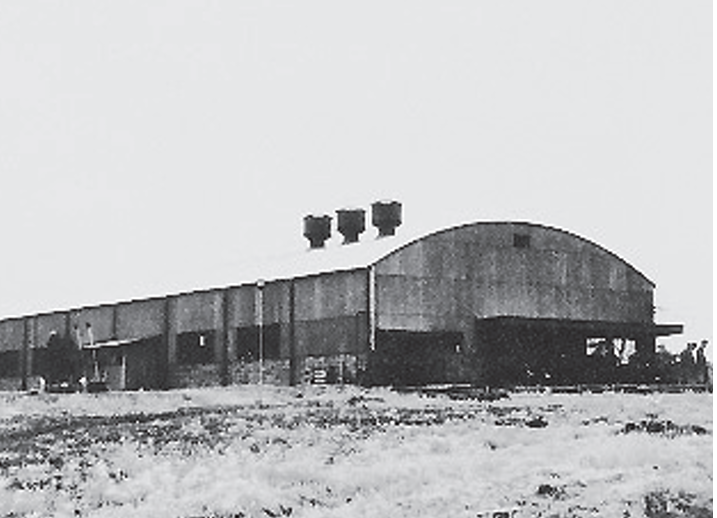
Shiga Manufacturing Plant Established
Japan
6 min read
Updated By: History Editorial Network (HEN)
Published:
Updated:
In May 1963, Kyoto Ceramic Co., Ltd., now known as Kyocera Corporation, established its Shiga manufacturing plant in Shiga Prefecture, Japan, expanding its production operations beyond its original base in Kyoto. The new facility supported the company's growing manufacturing activities in fine ceramics, which were used as insulating and structural components in electronic equipment. The plant was established approximately four years after Kyoto Ceramic's founding on 01/04/1959.
Kyoto Ceramic was founded by Kazuo Inamori and seven partners with ¥3 million in capital and 28 employees. Its early operations concentrated on specialized ceramic components, particularly insulating materials used in television equipment. These products required consistent manufacturing quality and material properties, including electrical insulation, heat resistance, and dimensional stability.
The establishment of the Shiga Plant expanded the company's manufacturing infrastructure at a time when Japan's electronics industry was developing rapidly. During the early 1960s, increasing production of televisions and other electrical equipment created demand for precision components and specialized industrial materials. Fine ceramics were particularly useful in applications requiring components capable of withstanding high temperatures and maintaining reliable electrical insulation.
Shiga Prefecture, located east of Kyoto, provided a location for expanding industrial operations while remaining within the wider Kansai region. Establishing a manufacturing facility there allowed Kyoto Ceramic to increase its production presence outside its original Kyoto operations. The new plant formed part of the company's early development of a broader manufacturing network within Japan.
Fine ceramic production involves several technical processes, including raw material preparation, forming, high-temperature firing, and precision finishing. These processes require controlled manufacturing conditions to achieve consistent product characteristics. Additional manufacturing facilities supported Kyocera's ability to develop and produce ceramic components for increasingly specialized industrial applications.
The Shiga Plant's establishment preceded several further developments in the company's history. In 1966, Kyoto Ceramic received an order from IBM for ceramic substrates used in general-purpose computers. In 1969, the company established Kyocera International, Inc. in the United States, expanding its international business presence. Kyoto Ceramic subsequently diversified into semiconductor-related components, electronic devices, and other industrial products before adopting the corporate name Kyocera Corporation in 1982.
The precise day in May 1963 on which the plant began operations, along with its original production capacity, investment cost, and initial employee count, is not established in the information available here.
#Kyocera
#ShigaPlant
#KazuoInamori
#KyotoCeramic
Primary Reference
Kyocera

Explore the Life Moments of
 AI Twin