
Djibouti

Horn of Harmony
About
#Djibouti
#Djibouti_Timeline
#Djibouti_History
#Djibouti_History_Timeline
Life Classification
Country
Life ID
EL1768068148127
Verified Name
Djibouti
Life Type
Entity Life
Life Editor(s)
History Editorial Network (HEN)
Life Privacy
Public
Subscription
Elite
Created On
2025-01-06
Updated On
2025-12-18
Connect
Related Lives

Horror Movies
Nightmares on Screen

Canadian Federal Election
Canada Decides

World War I
The Great War

Serbia
The Heart of the Balkans

Chad
Heart of the Sahel

Norway
Land of Fjords and Northern Lights


Benin
The Jewel of West African Culture.

2026
A migrant boat carrying approximately 305 people reportedly capsized near Guhere, north of Obock, Djibouti, between 08/10/2026 and 09/10/2026 while attempting to cross the Gulf of Aden toward Yemen. According to figures attributed to the International Organization for Migration (IOM), at least 139 migrants died, including children, while approximately 84 remained missing. Djiboutian authorities conducted search-and-rescue operations and provided emergency assistance to survivors. The reported figures indicate a severe maritime disaster, although the final casualty count requires confirmation from incident-specific IOM records.
The crossing forms part of the Eastern Migration Route, used primarily by migrants from the Horn of Africa travelling through Djibouti toward Yemen and Gulf countries. Migrants frequently face dangerous sea conditions, overcrowded vessels, exploitation by smugglers, and limited access to emergency assistance. The reported October disaster illustrates the risks associated with this journey, particularly for people travelling aboard unsafe boats. Rescue operations and efforts to identify missing passengers were central concerns following the sinking.
View detailsOn 10/04/2026, Djibouti’s incumbent President Ismaïl Omar Guelleh was re-elected for a sixth consecutive term, securing 97.81% of the vote according to provisional results released by the Ministry of Interior. His only challenger, Mohamed Farah Samatar of the Unified Democratic Center (CDU), received 2.19% of the total votes, marking a wide margin between the two candidates.
The election saw a voter turnout of approximately 80.4% among the country’s roughly 256,000 registered voters. Guelleh, aged 78 at the time of the election, was eligible to run following a constitutional change in October 2025, when Djibouti’s parliament removed the previous age limit of 75 for presidential candidates. This amendment allowed him to extend his tenure, which began in 1999.
The political environment surrounding the election was shaped by a boycott from several major opposition parties. These groups cited concerns over the lack of impartiality in the electoral process and restrictions on political freedoms. As a result, the contest featured limited opposition participation, with only one candidate formally challenging the incumbent.
Djibouti’s strategic position in the Horn of Africa remained a key contextual factor during the election period. The country hosts multiple foreign military bases, including those operated by the United States, China, and France, making it an important logistical and security hub in the region. The continuation of Guelleh’s leadership reflects ongoing political continuity in a state that plays a central role in regional security and international military presence.
View details
2025
Djibouti has launched a National Cyber Security Authority as part of its efforts to strengthen digital defenses and protect critical information infrastructure. The establishment of this authority reflects the country’s growing reliance on digital systems in government services, telecommunications, finance, and port operations. Its primary role is to develop national cyber security policies, monitor cyber threats, and coordinate responses to cyber incidents. By creating a dedicated institution, Djibouti aims to improve oversight, enhance technical capacity, and ensure a more structured approach to managing risks associated with cybercrime and digital vulnerabilities.
The launch of the authority is significant for Djibouti’s broader development and security goals. As a strategic hub for international trade and data connectivity in the Horn of Africa, the country faces increasing exposure to cyber risks that could affect economic stability and national security. Strengthening cyber defenses helps build trust in digital services and supports safe participation in the global digital economy. The initiative also aligns Djibouti with international efforts to promote cyber resilience through cooperation, training, and information sharing. Overall, the new authority represents an important step toward safeguarding digital systems and supporting sustainable technological growth.
View detailsForeign Minister Mahamoud Ali Youssouf has been elected as Chairperson of the African Union Commission, marking a significant moment in continental leadership and diplomacy. As a senior statesman with long experience in foreign affairs, his election followed consultations among African Union member states aimed at ensuring balanced representation and effective leadership. The Chairperson of the Commission serves as the chief executive officer of the African Union, responsible for overseeing its administration, implementing decisions made by member states, and representing the Union at international forums. Youssouf’s appointment reflects confidence in his diplomatic background and his ability to manage complex political and institutional responsibilities.
The significance of his election lies in the influence the African Union Commission holds over peace, security, development, and regional integration across Africa. Under his leadership, the Commission is expected to focus on strengthening cooperation among member states, improving institutional efficiency, and addressing ongoing challenges such as conflict resolution, economic development, and global partnerships. His role will also involve coordinating with international organizations and advocating for Africa’s collective interests on the global stage. Overall, Mahamoud Ali Youssouf’s election represents continuity and renewed leadership within the African Union, with potential long-term implications for governance, unity, and policy direction across the continent.
View details
2018
The Addis Ababa-Djibouti Railway, which commenced operations in January 2018, represents a significant advancement in transportation infrastructure between Ethiopia and Djibouti. This electrified standard gauge railway is designed to enhance freight services, providing a vital link between the Ethiopian hinterland and the Port of Doraleh in Djibouti. The railway spans approximately 756 kilometers and is expected to reduce transportation costs and time, thereby boosting trade and economic growth in the region. By facilitating the movement of goods, the railway plays a crucial role in supporting Ethiopia's burgeoning economy, which relies heavily on imports and exports through Djibouti, its primary access point to international markets. The project is a collaboration between the Ethiopian and Djiboutian governments, with significant investment from China, reflecting the growing economic ties between these nations. The railway not only enhances logistical efficiency but also promotes regional integration and development, making it a cornerstone of East Africa's transportation network. #mooflife #mof #MomentOfLife #AddisAbaba-djiboutiRailway #FreightServices #Ethiopia #Djibouti #TransportationInfrastructure
View details17th century
By the 17th century, the Ottoman Empire faced significant challenges in maintaining control over its territories, leading to a strategic withdrawal from Zeyla. This coastal town, along with its neighboring region of Tadjoura, came under the influence of the rulers of Mocha and Sana'a. The governance of Zeyla transitioned to an Emir, whose authority was largely symbolic and limited to the town itself, as noted by historian Mordechai Abir. The Emir's power was constrained, with real governance falling to a governor who relied on a small contingent of mercenaries and artillery to protect the area from nomadic incursions and banditry. Despite Tadjoura's claims of independence, it remained subordinate to Zeyla, committing to pay an annual annuity to the Imam of Sana'a, which was collected by the governor of Zeyla. The transition of power saw Mohammed Al-Barr succeeded by Sharmake Ali Salih as governor, marking a period of localized governance amidst the broader decline of Ottoman influence in the region. #mooflife #mof #MomentOfLife #17thCentury #OttomanEmpire #Zeyla #Tadjoura #LocalGovernance
View details16th century
The 16th century marked a significant period in the history of the Horn of Africa, particularly with the rise of the Adal Sultanate and its military campaigns against the Christian Kingdom of Abyssinia. One of the most important historical texts from this era is the 'Futuh Al-Habash,' authored by Shihāb al-Dīn. This medieval chronicle provides a detailed account of the Adal Sultanate's conquests, highlighting the political, social, and military dynamics of the time. The work not only serves as a historical record but also reflects the rich tradition of Islamic literature that has flourished in the region, particularly in Djibouti. The 'Futuh Al-Habash' is celebrated for its narrative style and depth of insight into the conflicts that shaped the region's history. In addition to this historical work, contemporary politicians and intellectuals in Djibouti have contributed to the literary landscape by sharing their memoirs and reflections, further enriching the country's cultural heritage. This blend of historical and modern narratives underscores Djibouti's long-standing tradition of Islamic scholarship and its ongoing relevance in understanding the complexities of the Horn of Africa's past and present. #mooflife #mof #MomentOfLife #FutuhAl-habash #AdalSultanate #Abyssinia #IslamicLiterature #16thCenturyHistory
View details2011
On 31 July 2011, the 13th Demi-Brigade of the Foreign Legion (13 DBLE) marked a significant transition in its operational history by departing from Djibouti to the United Arab Emirates. This unit has a storied legacy, having been established in 1962 when it was transferred from Algeria to Djibouti to serve as the backbone of the French garrison in the region. The 13 DBLE has played a crucial role in maintaining the security and integrity of the Republic of Djibouti, contributing to various missions and operations over the decades. The move to the UAE represents a strategic shift in the unit's deployment, reflecting the evolving geopolitical landscape and the need for a robust military presence in the Gulf region. The departure of the 13 DBLE not only signifies the end of an era for the French military presence in Djibouti but also highlights the ongoing commitment of France to its international military obligations. As the unit transitions to its new base, it carries with it a rich history and a legacy of service that will continue to influence its future operations. #mooflife #mof #MomentOfLife #FrenchForeignLegion #13thDemi-brigade #Djibouti #MilitaryHistory #UaeDeployment
View detailsJapan established its first overseas military base in Djibouti to enhance its anti-piracy operations in the Gulf of Aden and the surrounding waters. This strategic move was driven by the increasing threat posed by Somali pirates, who targeted commercial vessels and disrupted international trade routes. Located near the United States' Camp Lemonnier and other foreign military installations, Japan’s base allows its Self-Defense Forces (SDF) to conduct maritime patrols, escort merchant ships, and collaborate with international allies to ensure the security of vital sea lanes. The facility includes a runway for surveillance aircraft, living quarters for personnel, and command centers to coordinate naval missions.
Beyond counter-piracy efforts, Japan’s presence in Djibouti serves a broader geopolitical purpose. It strengthens Japan’s diplomatic and defense ties with African nations while showcasing its commitment to global security. The base also enhances Japan’s ability to respond to regional crises, provide humanitarian assistance, and protect its economic interests in the area. As one of the few Asian nations with a military outpost in Africa, Japan’s Djibouti base marks a significant shift in its post-World War II security policy, reflecting its growing role in international peacekeeping and maritime stability.
#JapanInAfrica #AntiPiracy #SecurityOperations #MaritimeDefense #GlobalPeace #DjiboutiBase #MomentsOfLife #MoofLife_Moment #MoofLife
View details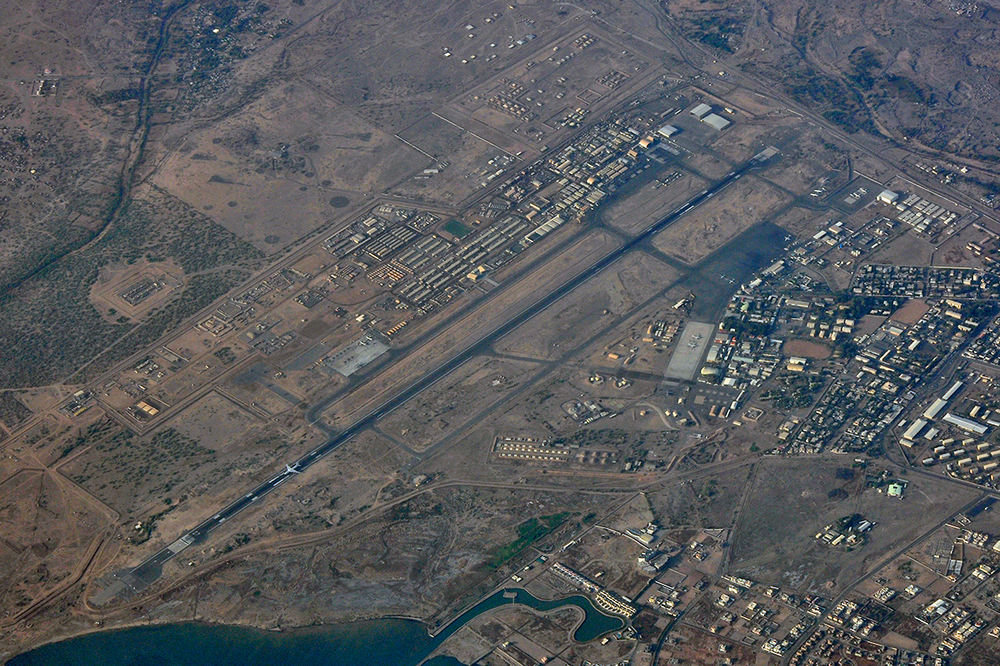
2010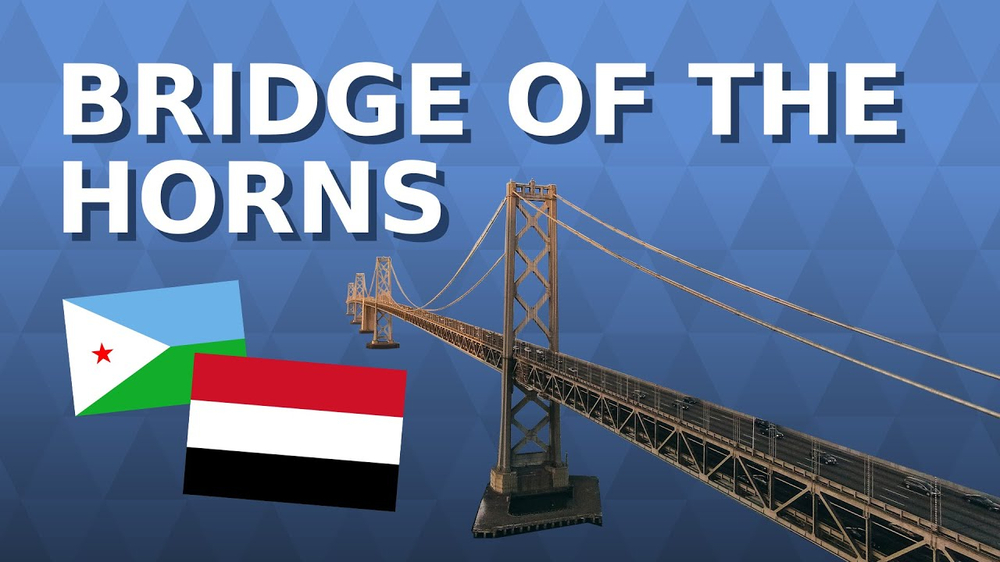
The Bridge of the Horns project aims to create a significant infrastructure link between the Horn of Africa and the Arabian Peninsula, spanning approximately 28.5 kilometers (17.7 miles) over the sea through Djibouti. This ambitious initiative is reportedly backed by Saudi investors, including notable investor Tarek bin Laden, who has been associated with various large-scale development projects in the region. However, as of June 2010, the project faced delays in its first phase, raising concerns about the timeline and feasibility of this transformative endeavor. The bridge is expected to enhance trade, tourism, and connectivity between the two regions, potentially reshaping economic dynamics in the area. Stakeholders are keenly observing the developments surrounding this project, as its successful implementation could lead to significant socio-economic benefits for both the Horn of Africa and the Arabian Peninsula. #mooflife #mof #MomentOfLife #BridgeOfTheHorns #SaudiInvestors #TarekBinLaden #HornOfAfrica #InfrastructureDevelopment
View details2009
In 2012, the Djiboutian government, in collaboration with DP World, embarked on the construction of the Doraleh Container Terminal, marking a significant milestone in the nation's maritime infrastructure. This ambitious project, valued at $396 million, aims to enhance Djibouti's position as a key logistics hub in the region. The Doraleh Container Terminal is designed to accommodate an impressive capacity of 1.5 million twenty-foot equivalent units (TEUs) annually, thereby significantly boosting the national transit capacity. This third major seaport is expected to facilitate increased trade and commerce, providing a vital link for goods moving in and out of the Horn of Africa. The strategic location of the terminal, combined with advanced operational capabilities, positions Djibouti as a pivotal player in global shipping and logistics, ultimately contributing to the economic growth and development of the nation. #mooflife #mof #MomentOfLife #DoralehContainerTerminal #Djibouti #DpWorld #SeaportConstruction #LogisticsHub
View details2007
In November 2007, the Djibouti national football team achieved a historic milestone by securing its first-ever World Cup-related victory. The team faced off against Somalia in the qualification rounds for the 2010 FIFA World Cup, and emerged victorious with a score of 1-0. This win was significant not only for the team but also for the nation, as it marked a turning point in Djibouti's football history. Since becoming a member of FIFA in 1994, Djibouti had participated in various qualifying rounds but had yet to secure a win in World Cup-related matches. The victory against Somalia showcased the potential of Djiboutian football and ignited hope among fans and players alike for future successes on the international stage. The Djibouti national team continues to strive for excellence, aiming to build on this achievement and make a mark in the world of football. #mooflife #mof #MomentOfLife #DjiboutiNationalFootballTeam #WorldCup2010 #FootballHistory #Fifa #DjiboutiSports
View details1991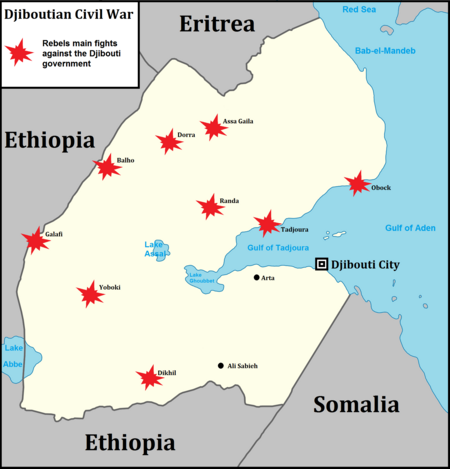
The Djiboutian Civil War, which spanned from 1991 to 2001, marked the first significant military engagement for the Djiboutian Armed Forces. This conflict arose between the Djiboutian government, which received support from France, and the Front for the Restoration of Unity and Democracy (FRUD). The war was characterized by intense hostilities, particularly in the early years, as the government sought to quell the insurgency led by FRUD. A turning point occurred when moderate factions within FRUD, facing substantial military defeats and loss of territory, opted to negotiate a peace treaty with the government. This agreement effectively ended most of the fighting by the late 1990s. However, a radical faction of FRUD persisted in its resistance, continuing to engage in hostilities until it too signed a peace treaty in 2001. The conclusion of the war resulted in a government victory, leading to the transformation of FRUD into a recognized political party within Djibouti's political landscape. The civil war not only reshaped the country's governance but also highlighted the complexities of internal conflict and foreign intervention in the Horn of Africa. #mooflife #mof #MomentOfLife #DjiboutianCivilWar #Frud #Djibouti #ArmedConflict #PeaceTreaty
View details1977
In 1977, the Republic of Djibouti officially gained independence, marking a significant milestone in the history of the region. Previously known as the French Territory of the Afars and the Issas, Djibouti's journey to independence was solidified when its citizens voted for self-determination. This pivotal moment not only established Djibouti as a sovereign nation but also led to its admission into the United Nations in the same year, highlighting its commitment to international cooperation and governance. The capital city, Djibouti, shares its name with the country, symbolizing the unity and identity of the nation. However, the path to stability was not without challenges. In the early 1990s, internal tensions regarding government representation escalated into armed conflict. This unrest prompted a power-sharing agreement in 2000, which aimed to foster peace and inclusivity between the ruling party and opposition groups. The Republic of Djibouti continues to navigate its post-independence landscape, striving for political stability and economic development in the Horn of Africa. #mooflife #mof #MomentOfLife #DjiboutiIndependence #RepublicOfDjibouti #UnMembership #HornOfAfrica #PoliticalStability
View details1975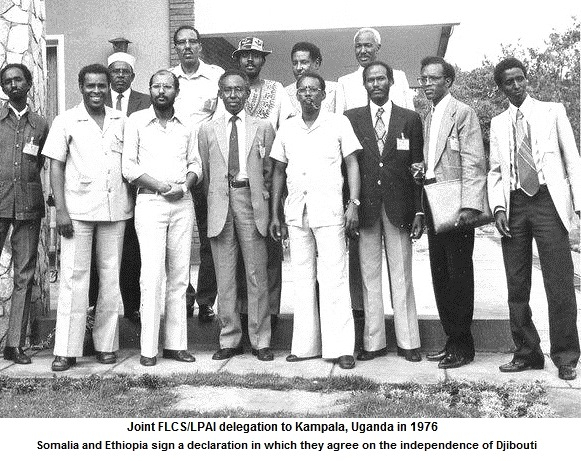
On March 24, 1975, the Front de Libération de la Côte des Somalis (FLCS) executed a high-profile kidnapping of Jean Guery, the French Ambassador to Somalia. This act was part of a broader strategy by the FLCS to secure the release of two of its members who were serving life sentences in France. The FLCS, recognized as a national liberation movement by the Organization of African Unity (OAU), sought to leverage this hostage situation to further its political objectives. The exchange took place in Aden, South Yemen, where Ambassador Guery was released in return for the two FLCS activists. The FLCS had evolved its demands over the years, initially seeking integration into a 'Greater Somalia' influenced by the Somali government, but later shifting towards a clear call for independence. This shift was solidified during meetings in Kampala, Uganda, with the African People's League for the Independence (LPAI), ultimately leading to increased tensions with Somalia. The FLCS's actions during this period highlight the complexities of the struggle for independence in the region and the lengths to which liberation movements would go to achieve their goals. #mooflife #mof #MomentOfLife #Flcs #Somalia #JeanGuery #Kidnapping #IndependenceMovement
View details1967
In 1967, a significant political event unfolded in French Somaliland, marking the second plebiscite aimed at determining the territory's future. The initial results indicated a preference for a continued, albeit looser, relationship with France. However, the voting patterns revealed a stark ethnic divide: the resident Somali population predominantly favored independence, aspiring for eventual union with Somalia, while the Afar community largely chose to maintain their association with France. This division underscored the complex socio-political landscape of the region. Unfortunately, the plebiscite was marred by allegations of vote rigging by French authorities, raising questions about the legitimacy of the electoral process. Following the plebiscite, the territory formerly known as Côte française des Somalis was renamed Territoire français des Afars et des Issas. The announcement of the plebiscite results ignited civil unrest, leading to several fatalities and prompting France to bolster its military presence along the frontier. This period was pivotal in shaping the future of the region, highlighting the tensions between colonial legacies and the aspirations for self-determination. #mooflife #mof #MomentOfLife #FrenchSomaliland #Plebiscite1967 #SomaliaIndependence #AfarsAndIssas #ColonialHistory
View details1966
In 1966, France faced significant political unrest in its overseas territory of French Somaliland, as it rejected a United Nations recommendation for the territory's independence. This decision was met with widespread discontent among the local population, culminating in demonstrations and riots during an official visit by French President Charles de Gaulle in August of that year. The protests highlighted the growing desire for self-determination among the people of French Somaliland, who were increasingly frustrated with colonial rule. In response to the escalating tensions and public outcry, President de Gaulle ordered a new referendum to gauge the sentiments of the local population regarding their political future. This move was seen as an attempt to address the demands for independence while also maintaining France's influence in the region. The events of 1966 marked a pivotal moment in the history of French Somaliland, setting the stage for future discussions on independence and self-governance that would ultimately lead to the territory becoming the independent nation of Djibouti in 1977. #mooflife #mof #MomentOfLife #FrenchSomaliland #CharlesDeGaulle #UnRecommendation #Independence #Djibouti
View details1958
In 1958, Djibouti faced a pivotal moment in its history as it held a referendum to determine its political future on the eve of neighboring Somalia's impending independence in 1960. The referendum posed a crucial question: should Djibouti remain associated with France or pursue full independence? The outcome favored continued association with France, largely influenced by the significant support from the Afar ethnic group and the resident French population. However, the legitimacy of the referendum was marred by allegations of widespread vote rigging, raising concerns about the fairness of the electoral process. The majority of those who voted against remaining with France were Somalis, who sought to unite with Somalia in a bid for independence. This political climate was further complicated by the tragic death of Mahmoud Harbi, the Vice President of the Government Council, who had advocated for independence. Harbi died in a plane crash two years later under suspicious circumstances, casting a shadow over the political landscape of Djibouti. The 1958 referendum thus not only shaped Djibouti's immediate political alignment but also set the stage for future tensions in the region, as the aspirations of the Somali population for unification remained unfulfilled. #mooflife #mof #MomentOfLife #Djibouti #Referendum1958 #FrenchColonialism #SomaliaIndependence #AfarEthnicGroup
View details1940
In June 1940, following the fall of France during World War II, French Somaliland came under the control of the pro-Axis Vichy government. This period marked a significant shift in the region's political landscape, as the Vichy regime aligned itself with Axis powers. The strategic location of French Somaliland, particularly the port city of Djibouti, became crucial during the East African Campaign. British and Commonwealth forces engaged in military operations against Italian troops in neighboring Italian East Africa, leading to a series of border skirmishes that had persisted since the Italian invasion of Ethiopia in the mid-1930s. By 1941, the tide turned as British forces successfully defeated the Italians, isolating the Vichy forces in French Somaliland. The British subsequently blockaded Djibouti City, and in 1942, approximately 4,000 British troops occupied the city, effectively ending Vichy control. Notably, a local battalion from French Somaliland played a role in the Liberation of France in 1944, highlighting the region's contribution to the Allied efforts during the war. #mooflife #mof #MomentOfLife #VichyFrenchRule #FrenchSomaliland #WorldWarIi #EastAfricanCampaign #DjiboutiCity
View details1900
In 1900, Djibouti was characterized by a predominantly Islamic population, with virtually no Christians present in the region. The introduction of Islam to the Horn of Africa dates back to the early days of the religion, when a group of persecuted Muslims sought refuge across the Red Sea, following the guidance of the Islamic prophet Muhammad. During the early colonial era, the presence of Christianity was minimal, with estimates suggesting that only about 100 to 300 individuals identified as Christians. These followers primarily emerged from the limited educational and social services provided by a few Catholic missions operating in French Somaliland. The Catholic missions focused on establishing schools and orphanages, which contributed to the small Christian community in the area. Despite the efforts of these missions, the overwhelming majority of the population adhered to Islam, which was further solidified by the Constitution of Djibouti, designating Islam as the sole state religion. This historical context highlights the significant influence of Islam in shaping the cultural and religious landscape of Djibouti during the early 20th century, a trend that continues to this day. #mooflife #mof #MomentOfLife #Djibouti #Islam #Christianity #ColonialEra #FrenchSomaliland
View details1897
In 1897, the region known today as Djibouti was officially established as French Somaliland, a designation that lasted until 1967. This territory, referred to in French as Côte française des Somalis, was part of France's colonial empire in Africa. The establishment of French Somaliland marked a significant period in the region's history, as it became a strategic location for trade and military operations in the Horn of Africa. The French administration had previously controlled the area known as Obock from 1862 until 1894, which laid the groundwork for the later establishment of French Somaliland. During its time as a French colony, the region experienced various developments, including infrastructure improvements and the introduction of French culture and language. The transition from French Somaliland to the French Territory of the Afars and the Issas in 1967 reflected the changing political landscape in the region, leading to eventual independence. The legacy of French colonial rule continues to influence Djibouti's cultural and political identity today. #mooflife #mof #MomentOfLife #FrenchSomaliland #CôteFrançaiseDesSomalis #DjiboutiHistory #ColonialAfrica #FrenchColonialism
View details1896
Djibouti became the administrative capital of the French Somaliland colony in 1896, replacing the port town of Obock. This transition marked a significant turning point in the region’s colonial history. Obock had initially served as the French administrative center due to its strategic location along the Gulf of Tadjoura. However, Djibouti’s natural deep-water harbor and its proximity to the Bab el-Mandeb Strait made it a more advantageous site for trade and maritime operations. As the French sought to strengthen their influence in the Horn of Africa, Djibouti quickly grew into a bustling port city, connecting Africa to the Arabian Peninsula and beyond.
With the construction of the Djibouti-Addis Ababa railway in the early 20th century, Djibouti’s importance surged, becoming a critical gateway for Ethiopia’s trade with the outside world. This infrastructural development not only boosted the local economy but also cemented Djibouti’s status as a regional hub for commerce and transportation. Over time, Djibouti evolved into a melting pot of cultures, reflecting its strategic position at the crossroads of Africa, the Middle East, and the Indian Ocean. Today, its legacy as a key administrative and economic center continues to shape its identity and role in the global maritime landscape.
#Djibouti #FrenchSomaliland #ColonialHistory #HornOfAfrica #Obock #MaritimeTrade #RailwayHistory #EastAfrica #MomentsOfLife #MoofLife_Moment #MoofLife
View details1885
On March 26, 1885, the French government formalized its control over the Issas by signing a treaty that established them as a protectorate. This agreement was part of a broader strategy to establish French Somaliland, which occurred between 1883 and 1887 through treaties with the ruling Somalis and Afar sultans. The region's strategic importance was underscored by a failed attempt in 1889 by Russian adventurer Nikolay Ivanovitch Achinov to establish a settlement at Sagallo, which was swiftly dismantled by French military forces within a month. The consolidation of French authority culminated in 1894 when Léonce Lagarde established a permanent French administration in Djibouti, officially naming the territory French Somaliland. This development not only solidified French influence in the region but also facilitated the construction of the Imperial Ethiopian Railway, enhancing Djibouti's role as a critical port for trade and transportation into Ethiopia. The establishment of French Somaliland marked a significant chapter in the colonial history of the Horn of Africa, reflecting the geopolitical interests of European powers during the late 19th century. #mooflife #mof #MomentOfLife #FrenchSomaliland #IssasProtectorate #ColonialHistory #Djibouti #HornOfAfrica
View details1884
The colonial period of Djibouti, spanning from 1884 to 1977, is a significant chapter in the region's history, marked by the establishment of borders and territorial limits that shaped its socio-political landscape. Simon Imbert-Vier's PhD thesis, 'Frontières et limites à Djibouti durant la période coloniale', provides an in-depth analysis of how colonial powers, particularly France, influenced the demarcation of boundaries in Djibouti. The thesis explores the implications of these borders on local communities, the economy, and the geopolitical dynamics of the Horn of Africa. Imbert-Vier examines the historical context of colonialism, the negotiations and conflicts that arose over territorial claims, and the lasting effects of these boundaries post-independence. The work highlights the complexities of colonial rule and its impact on national identity and regional stability, making it a crucial resource for understanding Djibouti's contemporary challenges. This period not only laid the groundwork for modern Djibouti but also serves as a case study for the broader implications of colonialism in Africa. #mooflife #mof #MomentOfLife #Djibouti #ColonialHistory #SimonImbert-vier #Borders #HornOfAfrica
View detailsOn April 14, 1884, significant developments occurred in the Gulf of Tadjoura, highlighting the geopolitical tensions between French and British interests in the region. The Commander of the French patrol sloop L'Inferent reported on the ongoing Egyptian occupation in the Gulf, while the Commander of the patrol sloop Le Vaudreuil noted that Egyptian forces were also present in the interior areas between Obock and Tadjoura. In a strategic move, Emperor Yohannes IV of Ethiopia signed an accord with Great Britain, which aimed to halt hostilities against the Egyptians. This agreement facilitated the evacuation of Egyptian troops from both Ethiopia and the Somaliland littoral, marking a pivotal moment in the regional power dynamics. Following this accord, the Egyptian garrison was withdrawn from Tadjoura, allowing Léonce Lagarde to deploy a patrol sloop to the area the very next night. This series of events underscored the shifting alliances and the increasing French influence in the Gulf of Tadjoura during this period. #mooflife #mof #MomentOfLife #GulfOfTadjoura #FrenchInfluence #BritishInterests #EgyptianOccupation #YohannesIv
View details1862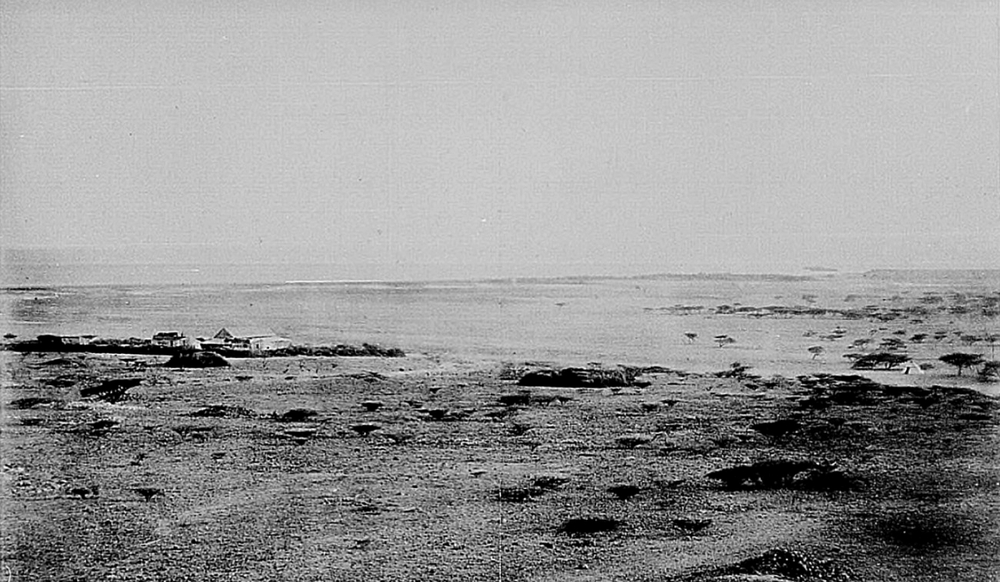
From 1862 to 1894, the region north of the Gulf of Tadjoura was officially designated as 'Obock' under French administration. This period marked a significant phase in the colonial history of the area, which would later evolve into what is known today as French Somaliland from 1897 to 1967. The French sought to establish a foothold in the Horn of Africa, utilizing Obock as a strategic port and administrative center. The French influence in the region was characterized by efforts to develop trade routes and establish control over local resources. Following the Obock period, the territory underwent further administrative changes, being renamed the French Territory of the Afars and the Issas from 1967 to 1977. This historical timeline reflects the complexities of colonial governance and the lasting impact of French rule in the region, shaping the socio-political landscape of modern-day Djibouti. #mooflife #mof #MomentOfLife #FrenchAdministration #Obock #GulfOfTadjoura #FrenchSomaliland #ColonialHistory
View detailsThe establishment of French influence in the Horn of Africa began with the signing of a significant treaty on March 11, 1862, between the Afar sultan, Raieta Dini Ahmet, and French representatives in Paris. This agreement marked the first French establishment in what is now Djibouti, as the Afars sold lands surrounding the coastal town of Obock to the French. The strategic importance of this acquisition was underscored by the French desire to create a coaling station for steamships, a necessity that became increasingly critical with the opening of the Suez Canal in 1869. Prior to the canal's inauguration, French vessels were required to procure coal at various ports, which was both costly and logistically challenging. The establishment of a coaling station in Obock not only facilitated maritime operations but also laid the groundwork for further French colonial ambitions in the region. This treaty would later serve as a foundation for the French captain of the Fleuriot de Langle to expand French territorial claims south of the Gulf of Tadjoura, solidifying France's presence in the Horn of Africa during the era known as the Scramble for Africa. #mooflife #mof #MomentOfLife #FrenchColonialism #HornOfAfrica #DjiboutiHistory #SuezCanal #AfarSultanate
View details1529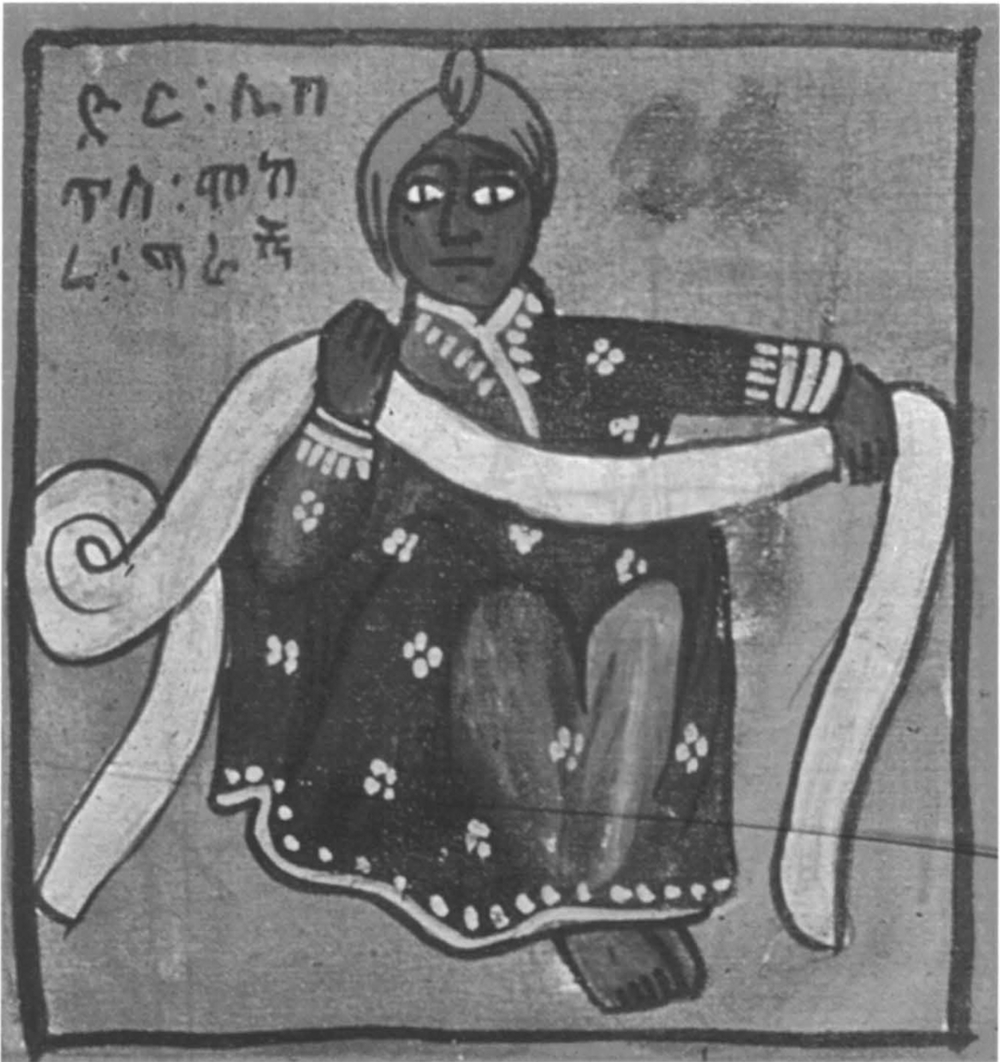
Imam Ahmad ibn Ibrahim al-Ghazi, a prominent military leader of the Adal Sultanate, led a significant campaign known as the Futuh Al-Habash from 1529 to 1543. His military endeavors aimed to expand the influence of Islam in the region, resulting in the conquest of approximately three-quarters of Christian Abyssinia. Al-Ghazi commanded a diverse army composed of Afar, Harari, and Somali warriors, which played a crucial role in his military successes. The campaign was marked by intense violence, as al-Ghazi's forces executed any Ethiopian who resisted conversion to Islam, leading to widespread devastation across the Christian kingdom. The relentless advance of his troops brought the ancient Ethiopian state to the brink of collapse. However, the tide turned at the decisive Battle of Wayna Daga, where Imam Ahmad was killed. His death marked a pivotal moment in the region's history, leading to the eventual decline of the Adal Sultanate and the restoration of Ethiopian sovereignty. The Futuh Al-Habash remains a significant chapter in the historical narrative of the Horn of Africa, illustrating the complex interplay of religion, power, and cultural identity during this tumultuous period. #mooflife #mof #MomentOfLife #ImamAhmadIbnIbrahimAl-ghazi #FutuhAl-habash #AdalSultanate #EthiopianHistory #HornOfAfrica
View details1415
In 1415, Sabr ad-Din III, the eldest son of Sa'ad ad-Din II, returned to Adal from his exile in Arabia to restore his father's throne. He proclaimed himself 'king of Adal' after his return from Yemen to the Harar plateau and established his new capital at Dakkar. Sabr ad-Din III and his brothers defeated an army of 20,000 men led by an unnamed commander hoping to restore the 'lost Amhara rule'. The victorious king then returned to his capital, but gave the order to his many followers to continue the war against the Christians in the region. This marked a significant turning point in the ongoing conflicts between the Adal Sultanate and the Ethiopian Empire. The return of Sabr ad-Din III not only revitalized the Adal Sultanate but also instigated a series of military campaigns aimed at expanding their influence and territory. The Adal forces, under the leadership of Sabr ad-Din III and his brothers, demonstrated remarkable military prowess, successfully overcoming the formidable Ethiopian army. The conflict escalated, leading to the eventual death of Emperor Tewodros I of Ethiopia, which further destabilized the region and shifted the balance of power in favor of the Adal Sultanate. Sabr ad-Din III's reign was characterized by his efforts to consolidate power and strengthen the Sultanate's position against external threats. His establishment of Dakkar as the new capital symbolized a new era for the Adal Sultanate, as it became a center for political and military strategy in the Horn of Africa. The events of 1415 were pivotal in shaping the historical landscape of the region, as the Adal Sultanate sought to reclaim its dominance and assert its influence over neighboring territories. #mooflife #mof #MomentOfLife #SabrAd-dinIii #AdalSultanate #EthiopianEmpire #HornOfAfrica #1415
View details1403
In 1403, the Ethiopian Emperor, likely Dawit I, mobilized a significant military force to counter the aggressive raids led by Sultan Sa'ad ad-Din II of Ifat. The Emperor, perceiving the Muslims in the region as 'enemies of the Lord', initiated an invasion of Ifat. The conflict culminated in a decisive battle on the Harar plateau, where the Ethiopian forces successfully defeated Ifat's troops. Following this defeat, Sultan Sa'ad ad-Din fled to Zeila, a coastal city, in hopes of finding refuge. However, the relentless Ethiopian soldiers pursued him to the peninsula of Zeila. According to the historian Al-Maqrizi, the Amhara forces besieged Sa'ad ad-Din, cutting off his access to water and supplies. This strategic maneuver ultimately led to a confrontation that resulted in the Sultan's death, marking a significant turning point in the power dynamics of the region. The defeat of Ifat and the demise of Sa'ad ad-Din II not only solidified the Ethiopian Empire's dominance but also underscored the ongoing conflicts between Christian and Muslim states in the Horn of Africa during this period. #mooflife #mof #MomentOfLife #EthiopianHistory #Sa'adAd-dinIi #Ifat #DawitI #HornOfAfrica
View details