
Angola

Land of contrasts, from bustling cities to breatht...
Related Lives

India
The Land of Diversity and Vibrant Culture.

Grenada
Spice Isle of the Caribbean

Taiwan
The Heart of Asia

Pakistan
Pakistan Zindabad
Azerbaijan
The Land of Fire

Portugal
The Land of Explorers

Belgium
The Heart of Europe.

Bangladesh
Resilience in Harmony

1483
In 1483, the Kingdom of Kongo and Portugal made history by establishing diplomatic and trade relations. This significant event marked the beginning of a long-lasting alliance between the African kingdom and the European power. The Kingdom of Kongo, located in present-day Angola, was a prosperous state with a sophisticated political system and thriving economy.
The diplomatic and trade relations with Portugal brought important benefits to both parties. The Kingdom of Kongo gained access to European goods such as textiles, weapons, and luxury items, while Portugal found a valuable trading partner in Africa. This collaboration also facilitated cultural exchange between the two regions, leading to the introduction of new technologies and ideas.
The Portuguese influence in the Kingdom of Kongo grew over time, eventually impacting the local political dynamics. This alliance played a key role in shaping the history of the region and had lasting consequences on the social and economic structures of both societies.
#KingdomOfKongo #Portugal #Diplomacy #TradeRelations #CulturalExchange #Angola
View details1482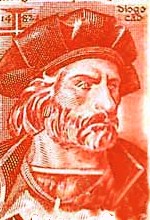
In the late 15th century, Diogo Cão, a Portuguese explorer, arrived at the mouth of the Congo River, initiating the first known encounter between Europeans and the region of present-day Angola. Cão's expedition was part of Portugal's efforts to establish trade routes and expand its influence along the African coast. The arrival of Cão opened the door for future European exploration, colonization, and exploitation of the resources in the area.
The impact of Cão's arrival was substantial. It marked the beginning of a new era for the people of Angola as they were exposed to European practices, technologies, and goods. The Europeans introduced trade networks that would significantly alter the economic landscape of the region. This event also paved the way for further European incursions into the continent, leading to centuries of colonial rule and exploitation.
The arrival of Diogo Cão at the mouth of the Congo River signifies a pivotal moment in the history of Angola and Africa as a whole. It serves as a reminder of the complex interactions between different cultures and the lasting effects of colonialism on the continent. This event highlights the importance of understanding the nuances of history and the far-reaching consequences of early European contact with Africa. #EuropeanExploration #ColonialismLegacy #CulturalExchange
View details1400
In the 1400s, the Kingdom of Kongo emerged in present-day northern Angola. Founded by the Bakongo people, this centralized state thrived due to its strategic location along trade routes, fostering economic growth and cultural exchange. The kingdom's capital, Mbanza Kongo, became a hub of commerce and politics, attracting merchants and diplomats from diverse regions.
The Kingdom of Kongo experienced flourishing trade in ivory, copper, and later slaves, establishing diplomatic ties with European powers. This contact brought Catholicism to the region, influencing the kingdom's religious landscape. The Kongo kings adopted Christianity while maintaining traditional beliefs, resulting in a unique syncretic religious practice.
The kingdom's class structure evolved, with royalty, nobility, and commoners playing distinct roles in society. The centralized government implemented laws and policies to maintain order and justice. Skilled artisans produced intricate pottery and textiles, showcasing the kingdom's artistic prowess.
The Kingdom of Kongo significantly influenced neighboring societies, spreading its language, customs, and political organization. The kingdom's downfall came in the face of slave trade exploitation, internal strife, and European colonization pressures.
#KingdomofKongo #MbanzaKongo #TradeRoutes #CulturalExchange #SyncreticReligion #CentralizedGovernment #SlaveTrade #EuropeanColonization #ArtisticProwess.
View details1390
In the late 14th century, the Kingdom of Kongo was established in Central Africa, encompassing regions that are part of present-day Angola. This kingdom emerged as a powerful political entity, with its capital situated in the region that is now known as Angola. The founding of the Kingdom of Kongo marked the beginning of a centralized government system that brought together various ethnic groups under a single authority.
The establishment of the Kingdom of Kongo had a significant impact on the region, promoting trade and cultural exchange. The kingdom's strategic location along the Atlantic coast facilitated interactions with European traders, leading to the development of a thriving commercial network. Additionally, the Kingdom of Kongo played a pivotal role in shaping the social and religious landscape of Central Africa, with Christianity gaining a foothold in the region.
Over time, the Kingdom of Kongo faced internal conflicts and external pressures, eventually leading to its decline in the 17th century. Despite its eventual fall, the legacy of the Kingdom of Kongo endures in the historical and cultural heritage of Angola and the broader Central African region.
#KingdomofKongo #CentralAfrica #AngolaHistory #CulturalExchange #TradeNetworks
View details1380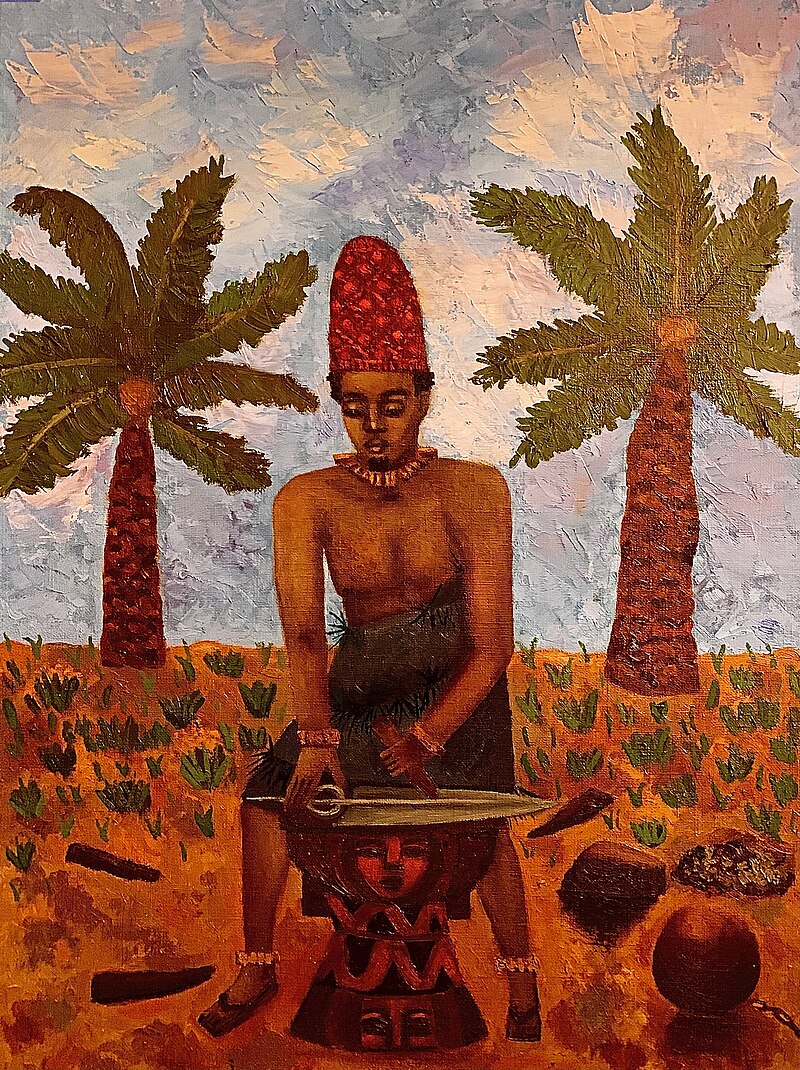
In 1300, in what is now Angola, the Kongo Kingdom was founded by Lukeni lua Nimi. The Kongo Kingdom emerged as a centralized state with a hierarchical system of governance. Lukeni lua Nimi unified several smaller communities under his rule, establishing a powerful kingdom that would thrive for centuries to come.
The establishment of the Kongo Kingdom brought political stability to the region, fostering economic growth and cultural development. Trade flourished within the kingdom and with neighboring regions, as the Kongo people were skilled in agriculture, metalwork, and crafting. The kingdom's strategic location near the coast allowed for lucrative trade with European merchants.
Under the rule of Lukeni lua Nimi and his successors, the Kongo Kingdom experienced a golden age of prosperity and influence. The kingdom's capital, Mbanza Kongo, became a thriving center of politics, religion, and commerce. The Kongo Kingdom played a significant role in the transatlantic slave trade, supplying enslaved people to European colonizers.
The legacy of the Kongo Kingdom can still be seen in the cultural traditions and political institutions of present-day Angola and neighboring countries. The kingdom's establishment by Lukeni lua Nimi marked a pivotal moment in the history of the region, shaping its future trajectory. #KongoKingdom #LukeniluaNimi #AngolanHistory #CulturalHeritage
View details1189
During the 12th century, the Portuguese under D. Sancho I launched a series of military campaigns to expand their influence in Africa. One of the notable victories was the defeat of the Moors in Angola. This conquest allowed the Portuguese to establish control over strategic areas, paving the way for further colonization efforts.
The defeat of the Moors marked a significant turning point in the history of Angola, as it led to the consolidation of Portuguese power in the region. The successful military campaign enabled the Portuguese to gain access to valuable resources and trade routes, strengthening their presence in Angola.
The expansion of Portuguese influence in Angola had far-reaching implications for the region, shaping its political and cultural landscape for centuries to come. The defeat of the Moors solidified Portuguese control over Angola, laying the foundation for the establishment of colonial rule and the spread of Christianity.
Overall, the victory of the Portuguese under D. Sancho I against the Moors was a crucial event that contributed to the colonization and eventual integration of Angola into the Portuguese Empire. #PortugueseColonization #MilitaryCampaign #AngolanHistory
View details0100
The event marked the arrival of the Bantu people in Angola, catalyzing the establishment of several influential kingdoms in the region. This migration significantly impacted the cultural landscape, as the Bantu people brought their distinct languages, traditions, and agricultural practices to Angola. The establishment of these kingdoms led to the flourishing of trade routes and the development of sophisticated political structures.
The Bantu people's arrival also played a pivotal role in shaping the demographic composition of Angola, contributing to the diverse ethnic tapestry that characterizes the country today. These kingdoms were centers of economic activity and cultural exchange, facilitating the spread of ideas and innovations across the region. The Bantu migrations brought about a period of dynamic change and growth, laying the foundations for the rich cultural heritage that is celebrated in Angola.
#BantuMigration #KingdomEstablishment #CulturalExchange #AngolanHistory
View details