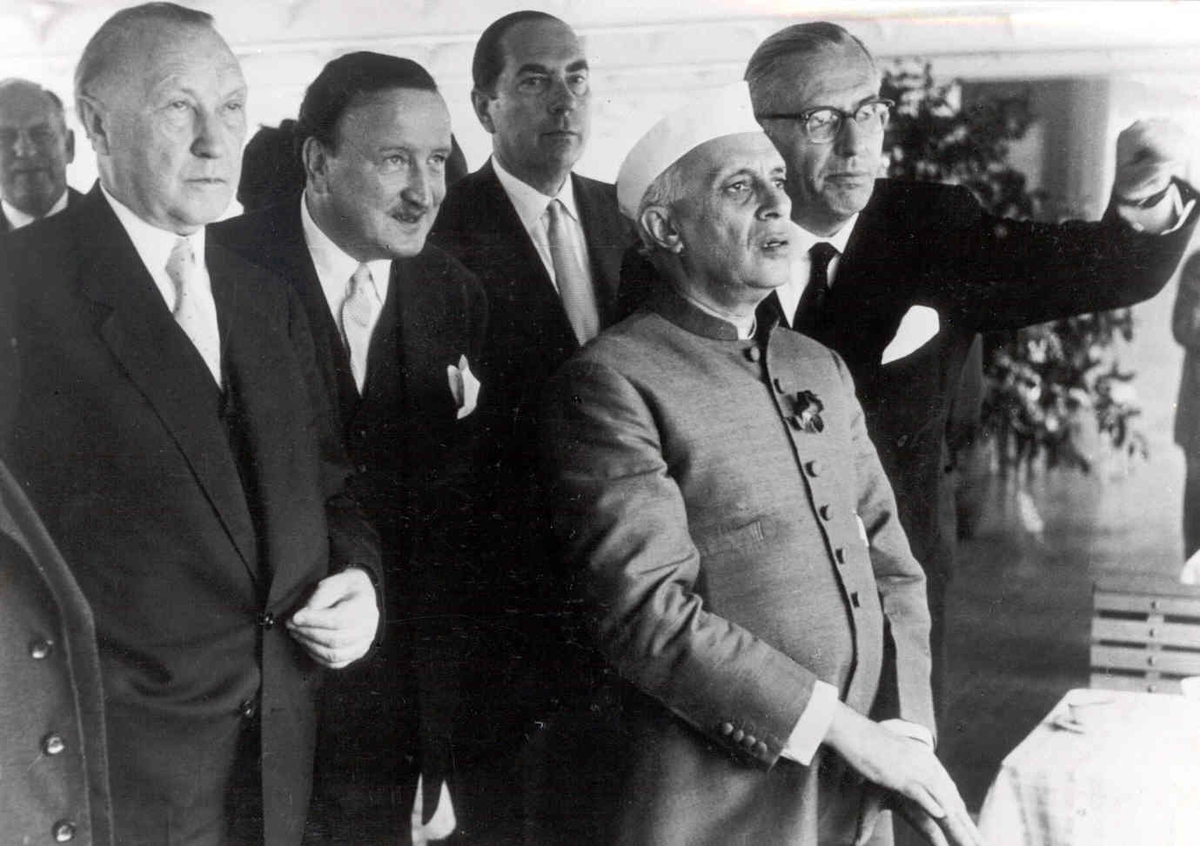
Nehru's strategic meeting with Adenauer accelerates India's industrialization agenda through German collaboration.
India
Political
5 min read
Updated By: History Editorial Network (HEN)
Published:
Updated:
Jawaharlal Nehru's meeting with German Chancellor Konrad Adenauer marked a pivotal point in India's post-independence industrialization agenda. Nehru, India's first Prime Minister, had set forth an ambitious vision of transforming the largely agrarian society into a modern industrialized nation. Recognizing the need for international cooperation and advanced technological input, Nehru sought to establish ties with leading industrial nations.
The meeting with Chancellor Adenauer was a strategic move. West Germany, at the time, was emerging as an industrial powerhouse post-World War II. Adenauer's leadership had contributed significantly to West Germany's economic recovery and its establishment as a key player on the global stage. By securing Germany's support, Nehru aimed to tap into German expertise, technology, and capital, which were crucial for India's developmental projects.
This diplomatic engagement led to multiple collaborations between India and West Germany. German firms began investing in Indian infrastructure projects and industrial ventures. These partnerships resulted in the establishment of large-scale industries and the transfer of technology, which were critical for India's planned economy and its drive towards self-sufficiency.
The impact of this collaboration was reflected in several areas. Notably, there was a significant boost in sectors such as steel production, automotive manufacturing, and engineering. Industrialization gathered momentum, contributing to increased employment, modernization of the manufacturing sector, and overall economic growth. Furthermore, educational exchanges and technical training programs facilitated skill development among Indian workers and engineers.
During this period, India experienced an annual growth rate of around 3.5%, a notable improvement compared to pre-independence years. The gross industrial output saw substantial increases, underscoring the effectiveness of these international partnerships in achieving Nehru’s industrial goals.
Overall, the meeting between Nehru and Adenauer was a cornerstone in India's journey towards industrialization, reflecting the importance of diplomatic and economic collaborations in national development.
#MoofLife #Nehru #Adenauer #IndiaGermanyRelations #Industrialization #EconomicCollaboration
Explore the Life Moments of
 AI Twin