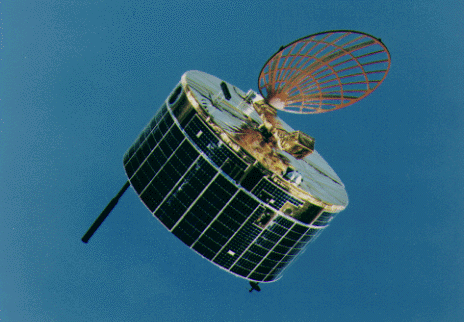
Space probe Sakigake passes Earth
Japan

Science
Technology
4 min read
Updated By: History Editorial Network (HEN)
Published:
The Japanese space probe Sakigake made a historic pass by Earth, marking a milestone in Japan's space exploration efforts. Launched in 1985, Sakigake was Japan's first interplanetary spacecraft and aimed to study solar wind and cosmic rays. As it approached Earth, the spacecraft relayed valuable data back to scientists, contributing to our understanding of the solar system.
Sakigake's journey demonstrated Japan's growing expertise in space technology and research. The successful Earth pass proved Japan's capabilities in interplanetary missions and paved the way for future endeavors in space exploration. It showcased Japan as a key player in the international space community, earning recognition for its scientific achievements and technological advancements.
The event sparked excitement and pride among the Japanese people, as they celebrated the success of their country's space program. It inspired a new generation of scientists and engineers to pursue careers in space exploration, further fueling Japan's aspirations for future space missions. Sakigake's mission served as a testament to Japan's commitment to pushing the boundaries of exploration and knowledge, positioning the country as a significant presence in the global space industry.
The Japanese space probe Sakigake passing by Earth was a momentous achievement for Japan, underscoring its progress in space exploration and scientific research. It symbolized Japan's dedication to innovation and discovery, leaving a lasting impact on the nation's space ambitions.
#JapanSpaceExploration #SakigakeMission #InterplanetaryExploration #ScientificAchievement

Explore the Life Moments of
 AI Twin