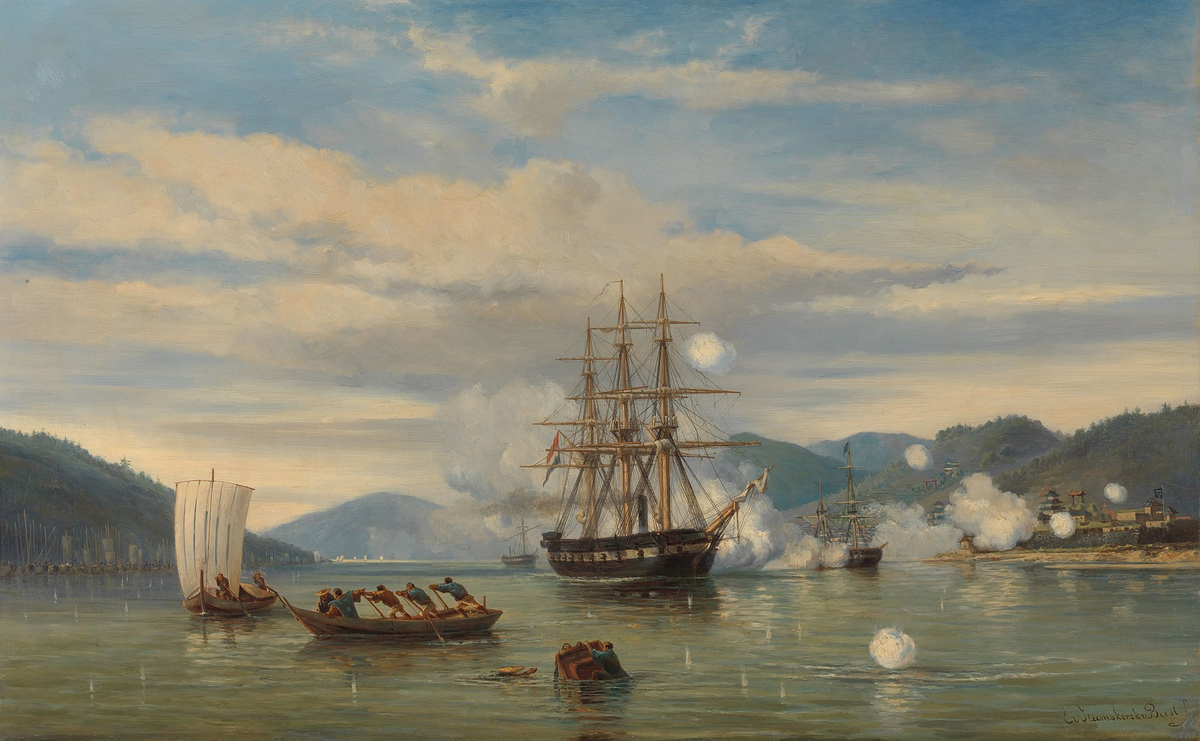
Naval attack on Japan's Shimonoseki Straits
Japan

Political
4 min read
Updated By: History Editorial Network (HEN)
Published:
In the mid-19th century, Japan was undergoing political turmoil due to the decline of the Tokugawa shogunate and the push for modernization. In this context, the European powers of Britain, France, and the Netherlands sought to assert their influence in the region.
The British, French, and Dutch fleets initiated an attack on Japan in the Shimonoseki Straits, aiming to punish the feudal lord of Choshu domain for disrupting foreign shipping and attacking Western vessels. The confrontation marked a significant moment in Japan's history, highlighting the clash between traditional isolationist policies and Western imperialism.
The attack on Shimonoseki resulted in a decisive victory for the European powers, demonstrating their superior firepower and naval capabilities. The punitive expedition forced Japan to open up further to foreign trade and sign treaties allowing Western powers to establish legations in the country. This event served as a catalyst for Japan's rapid modernization and eventual transition into a global industrial power.
Ultimately, the British, French, and Dutch fleets' assault on Japan in the Shimonoseki Straits underscored the shifting power dynamics in the region and the inevitability of Japan's integration into the world economy. The event highlighted the challenges faced by traditional societies in the face of Western imperialism and the transformative impact of external pressure on domestic politics and policies.
#Japan #ShimonosekiStraits #EuropeanPowers #Imperialism #Modernization

Explore the Life Moments of
 AI Twin