Alliance Strengthened: US-Japan Security Treaty Signed
Japan
Political
Global Trade.
4 min read
Updated By: History Editorial Network (HEN)
Published:
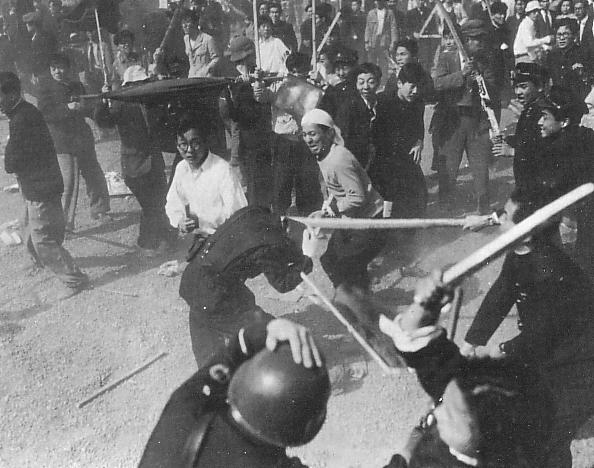
the Treaty of Mutual Cooperation and Security between the United States and Japan was signed, symbolizing a pivotal moment in the post-World War II era. This treaty emerged against the backdrop of the Cold War, with both nations recognizing the strategic importance of enhancing their security cooperation in the face of growing regional threats, particularly from the Soviet Union and China.
The treaty solidified the alliance between the United States and Japan, establishing the United States as a key security partner for Japan in the Asia-Pacific region. It granted the United States the right to maintain military bases in Japan, enhancing its ability to project power in the region and ensuring Japan's security in the face of external threats. In return, the United States pledged to defend Japan in the event of an armed attack, underscoring the commitment to mutual security shared by both nations.
The signing of the treaty had a profound impact on the geopolitical landscape of East Asia, helping to stabilize the region and prevent the spread of communism. It also marked a significant milestone in Japan's post-war reintegration into the international community, signaling its transition from a defeated aggressor to a key ally in the fight against common threats.
To this day, the Treaty of Mutual Cooperation and Security remains a cornerstone of the U.S.-Japan alliance, serving as a testament to the enduring partnership between the two nations. It continues to shape their security cooperation and influence their strategic calculus in the Asia-Pacific region, highlighting the importance of multilateral alliances in maintaining peace and stability in an increasingly complex global environment.
#USJapanAlliance #ColdWar #SecurityCooperation #Geopolitics #EastAsia.
Explore the Life Moments of
 AI Twin