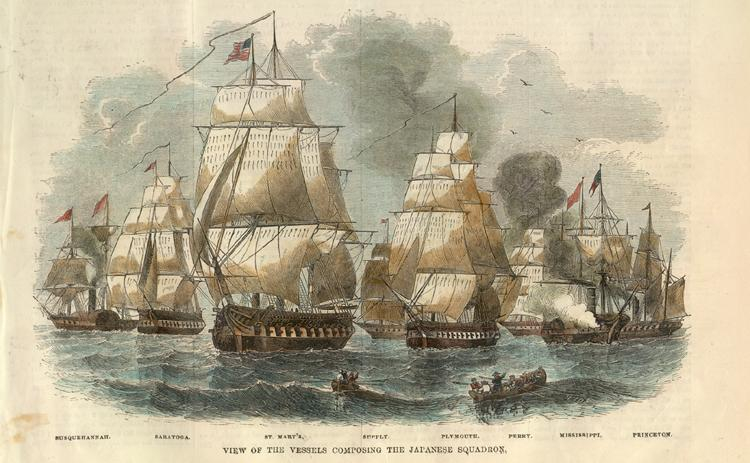
Russian Fleet Arrival in Nagasaki
Japan
Political
4 min read
Updated By: History Editorial Network (HEN)
Published:
In 1853, the arrival of the Russian fleet at Nagasaki, Japan marked a crucial point in the country's history. The appearance of Russian warships led by Admiral Yevfimy Putyatin sparked fear and uncertainty among the Japanese people and authorities. At that time, Japan was under the strict isolationist policy known as sakoku, which limited foreign interactions to a few designated ports.
The unexpected arrival of the Russian fleet highlighted the vulnerability of Japan's coastal defenses and its lack of preparedness to deal with foreign powers seeking to establish trade and diplomatic relations. The event also brought to the forefront the necessity for Japan to modernize its military and diplomatic strategies to protect its sovereignty and interests.
The Japanese officials, led by representatives from the Tokugawa shogunate, engaged in negotiations with Putyatin to address the situation and prevent any potential conflicts. This encounter paved the way for the eventual opening of Japan to trade with Western powers, culminating in the signing of the Treaty of Shimoda in 1855.
The Russian fleet's arrival at Nagasaki served as a wake-up call for Japan, prompting the country to reevaluate its isolationist policies and embark on a path of modernization and engagement with the international community. This event played a significant role in shaping Japan's future diplomatic relations and contributed to the end of the Tokugawa shogunate's rule.
The presence of the Russian fleet in Nagasaki underscored the shifting dynamics in East Asia and the growing influence of Western powers in the region. It marked the beginning of Japan's journey towards modernization and eventual emergence as a major global player.
#OpeningToTheWest #Modernization #DiplomaticRelations

Explore the Life Moments of
 AI Twin