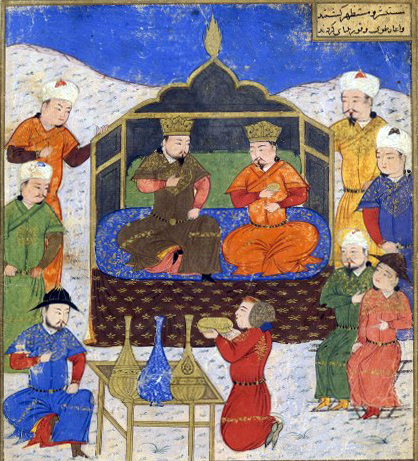
The Death of Oljeitu: Disintegration of the Ilkhanate
Political
4 min read
Updated By: History Editorial Network (HEN)
Published:
Oljeitu's death in 1316 marked the end of a competent ruler's reign over the Ilkhanate, a vast empire in the Middle East. Oljeitu's leadership had brought stability and prosperity to the region, but his passing led to a power struggle among his successors. This infighting weakened the Ilkhanate, paving the way for its eventual disintegration.
As the last Ilkhan ruler capable of maintaining control, Oljeitu's death created a vacuum of power that various factions sought to fill. His heirs were unable to maintain unity among themselves, allowing rival nobles and neighboring powers to exploit the situation. The lack of a strong central authority led to internal strife and external pressures, hastening the decline of the Ilkhanate.
The disintegration of the Ilkhanate had far-reaching consequences, affecting not only the political landscape of the region but also its cultural and economic dynamics. The loss of centralized rule disrupted trade routes, leading to economic hardship for the population. Furthermore, the breakdown of order resulted in social instability and widespread suffering.
Amidst the chaos that followed Oljeitu's death, the once-mighty Ilkhanate fractured into smaller entities and lost its influence over the region. The event served as a turning point in the history of Iran and the Middle East, reshaping power dynamics and setting the stage for the rise of new ruling powers.
#Oljeitu #Ilkhanate #Disintegration #PowerStruggle #MiddleEast #Iran #HistoricalTurningPoint
Primary Reference
WOMEN IN MONGOL IRAN

Explore the Life Moments of
 AI Twin