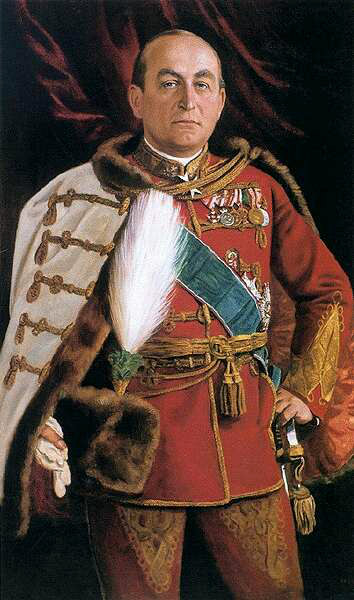
Gyula Gömbös: New Prime Minister establishes authoritarian regime.
Hungary
Political
Economic Downturn
5 min read
Updated By: History Editorial Network (HEN)
Published:
In the early 1930s, Hungary faced severe economic and political challenges. The Great Depression had strained the nation's economy, leading to widespread unemployment and social unrest. Amidst this turmoil, Gyula Gömbös, an army officer and politician with nationalistic views, ascended to the position of Prime Minister. His rise marked a shift towards a more centralized and authoritarian regime.
Gömbös advocated for a strong, centralized government and sought to implement extensive reforms. He sought to align Hungary more closely with fascist Italy and Nazi Germany, reflecting his belief in the authoritarian models espoused by these regimes. His administration worked to curtail civil liberties, consolidate power, and suppress political opposition.
One of Gömbös' first moves was to strengthen the executive branch, reducing the influence of Parliament. He also sought to centralize control over the media, restricting freedom of speech and ensuring government narratives dominated public discourse. His government implemented policies aimed at economic self-sufficiency, attempting to mitigate the impact of the global depression through state intervention and economic planning.
Gömbös' government also emphasized the importance of national unity, often at the expense of minority rights. This period saw increased scrutiny and regulation of ethnic minority groups. Critics argue that Gömbös’ policies laid the groundwork for the further erosion of democratic institutions in Hungary, contributing to the political climate that would pave the way for more extreme authoritarian rule in later years.
The impact of Gömbös' tenure was significant in shaping Hungary’s political landscape. His approach to governance left a lasting imprint on the nation's political culture, steering it further from democratic principles and towards authoritarianism. Gömbös' legacy is seen as a crucial period that influenced Hungary's subsequent political developments and its alignment with Axis powers during World War II.
#HungaryHistory #PoliticalShift #EconomicCrisis #Authoritarianism #NationalUnity #CivilLiberties #MediaControl #EconomicReforms #PowerConsolidation #MoofLife
Primary Reference
PEN (Organization): An Inventory of Its Records at the Harry ...

Explore the Life Moments of
 AI Twin