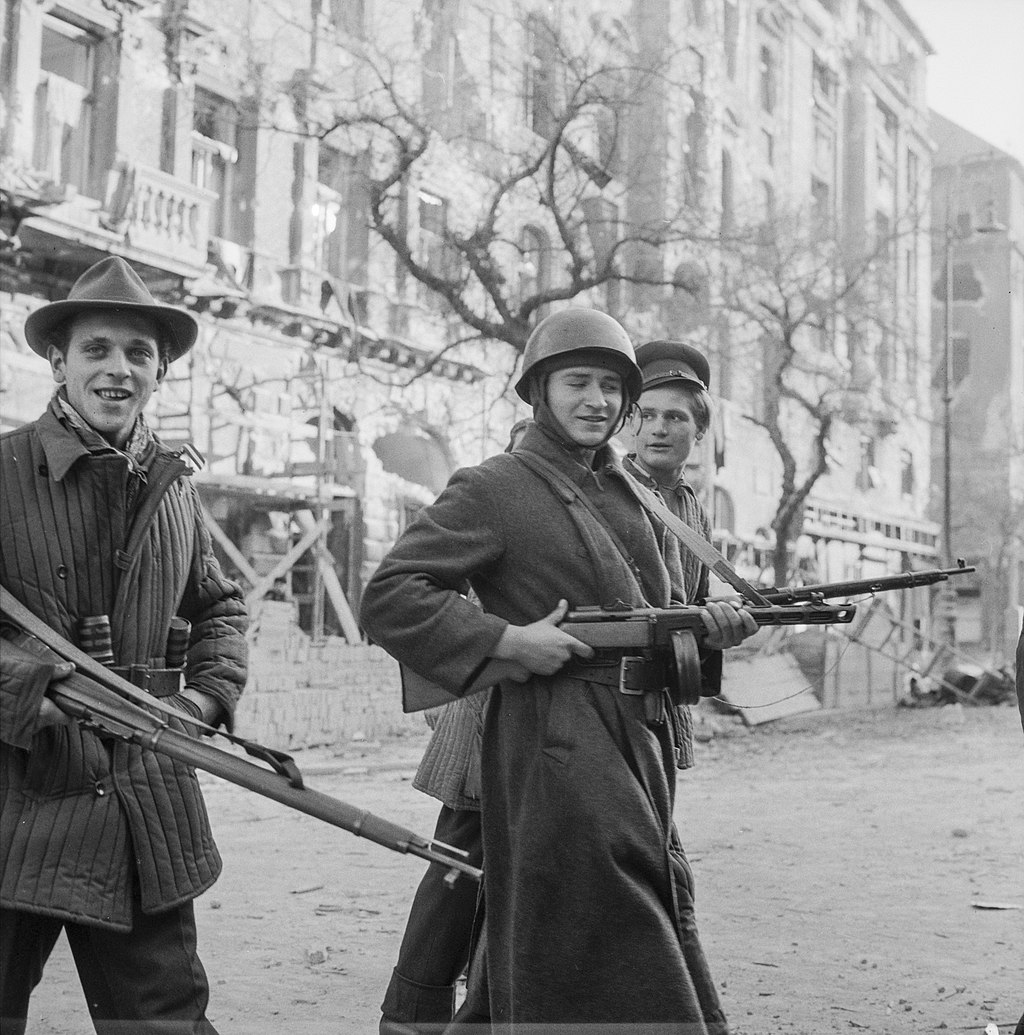
Revolution against Soviet Rule in 1956
Hungary

PoliticalResistance
5 min read
Updated By: History Editorial Network (HEN)
Published:
In the midst of a Cold War landscape, Hungary experienced a critical uprising against Soviet dominance. Prior to this eruption, Hungary had been under the stringent control of the Soviet Union, which imposed a communist regime that heavily restricted political freedoms and economic reforms. The Hungarian populace grew increasingly discontent with the oppressive governance, economic hardships, and lack of political freedom.
On that fateful day in October, thousands of Hungarian citizens mobilized in Budapest to demand an end to Soviet rule. The movement began as a student-led demonstration that rapidly garnered mass support, evolving into a nationwide revolt. The protesters called for political reforms, freedom of speech, release of political prisoners, and the withdrawal of Soviet troops from Hungary.
One of the notable aspects of the uprising was the initial success against Soviet forces. Hungarian revolutionaries managed to take control of key positions in Budapest, and Imre Nagy, a reformist politician, was reinstated as Prime Minister. Under Nagy’s leadership, the government declared Hungary's intention to withdraw from the Warsaw Pact, seeking neutrality and aiming for democratic reforms.
However, this period of relative freedom was short-lived. The Soviet Union, unwilling to lose its grip on Hungary, launched a massive military intervention. Soviet tanks and troops entered Budapest and other cities, resulting in fierce battles. Despite the valiant resistance of the Hungarian fighters, the Soviet forces overwhelmed them with superior numbers and firepower.
The conflict led to significant casualties, with estimates of Hungarian deaths ranging between 2,500 to 3,000, while Soviet losses were also substantial. Thousands of Hungarians were arrested, executed, or imprisoned in the aftermath. Additionally, about 200,000 Hungarians fled the country as refugees. The uprising was ultimately crushed, and Soviet control was re-established, but the event left an indelible mark on Hungarian society and the global Cold War narrative.
The Hungarian Revolution of 1956 remains a poignant example of the desire for freedom and resistance against oppressive regimes. The sacrifices made by the Hungarian people continue to be remembered as a pivotal point in the struggle for national sovereignty and democratic governance.
#MoofLife #HungarianRevolution #SovietRule #ColdWarHistory #DemocraticReforms #PoliticalUprising #HistoricalResistance
Primary Reference
Hungarian Revolution of 1956 - Wikipedia

Explore the Life Moments of
 AI Twin