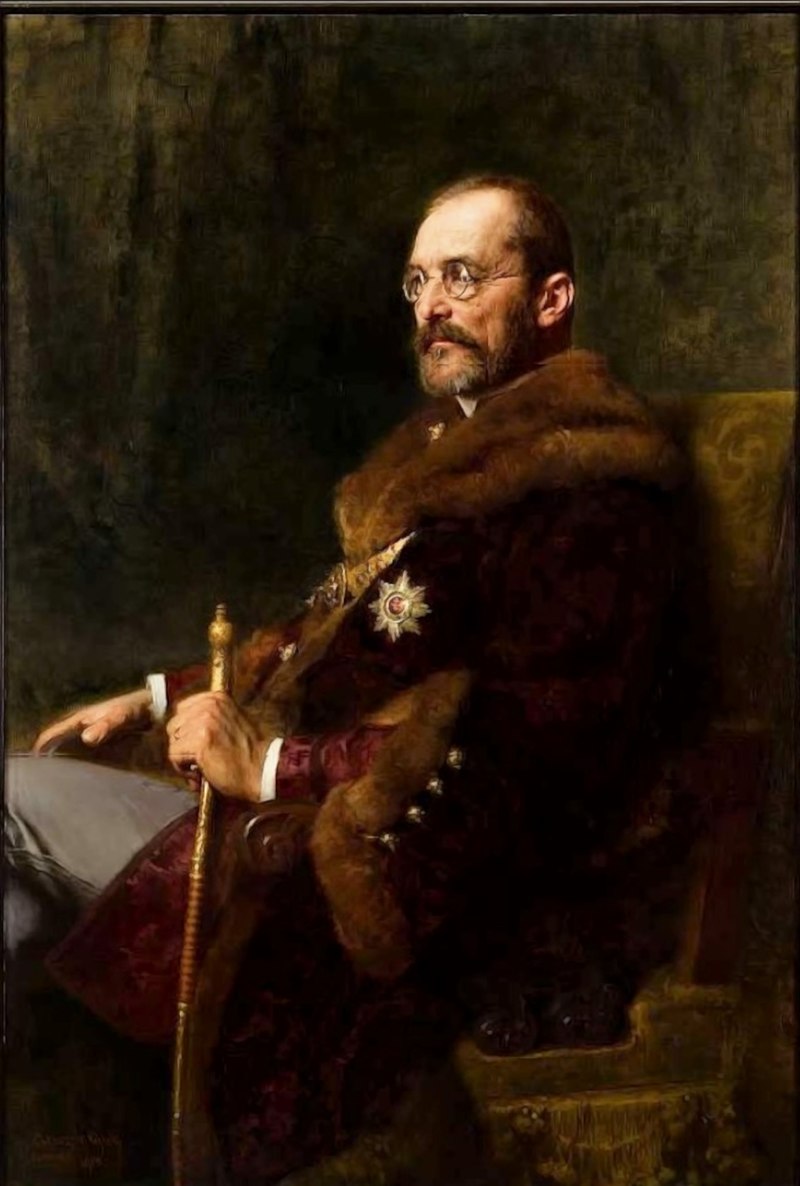
Count István Tisza: Prime Minister and Political Influence in Early 20th Century
Hungary
Political
5 min read
Updated By: History Editorial Network (HEN)
Published:
Count István Tisza ascended to the position of Prime Minister of Hungary, marking a pivotal shift in early 20th-century Hungarian politics. Born into an influential political family, Tisza brought with him a background steeped in governance and public administration. Before assuming office, Tisza had already established himself as a prominent member of the Hungarian political landscape, having served in various capacities including speaker of the House of Representatives.
His tenure as Prime Minister coincided with a period of considerable social and political upheaval in Hungary, which was then part of the Austro-Hungarian Empire. Tisza was a strong advocate for maintaining the dual monarchy structure of Austria-Hungary, believing it was essential for Hungary's stability and growth. His policies often reflected a conservative approach, focusing on maintaining order and suppressing nationalist movements that threatened the unity of the empire.
One of Tisza's key initiatives was the introduction of electoral reforms aimed at broadening the electoral base while still safeguarding the interests of the aristocracy. Despite these efforts, his approach often led to friction with various ethnic groups within Hungary who demanded greater autonomy and representation.
Economically, Tisza's administration was marked by efforts to modernize Hungary's infrastructure, promoting industrialization and improving transportation networks. These measures helped to stimulate economic growth, although they often disproportionately benefited the elite classes and industrialists, which further exacerbated social tensions.
Statistics from this period indicate a notable increase in industrial output and railway expansion, but also a rise in political unrest and labor strikes. Tisza's uncompromising stance on maintaining the political status quo alienated many, leading to a polarized society.
Ultimately, Tisza's leadership was instrumental in shaping Hungary's political trajectory during a tumultuous era. His commitment to the dual monarchy and conservative policies left an indelible mark on the nation's history, setting the stage for future conflicts and transformations within the region.
#PoliticalLeadership #HungarianHistory #AustroHungarianEmpire #CountIstvánTisza #Early20thCentury #MoofLife

Explore the Life Moments of
 AI Twin