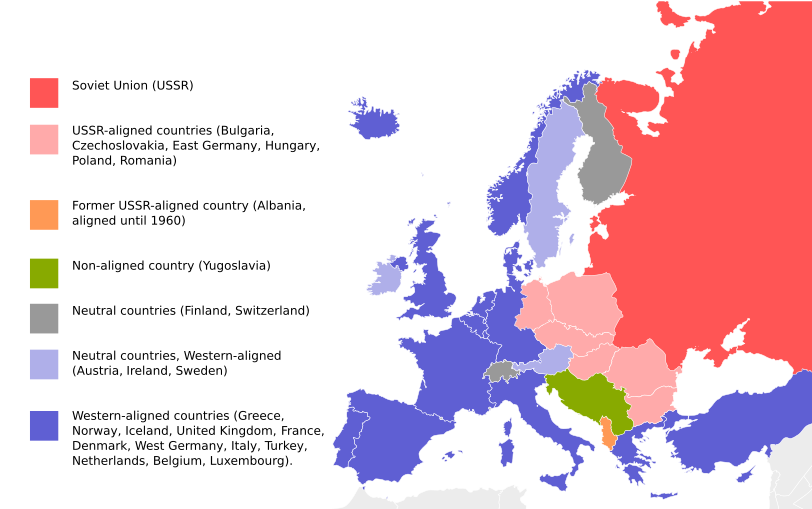
Formation of Economic Assistance Council in Eastern Europe with other Communist Bloc nations.
Hungary
Political
Economic Integration
6 min read
Updated By: History Editorial Network (HEN)
Published:
In the aftermath of World War II, the geopolitical landscape was significantly altered, leading to the formation of economic alliances that reflected the growing ideological divide between the Eastern and Western Blocs. One such alliance was the Council of Mutual Economic Assistance (Comecon), established by the Soviet Union and several Eastern European countries. The aim was to foster economic cooperation among socialist states and serve as a counterweight to the Western European nations' Marshall Plan.
The creation of Comecon was rooted in the need for a coordinated effort towards economic recovery and integration among the Eastern Bloc countries. Hungary, along with the Soviet Union, Bulgaria, Czechoslovakia, Poland, and Romania, became a founding member. The objective was to develop and optimize the socialist economies through mutual assistance, which was expected to accelerate industrialization, improve resource allocation, and ensure economic interdependence among member states.
Comecon facilitated various joint projects and standardized economic activities by promoting specialized production. Hungary, with its focus on heavy industry and agriculture, benefited from this regional cooperation. Industrial output in Hungary saw considerable growth during the early years of Comecon's operation. The establishment of Comecon also intended to minimize economic disparities within the socialist bloc and create a more balanced economic development.
Economic collaboration under Comecon went beyond bilateral agreements, often involving multilateral projects that aimed at technological advancements and resource sharing. Hungary, like its counterparts, engaged in numerous initiatives designed to increase productivity and develop infrastructure. These included large-scale industrial complexes and energy projects that leveraged the collective resources and technical know-how of all members.
Despite challenges and varying degrees of economic success among member states, Comecon played a pivotal role in shaping the economic policies within the Eastern Bloc. It provided an alternative model of economic integration distinct from capitalist market economies, emphasizing centralized planning and state ownership of resources.
While Comecon's effectiveness and efficiency have been subjects of debate, its formation marked a critical juncture in the economic history of the socialist states and highlighted the ideological rift of the Cold War era.
#ColdWarEconomics #EasternBlocCooperation #SocialistEconomies #HungaryInComecon #MoofLife
Primary Reference
Comecon | Soviet-Led Economic Alliance & Cold War History ...

Explore the Life Moments of
 AI Twin