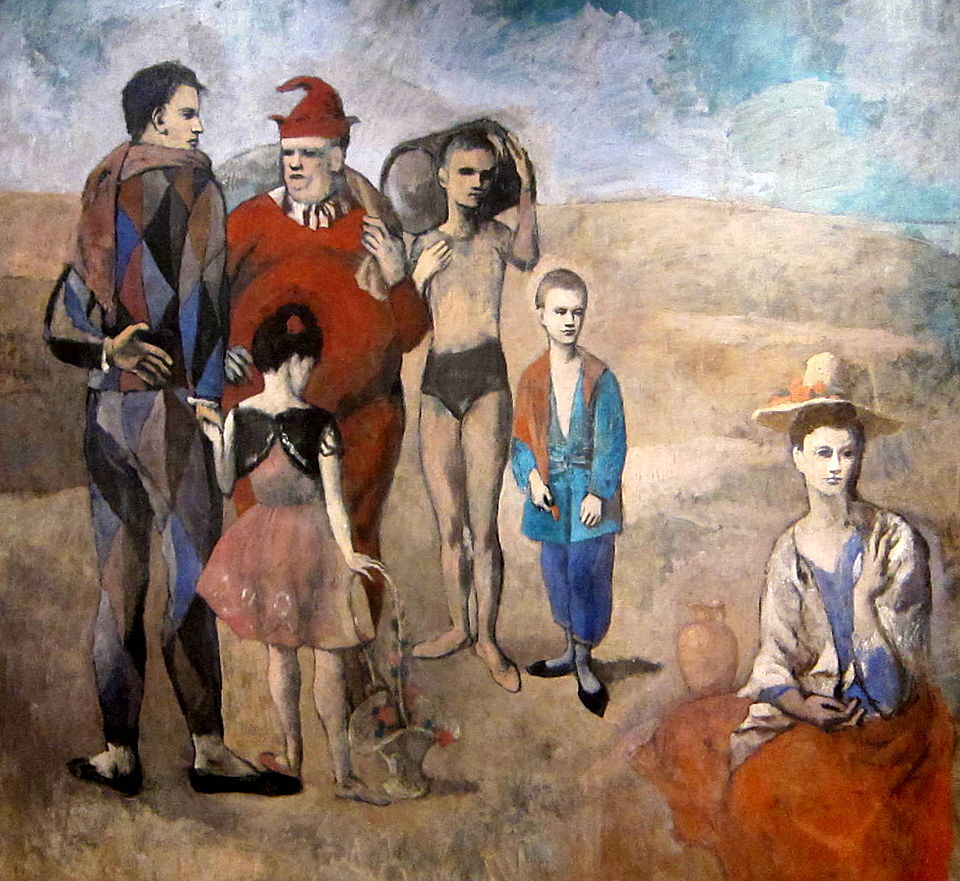
Pablo Picasso's Artistic Legacy and Family Life
Paris, France
Art
Biography
4 min read
Updated By: History Editorial Network (HEN)
Published:
Updated:
Pablo Picasso, a pivotal figure in 20th-century art, is renowned for his innovative contributions that transformed the landscape of modern art. His work during the Rose Period, particularly the painting 'Family of Saltimbanques,' reflects a significant shift in his artistic style, moving from the somber tones of his Blue Period to a more vibrant palette. This period is characterized by themes of circus performers and the exploration of human emotion, showcasing a blend of melancholy and warmth. The 'Family of Saltimbanques' features a group of itinerant circus performers, symbolizing the artist's fascination with the marginalized and the complexities of human relationships. This painting not only highlights Picasso's evolving style but also serves as a commentary on the social dynamics of the time, illustrating the struggles and resilience of those living on the fringes of society.
Picasso's artistic legacy extends beyond his individual works; it encompasses his influence on various art movements, including Cubism, which he co-developed with Georges Braque. This movement marked a radical departure from traditional perspectives, emphasizing fragmented forms and multiple viewpoints. The principles of Analytic Cubism, which emerged from this collaboration, further revolutionized the way art was perceived and created. Picasso's family life also played a crucial role in shaping his artistic vision. His relationships, particularly with women, often inspired his work, leading to a rich exploration of themes such as love, loss, and identity. The interplay between his personal experiences and artistic endeavors contributed to a body of work that remains influential, inspiring countless artists and movements long after his passing.
#mooflife
#MomentOfLife
#PabloPicasso
#ArtisticLegacy
#FamilyOfSaltimbanques
#RosePeriod
#Cubism
Primary Reference
Family of Saltimbanques

Explore the Life Moments of
 AI Twin