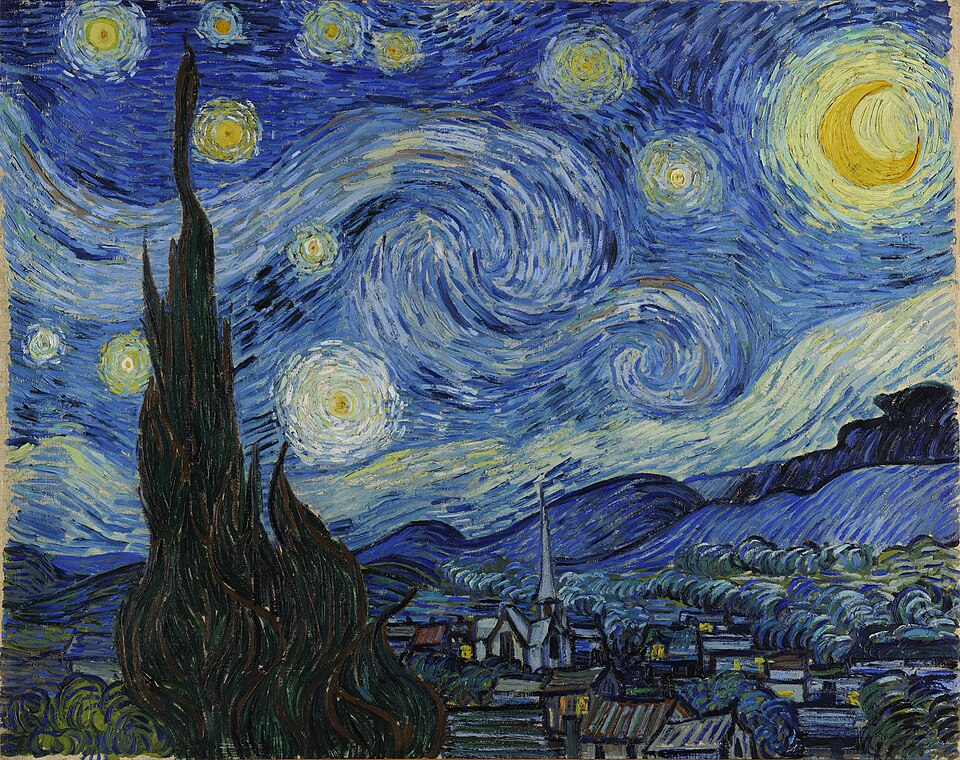
The Starry Night by Vincent van Gogh
New York City, United States
Art
Post-Impressionism
Painting
3 min read
Updated By: History Editorial Network (HEN)
Published:
Updated:
Vincent van Gogh created 'The Starry Night' during his stay at the Saint-Paul-de-Mausole asylum in Saint-Rémy-de-Provence. This painting is a prime example of Post-Impressionism, a movement characterized by a focus on emotional expression and the use of vivid colors. Van Gogh's work reflects his personal struggles with mental health, as he sought solace in the beauty of the night sky. The swirling patterns and bold colors in 'The Starry Night' convey a sense of movement and turbulence, which can be interpreted as a reflection of the artist's inner turmoil. The cypress tree in the foreground, often associated with death, contrasts with the vibrant stars and moon, suggesting a connection between life and the cosmos.
The impact of 'The Starry Night' extends beyond its immediate aesthetic appeal. It has become one of the most recognized and celebrated works in Western art, influencing countless artists and movements. The painting is often analyzed for its innovative use of color and form, which broke away from traditional representation. Art historians note that Van Gogh's technique of applying paint in thick layers, known as impasto, adds a tactile quality to the work. Today, 'The Starry Night' is housed in the Museum of Modern Art in New York City, where it continues to attract millions of visitors each year, serving as a testament to Van Gogh's enduring legacy and the emotional depth of his art.
#mooflife
#MomentOfLife
#VincentVanGogh
#TheStarryNight
#Post-impressionism
#ArtHistory
#FamousPaintings
Primary Reference
The Starry Night

Explore the Life Moments of
 AI Twin