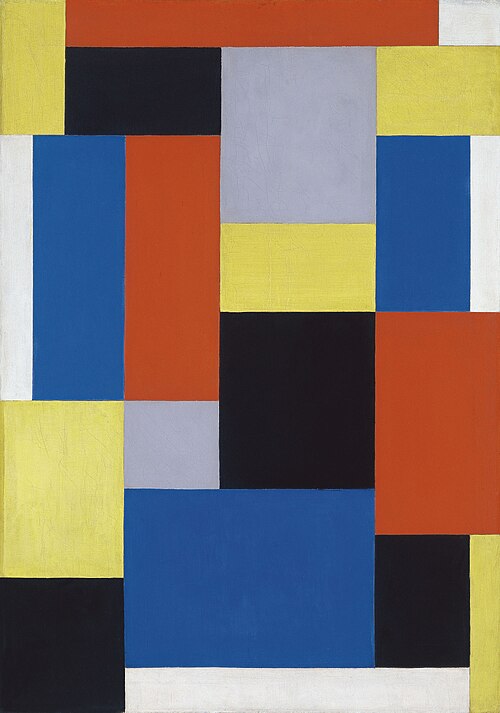
Theo van Doesburg's Composition XX
Italy
Art
De Stijl
Modernism
4 min read
Updated By: History Editorial Network (HEN)
Published:
Updated:
Theo van Doesburg's Composition XX is a notable work within the De Stijl art movement, which emerged in the early 20th century. This movement, characterized by a focus on abstraction and a reduction to the essentials of form and color, sought to express a new aesthetic that aligned with the modernist ideals of harmony and order. Composition XX exemplifies these principles through its geometric forms and primary color palette, which are hallmarks of De Stijl. Van Doesburg, a key figure in this movement, aimed to create a universal visual language that transcended individual expression, promoting a collective artistic vision. His work often incorporated horizontal and vertical lines, along with blocks of color, to create a sense of balance and structure, reflecting the underlying philosophy of the movement that art should be a reflection of the modern world.
The impact of Composition XX extends beyond its visual appeal; it represents a significant shift in the approach to art during its time. The De Stijl movement, which included other prominent artists like Piet Mondrian, influenced various fields, including architecture, design, and typography. The principles established by van Doesburg and his contemporaries laid the groundwork for later developments in abstract art and modern design. The emphasis on simplicity and functionality in Composition XX resonates with contemporary art and design practices, highlighting the enduring legacy of De Stijl. As a result, this artwork not only serves as a representation of its time but also continues to inspire and inform modern artistic endeavors.
#mooflife
#MomentOfLife
#TheoVanDoesburg
#CompositionXx
#DeStijl
#AbstractArt
#Modernism
Primary Reference
Composition XX

Explore the Life Moments of
 AI Twin