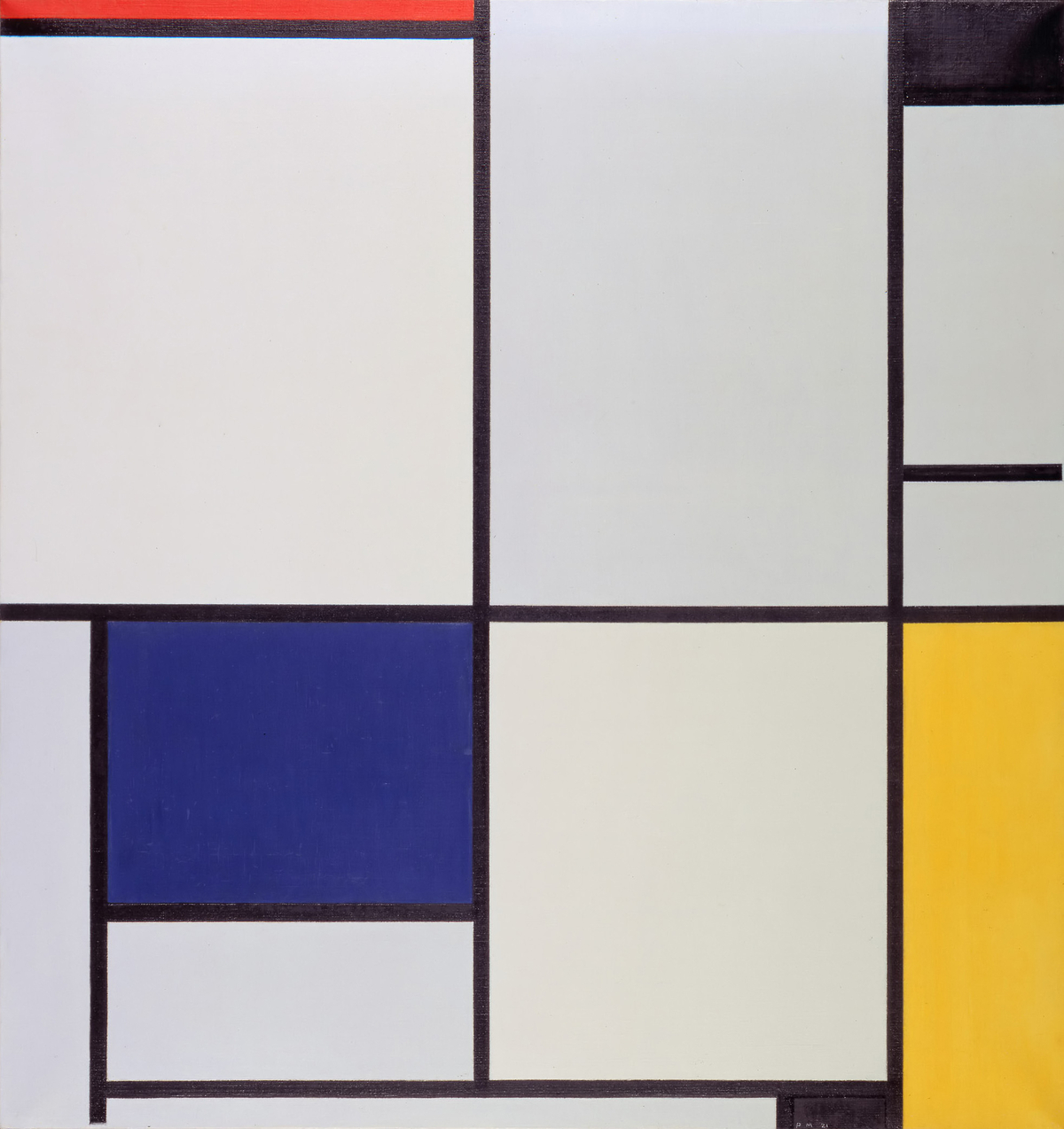
Piet Mondrian's Tableau I Artwork Overview
The Hague, Netherlands
Art
Painting
Modernism
4 min read
Updated By: History Editorial Network (HEN)
Published:
Updated:
Piet Mondrian's 'Tableau I' is a notable artwork that exemplifies the principles of the De Stijl movement, which emerged in the early 20th century. This movement, founded in the Netherlands, sought to create a new aesthetic language that emphasized abstraction and simplicity through geometric forms and primary colors. Mondrian, a key figure in this movement, aimed to express universal harmony and order through his art. 'Tableau I' reflects these ideals with its use of a grid structure, featuring rectangles and squares in a limited palette of red, blue, yellow, black, and white. This composition not only showcases Mondrian's mastery of balance and proportion but also serves as a visual representation of his philosophical beliefs about art and life.
The impact of 'Tableau I' extends beyond its aesthetic qualities; it has influenced various fields, including architecture, design, and modern art. The work is often cited as a precursor to minimalism and has inspired countless artists and designers to explore abstraction and the use of color in innovative ways. Mondrian's approach to composition, characterized by a strict adherence to horizontal and vertical lines, has become a defining feature of modern art. The artwork is housed in a prominent museum, where it continues to attract attention and provoke discussion about the relationship between art, geometry, and the underlying structures of reality. Through 'Tableau I', Mondrian not only contributed to the De Stijl movement but also left a lasting legacy that resonates in contemporary art and design.
#mooflife
#MomentOfLife
#PietMondrian
#TableauI
#DeStijl
#ModernArt
#AbstractArt
Primary Reference
Tableau I, 1921 by Piet Mondrian

Explore the Life Moments of
 AI Twin