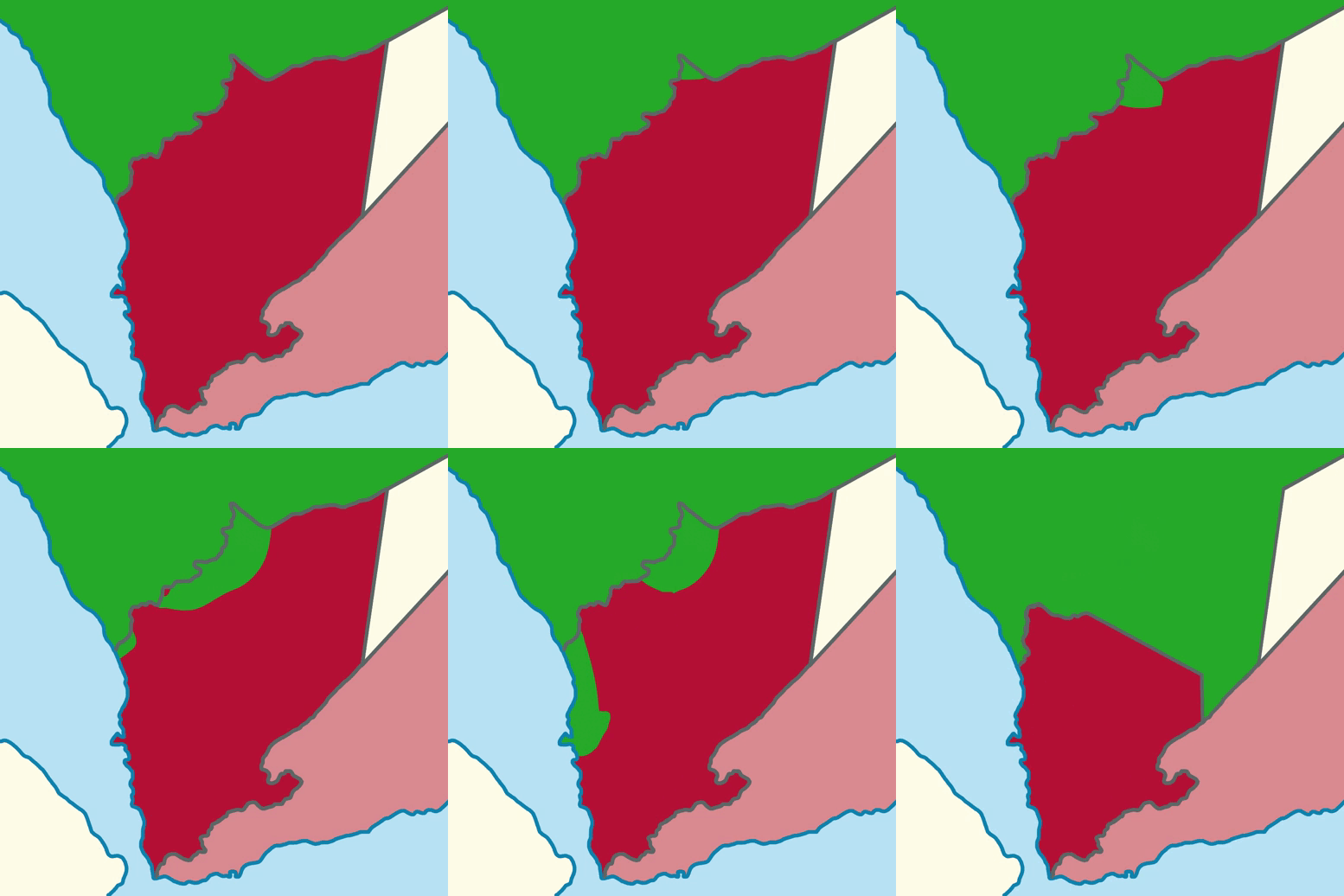
Saudi–Yemeni war (1934)
Yemen
Military History
Middle Eastern Politics
International Relations
6 min read
Updated By: History Editorial Network (HEN)
Published:
Updated:
On 20/03/1934, the Kingdom of Saudi Arabia officially declared war on the Mutawakkilite Kingdom of Yemen, beginning a short but consequential conflict between the two neighboring states. The war centered on territorial disputes involving the regions of Asir, Jazan, and Najran, areas along the southern Arabian frontier claimed by both governments during a period of regional state formation and political consolidation.
At the time, Saudi Arabia under King Abdulaziz Ibn Saud had recently unified much of the Arabian Peninsula and formally established the Kingdom of Saudi Arabia in 1932. Meanwhile, North Yemen was ruled by Imam Yahya Hamid al Din, leader of the Mutawakkilite Kingdom of Yemen. Tensions between the two countries had been rising over control of border territories inhabited by tribes with historical ties to both sides.
The immediate causes of the conflict included disputes over sovereignty in Asir, Najran, and Jazan, along with Yemeni attempts to expand political influence into areas that Saudi Arabia regarded as part of its territory. Border clashes and tribal confrontations increased during the early months of 1934, eventually leading Saudi Arabia to launch military operations against Yemeni forces.
Saudi troops advanced rapidly during the campaign, capturing several important towns and coastal areas. Saudi naval forces also operated in the Red Sea, while Yemeni resistance faced logistical and military disadvantages. Fighting took place across mountainous frontier regions as well as along parts of the Tihama coastal plain. Despite the limited duration of the war, the conflict demonstrated the growing military strength of the newly established Saudi state.
The fighting ended later in 1934 with the signing of the Treaty of Taif on 20/05/1934. Under the agreement, Yemen recognized Saudi control over Asir, Jazan, and Najran, while both countries agreed to establish a framework for future relations and border arrangements. The treaty significantly reduced immediate tensions between the two kingdoms and became the basis for later border negotiations during the twentieth century.
Although the 1934 conflict was relatively brief, its consequences shaped Saudi Yemeni relations for decades. Disagreements over sections of the frontier continued periodically until the signing of the Treaty of Jeddah in 2000, which finalized the modern border between the two countries.
Historical Significance
The 1934 Saudi Yemeni War played a major role in defining the territorial boundaries of the modern Arabian Peninsula. The conflict strengthened Saudi Arabia’s control over disputed southern regions and established diplomatic foundations that continued to influence relations between Saudi Arabia and Yemen throughout the twentieth century.
#mooflife
#MomentOfLife
#Ceasefire
#Treaty
#BritishInfluence
#SaudiArabia
#Yemen
Primary Reference
Saudi–Yemeni war (1934)

Explore the Life Moments of
 AI Twin