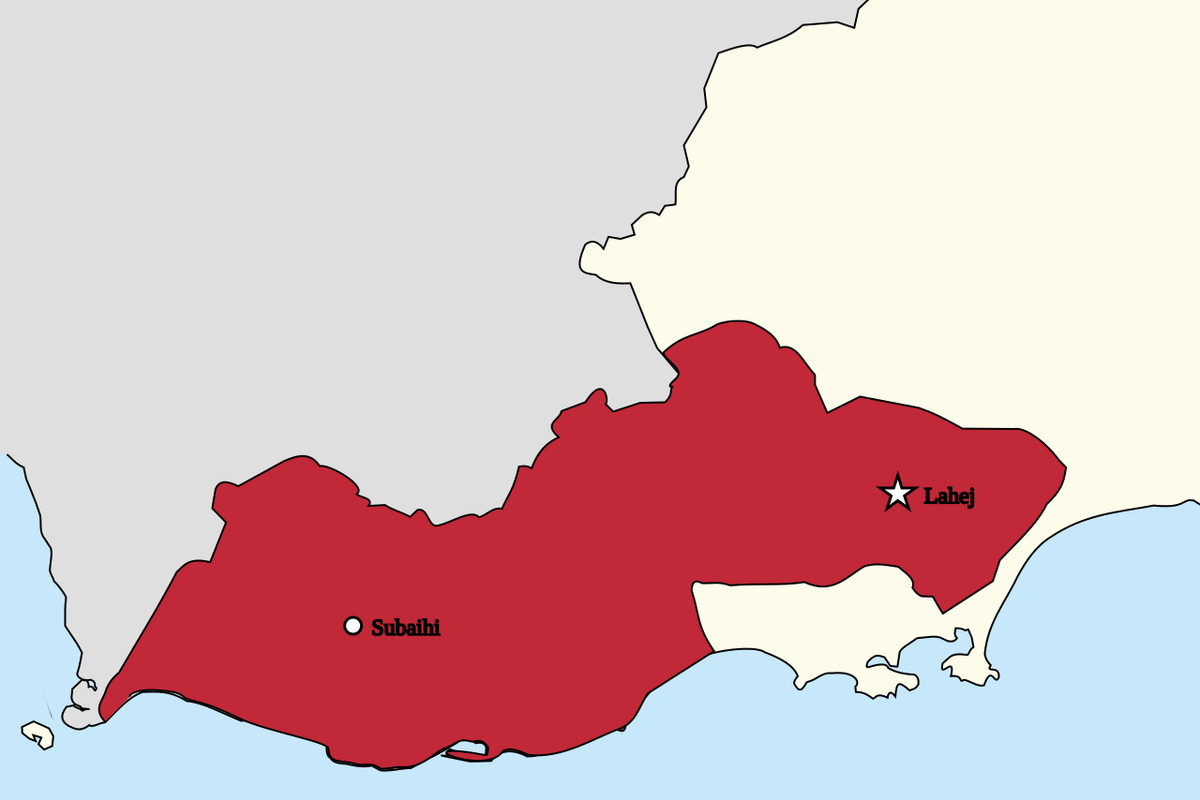
The 1735 Capture of Aden by Fadl ibn Ali and the Expansion of the Sultanate of Lahej
Aden and Lahej, Southern Arabia
Political
Sustainability
6 min read
Updated By: History Editorial Network (HEN)
Published:
Updated:
In 1735, Fadl ibn Ali al Abdali, leader of the Abdali tribe, captured the important port city of Aden, significantly expanding the influence of the Sultanate of Lahej in southern Arabia. The seizure of Aden marked a turning point in regional politics and strengthened the Abdali rulers as one of the leading powers in southern Yemen during the eighteenth century.
At the time, political authority in Yemen was fragmented among tribal confederations, local dynasties, and the Zaydi Imamate based in the northern highlands. Although the Abdali rulers of Lahej had previously operated within the broader sphere of influence of the Imamate, weakening central authority and regional rivalries created opportunities for greater local independence.
Fadl ibn Ali al Abdali emerged as a powerful tribal and political leader during this period of instability. By capturing Aden, he gained control over one of the Arabian Peninsula’s most strategically important ports. Aden had long served as a commercial center connecting trade routes across the Red Sea, the Indian Ocean, East Africa, and South Asia. Control of the port brought economic advantages through customs revenues, maritime trade, and influence over regional shipping activity.
The conquest also elevated the political status of the Sultanate of Lahej. The Abdali rulers increasingly acted as independent regional authorities rather than tributaries subordinate to the Zaydi Imamate. Their influence extended across surrounding territories in southern Yemen, strengthening the position of Lahej in local power struggles and regional diplomacy.
Despite its strategic importance, Aden experienced periods of economic decline during parts of the eighteenth century as shifts in global trade routes affected Red Sea commerce. Nevertheless, the port remained valuable because of its natural harbor and geographic location near the Bab el Mandeb Strait, which linked the Red Sea with the Gulf of Aden and the Indian Ocean.
The Abdali dynasty continued to govern Lahej and Aden for generations, though regional politics shifted dramatically during the nineteenth century. In 1839, British forces captured Aden from the Sultan of Lahej, beginning more than a century of British colonial presence in southern Arabia. Even after the loss of Aden, the Sultanate of Lahej survived as a British protected state within the Aden Protectorate.
Historical Significance
The capture of Aden in 1735 strengthened the rise of the Sultanate of Lahej as a major regional power in southern Arabia. Control of the port increased the Abdali dynasty’s political and economic influence and helped shape the later history of Aden as a strategic center contested by regional and global powers.
Primary Reference
Timeline of Yemeni history

Explore the Life Moments of
 AI Twin