The merger of North and South Yemen
Sana'a and Aden, Yemen
Politics
International Relations
7 min read
Updated By: History Editorial Network (HEN)
Published:
Updated:
On 22/05/1990, the Yemen Arab Republic, commonly known as North Yemen, and the People’s Democratic Republic of Yemen, known as South Yemen, officially united to create the Republic of Yemen. The merger ended decades of political division on the Arabian Peninsula and established a single Yemeni state with Sana'a designated as the capital.
The unification agreement brought together two governments with different political systems and historical alliances. North Yemen had operated as a republican state under President Ali Abdullah Saleh, while South Yemen had been governed by the socialist Yemeni Socialist Party with close ties to the Soviet Union. Under the terms of the unification arrangement, Ali Abdullah Saleh became president of the new republic, and southern leader Ali Salim al Beidh assumed the position of vice president. A transitional power sharing government was also established to integrate political institutions, armed forces, and administrative systems from both states.
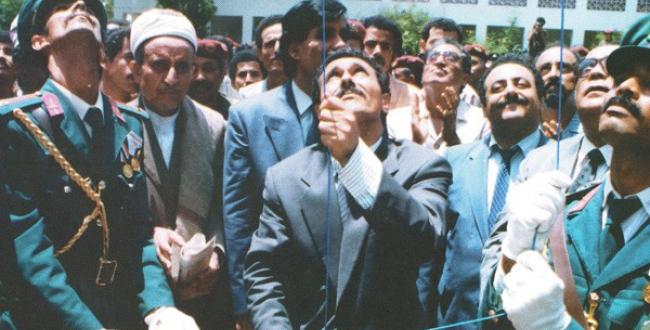
The formal declaration of unity was accompanied by national ceremonies and symbolic events across the country. One of the most recognized moments occurred in the southern port city of Aden, where the newly adopted Yemeni national flag of red, white, and black was raised to represent the unified republic. Citizens in both northern and southern regions celebrated the announcement, viewing it as the realization of long standing aspirations for Yemeni unity.
Several political and economic factors accelerated the move toward unification during the late 1980s. The end of the Cold War significantly altered regional dynamics, particularly for South Yemen, which had relied heavily on Soviet political and economic support. As the Soviet Union reduced its international commitments, South Yemen faced increasing economic pressure and political uncertainty. At the same time, leaders from both north and south saw potential economic and strategic benefits in creating a single state, including cooperation in oil exploration and regional diplomacy.
Despite the optimism surrounding unification, tensions between northern and southern political elites soon emerged over issues such as power sharing, military integration, constitutional authority, and economic management. These disagreements intensified during the following years and eventually contributed to the outbreak of the 1994 Yemeni Civil War. Nevertheless, the 1990 unification remains one of the most important political developments in modern Yemeni history.
May 22 continues to be officially commemorated each year as Yemen Unity Day, a national holiday marking the creation of the Republic of Yemen.
Historical Significance
The unification of North and South Yemen in 1990 created the first fully unified Yemeni state in modern history. The event reshaped political life on the Arabian Peninsula and established a national framework that continued to influence Yemen’s internal politics, regional relations, and future conflicts in the decades that followed.
#mooflife
#MomentOfLife
#YemenUnification
#AliAbdullahSaleh
#PoliticalMerger
#YemenHistory
#MiddleEastPolitics
Primary Reference
Yemeni unification

Explore the Life Moments of
 AI Twin