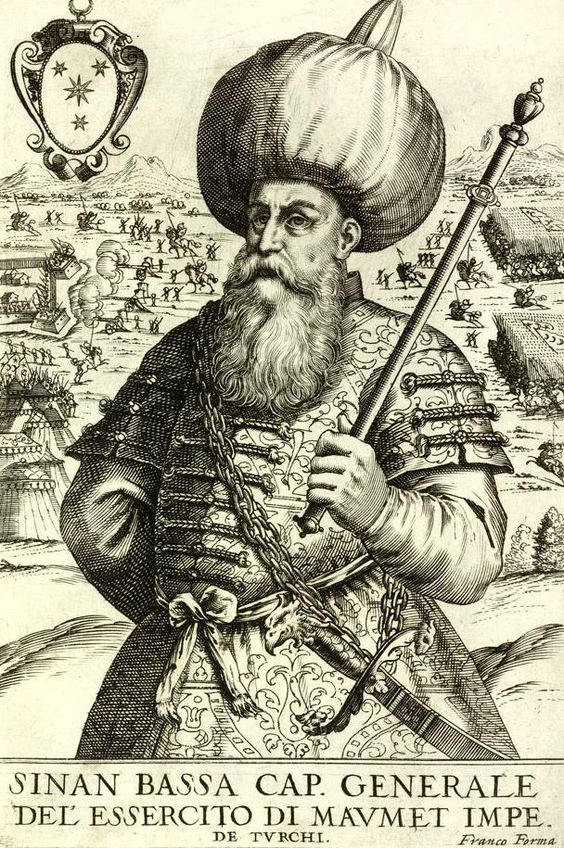
Reconquest of Yemeni Cities by Sinan Pasha
Yemen
Historical Events
Military Campaigns
Middle Eastern History
7 min read
Updated By: History Editorial Network (HEN)
Published:
Updated:
In 1570, Ottoman commander Koca Sinan Pasha led a major military campaign that restored Ottoman authority over large parts of Yemen after a widespread uprising led by the Zaydi Imamate. The reconquest marked a significant effort by the Ottoman Empire to reassert control over the strategically important southern Arabian region during a period of intense imperial competition in the Red Sea and Indian Ocean.
The Ottoman Empire had first expanded into Yemen during the sixteenth century after defeating the Mamluk Sultanate and extending influence over the Red Sea coast. Ottoman leaders viewed Yemen as strategically valuable because of its location near the Bab el Mandeb Strait, a crucial maritime passage connecting the Red Sea with the Indian Ocean. Control over Yemen also helped the empire protect pilgrimage routes to the Islamic holy cities and counter Portuguese naval expansion in the region.
Despite the initial Ottoman occupation, maintaining authority over Yemen proved difficult. The mountainous terrain of the Yemeni highlands, combined with strong tribal networks and local religious leadership, made centralized rule challenging. Resistance grew under the Zaydi Imamate, a religious and political institution rooted in northern Yemen that opposed foreign domination and sought to preserve local autonomy.
By the late 1560s, Zaydi forces and allied tribes had launched major revolts against Ottoman administration. In response, the Ottoman government dispatched Koca Sinan Pasha, one of the empire’s senior military commanders, to suppress the rebellion and restore imperial authority. His campaign involved large scale military operations against insurgent strongholds in the highlands and efforts to secure key cities and trade routes.
The Ottoman reconquest succeeded in reestablishing control over important urban centers, including Sana'a, and temporarily stabilized imperial administration in Yemen. Ottoman forces strengthened fortifications, reorganized provincial governance, and attempted to integrate Yemen more firmly into the empire’s administrative structure. However, resistance from tribal and Zaydi factions continued intermittently throughout the following decades.
Although the 1570 campaign restored Ottoman authority, the empire never achieved complete and uncontested control over all of Yemen. Ongoing revolts, difficult geography, and local political fragmentation repeatedly challenged Ottoman rule. In the early seventeenth century, the Qasimid Imams launched renewed resistance movements that eventually succeeded in expelling Ottoman forces from most of Yemen by 1635.
The Ottoman reconquest nevertheless demonstrated the strategic importance of Yemen within wider regional politics. The province remained a key battleground in struggles over Red Sea commerce, religious influence, and imperial power during the early modern period.
Historical Significance
The 1570 reconquest under Koca Sinan Pasha reinforced Ottoman influence in southern Arabia and highlighted Yemen’s importance within global maritime and imperial networks. The campaign also intensified the long historical rivalry between Ottoman authorities and the Zaydi Imamate, a struggle that shaped Yemeni politics for centuries.
#mooflife
#MomentOfLife
#SinanPasha
#Yemen
#OttomanEmpire
#MilitaryCampaign
#Reconquest
Primary Reference
Koca Sinan Pasha

Explore the Life Moments of
 AI Twin