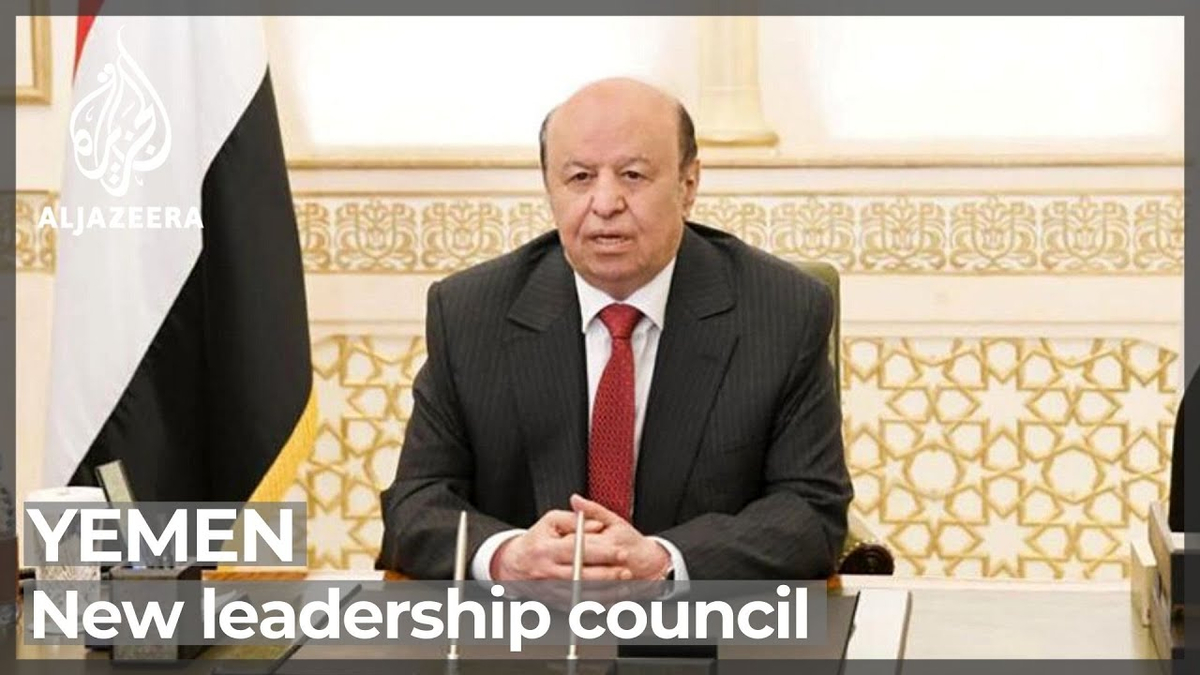
Presidential Leadership Council takes power
Riyadh, Saudi Arabia
Politics
Middle East
Leadership Changes
7 min read
Updated By: History Editorial Network (HEN)
Published:
Updated:
On 07/04/2022, Yemeni President Abd-Rabbu Mansour Hadi formally transferred his full executive powers to a newly established Presidential Leadership Council (PLC) during a decree issued from Riyadh, Saudi Arabia. The move marked the end of Hadi’s leadership after more than a decade in office and came amid a United Nations brokered truce intended to reduce hostilities in Yemen’s long running civil conflict. The transfer was announced as regional and international actors sought to reorganize the anti Houthi coalition and create a more unified negotiating structure for future peace talks.
Before delegating authority, Hadi dismissed Vice President Ali Mohsen al Ahmar, a military commander and influential political figure who had served as vice president since 2016. Hadi stated that the newly formed PLC would collectively exercise presidential powers during a transitional phase. The council was assigned responsibility for managing Yemen’s political, military, economic, and security affairs while also pursuing negotiations toward a permanent ceasefire with Houthi forces.
The eight member Presidential Leadership Council was chaired by Rashad al Alimi, a former Yemeni interior minister known for maintaining relationships with Saudi Arabia, Gulf states, and multiple Yemeni political factions. Other members represented several influential military and regional groups within the anti Houthi alliance, including southern separatists, tribal leaders, and commanders backed by the United Arab Emirates and Saudi Arabia. The structure was intended to reduce fragmentation among forces opposed to the Houthis, who had controlled Yemen’s capital Sanaa since 2014.
The transfer of power occurred shortly after a two month nationwide truce brokered by the United Nations came into effect in April 2022. The ceasefire included provisions for halting cross border attacks, easing restrictions on fuel imports into Hodeidah port, and reopening limited commercial flights from Sanaa airport. International observers viewed the creation of the PLC as an attempt to strengthen the anti Houthi camp’s negotiating position while also addressing longstanding divisions among Yemeni factions aligned with the internationally recognized government.
Hadi had originally assumed the presidency in 2012 following the resignation of former President Ali Abdullah Saleh during the Arab Spring related unrest in Yemen. His administration later relocated to Saudi Arabia after Houthi fighters seized Sanaa, leading to the Saudi led military intervention in 2015. By 2022, criticism of Hadi’s leadership had increased due to prolonged conflict, internal divisions, and worsening humanitarian conditions across Yemen.
Why This Moment Matters
The formation of the Presidential Leadership Council represented one of the largest structural changes within Yemen’s internationally recognized government since the civil war escalated in 2014. Rather than concentrating authority in a single presidency, the transition attempted to distribute power among competing political and military factions at a time when diplomatic efforts and ceasefire negotiations were gaining renewed international attention.
A general view of the capital Sana'a, on the day the country has witnessed a progressive political process as they try to end the war, on April 07, 2022 in Sana'a, Yemen. Yemen's Internationally-recognized President Abd-Rabbu Mansour Hadi has offered his resignation and formed a presidential council to replace him and lead the country with all powers in a bid to end the country's seven-year war.
#mooflife
#MomentOfLife
#Yemen
#PresidentialLeadershipCouncil
#AbdRabbuhMansurHadi
#HumanitarianCrisis
#CholeraOutbreak
Primary Reference
Developments in Government Controlled Territory

Explore the Life Moments of
 AI Twin