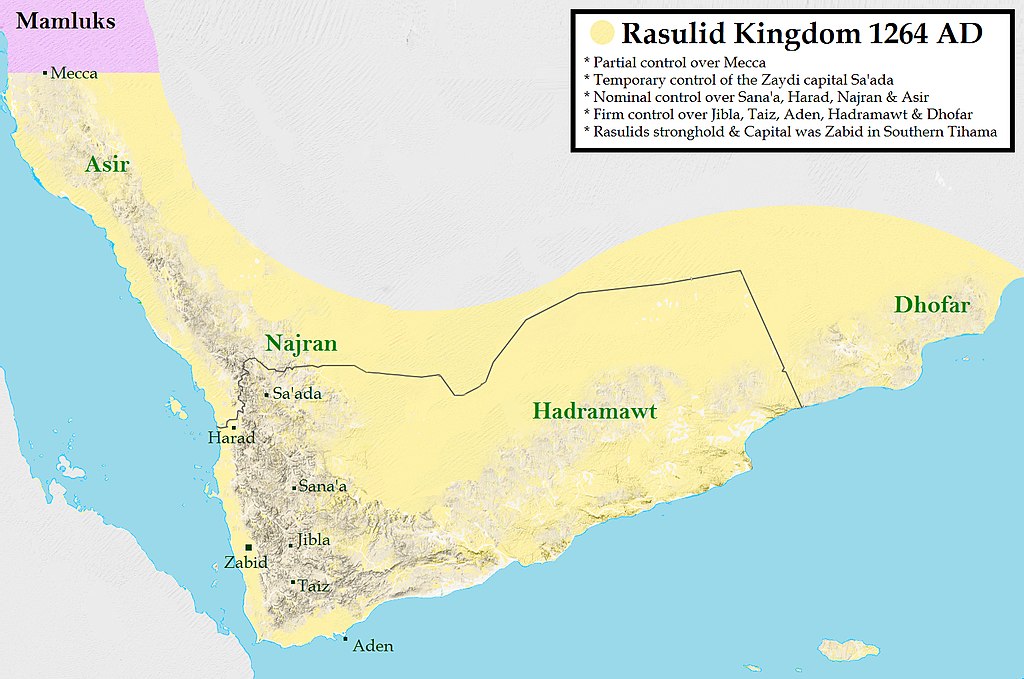
Establishment of the Rasulid Dynasty
Yemen
Historical Dynasties
Middle Eastern History
Yemeni History
3 min read
Updated By: History Editorial Network (HEN)
Published:
Updated:
The Rasulid Dynasty emerged in the early 13th century, founded by Umar ibn Rasul, who had previously served as the deputy governor under the Ayyubid dynasty. Following the departure of the last Ayyubid ruler from Yemen, Umar ibn Rasul declared himself an independent king, marking the establishment of the Rasulid Dynasty. This transition was significant as it represented a shift in power dynamics within the region, allowing for the consolidation of authority under a local ruler rather than an external dynasty. The Rasulid Dynasty governed from its capital in Ta'izz and played a crucial role in the political landscape of Yemen, influencing trade and cultural exchanges in the Arabian Peninsula.
The Rasulid Dynasty is noted for its contributions to the development of Yemen, particularly in the realms of architecture, literature, and trade. Under their rule, Ta'izz became a center of commerce and culture, attracting scholars and merchants. The dynasty also engaged in military campaigns to expand its territory and influence, which included conflicts with neighboring states. The impact of the Rasulid Dynasty can be seen in the establishment of a distinct Yemeni identity and the promotion of local governance. Their reign lasted for several centuries, during which they navigated various challenges, including internal strife and external threats, ultimately shaping the historical trajectory of Yemen.
#mooflife
#MomentOfLife
#RasulidDynasty
#YemenHistory
#UmarIbnRasul
#Ta'izz
#AyyubidDynasty
Primary Reference
Rasulid dynasty

Explore the Life Moments of
 AI Twin