British Bombardment and Occupation of Aden
Aden, Saudi Arabia
Historical Events
Military Conflicts
Colonial History
7 min read
Updated By: History Editorial Network (HEN)
Published:
Updated:
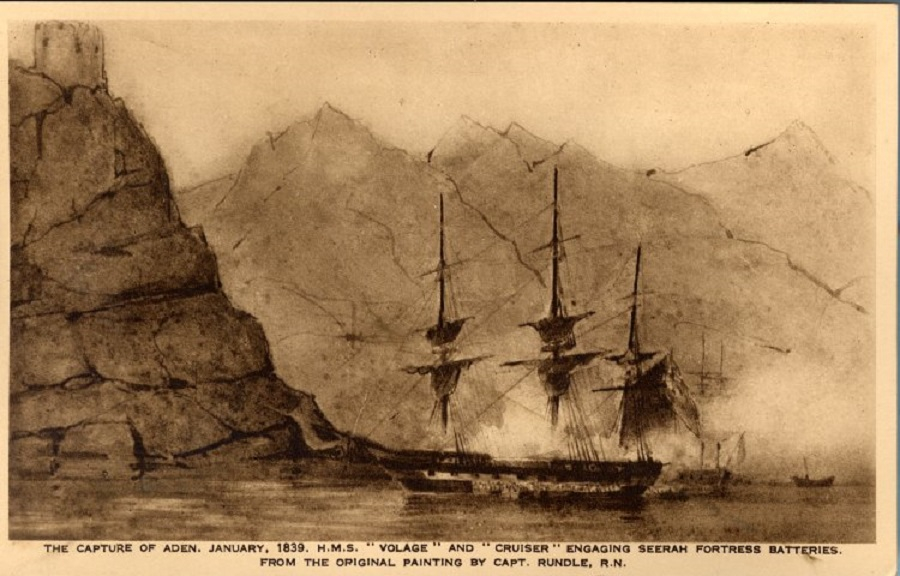
On 19/01/1839, forces of the British East India Company bombarded and occupied the port city of Aden, beginning more than a century of British rule in southern Arabia. The military operation, commonly known as the Aden Expedition, established Aden as one of Britain’s most important strategic ports along the maritime route between Europe and India.
During the early nineteenth century, Britain sought to strengthen control over sea lanes linking the Mediterranean, the Red Sea, and the Indian Ocean. Aden’s location near the Bab el Mandeb Strait made it strategically valuable for protecting commercial shipping and supporting British communication with India, which was then the central territory of the British Empire in Asia.
The immediate justification for British intervention involved disputes with local authorities connected to attacks and alleged mistreatment of shipwrecked British sailors and cargo. British officials accused the Sultan of Lahej, whose influence extended over Aden, of failing to provide compensation and security guarantees. After negotiations broke down, the East India Company launched a naval assault against the port.
On 19/01/1839, British warships bombarded Aden before troops landed and seized control of the city. Local resistance was overcome relatively quickly, and the British established permanent occupation of the port. Aden was subsequently administered as part of British India for several decades before later becoming a separate Crown Colony.
The occupation transformed Aden into a major imperial and commercial center. Its importance increased dramatically after the introduction of steam navigation and later with the opening of the Suez Canal in 1869. Aden developed into a crucial coaling station, naval base, and trading hub serving routes between London, Bombay, East Africa, and Southeast Asia. The city attracted merchants, laborers, and migrants from across the region, creating a diverse and cosmopolitan urban population.
British control gradually expanded beyond the port itself through treaties and protectorate arrangements with surrounding tribal and local rulers. These agreements eventually formed the Aden Protectorate, which covered much of southern Arabia under British influence. While Aden became economically significant, British rule also generated political resistance and nationalist opposition that intensified during the twentieth century.
The period of British control ended in 1967 after the Aden Emergency and the withdrawal of British forces from South Yemen. The occupation that began in 1839 therefore shaped southern Yemen’s political, economic, and social development for more than 128 years.
Historical Significance
The British capture of Aden established one of the most important imperial ports in the Red Sea and Indian Ocean region. The occupation connected southern Arabia more closely to global trade networks and colonial politics while laying the foundations for major political transformations that continued into the modern era.
#mooflife
#MomentOfLife
#BritishEmpire
#Aden
#ColonialHistory
#MilitaryHistory
#ArabTribes
Primary Reference
Aden Expedition

Explore the Life Moments of
 AI Twin