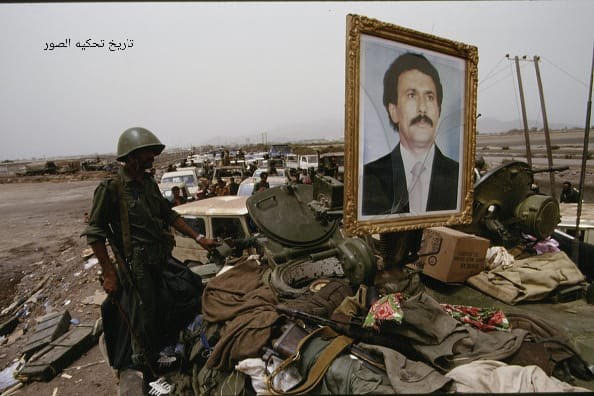
Yemeni civil war (1994)
Yemen
Politics
International Relations
War
7 min read
Updated By: History Editorial Network (HEN)
Published:
Updated:
On 04/05/1994, Yemen descended into civil war as fighting erupted between forces loyal to the northern government and southern separatist leaders, marking the start of the conflict commonly known as the 1994 Yemeni Civil War or the Summer War. The confrontation followed years of growing political tension after the 1990 unification of the Yemen Arab Republic in the north and the People’s Democratic Republic of Yemen in the south.
The unified Republic of Yemen had been formally established on 22/05/1990, with Ali Abdullah Saleh becoming president and southern leader Ali سالم al Beidh serving as vice president. Although unification was initially welcomed by many Yemenis, disagreements soon emerged over political power sharing, military integration, economic management, and constitutional authority. Relations between the ruling General People’s Congress (GPC) in the north and the Yemeni Socialist Party (YSP), which had governed the south before unification, steadily deteriorated during the early 1990s.
Tensions escalated further after the 1993 parliamentary elections, when disputes over political influence and accusations of assassinations against southern political figures deepened mistrust between the two sides. Southern leaders increasingly complained of marginalization within the unified state, while armed forces from the former north and south remained only partially integrated. Military confrontations between rival units became more frequent in the months leading up to the war.
The conflict officially began on 04/05/1994 when fighting intensified between northern and southern military formations. Air strikes and artillery exchanges were reported in several areas, including around Sana'a and Aden. Within weeks, the violence expanded into a broader national conflict involving armored divisions, air forces, tribal fighters, and political militias aligned with both sides.
On 21/05/1994, southern leaders declared the establishment of the Democratic Republic of Yemen and announced an attempt to secede from the unified republic. However, the declaration did not receive broad international recognition. Northern government forces, supported by tribal allies and Islamist fighters, advanced southward during the conflict and captured the southern port city of Aden on 07/07/1994. The fall of Aden effectively ended organized southern resistance and secured the continuation of Yemeni unity under the Sana'a based government.
The war lasted approximately two months and resulted in thousands of casualties, widespread displacement, and significant damage to infrastructure. Following the conflict, President Ali Abdullah Saleh consolidated political control over the country, while many southern political and military leaders either fled into exile or were removed from positions of influence. The aftermath of the war also contributed to long term grievances in southern Yemen that continued to shape Yemeni politics for years afterward.
Historical Significance
The 1994 civil war became one of the defining events of post unification Yemen. Although the northern government preserved national unity, unresolved political and regional tensions remained beneath the surface and later contributed to renewed separatist movements and instability in southern Yemen during the following decades.
#mooflife
#MomentOfLife
#YemenCivilWar
#NorthernSouthernAccord
#YemeniPolitics
#SaudiArabiaInvolvement
#YemeniSocialistParty
Primary Reference
Yemeni civil war (1994)

Explore the Life Moments of
 AI Twin