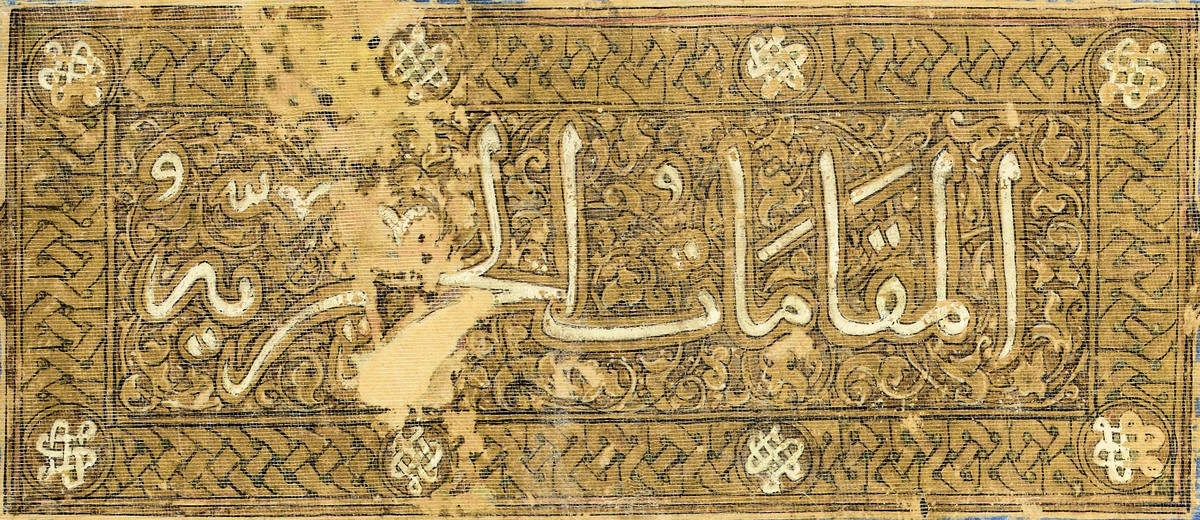
Exploring the Maqamat al-Hariri
Islamic World including Iraq and regions connected to Yemen, Yemen
Literature
Culture
7 min read
Updated By: History Editorial Network (HEN)
Published:
Updated:
Around 1210, illustrated manuscripts of the Maqamat al Hariri emerged as some of the most important achievements of medieval Arabic literature and Islamic art. Although the Maqamat itself had been written earlier by the Iraqi scholar al Hariri of Basra between the late eleventh and early twelfth centuries, the early thirteenth century became a defining period for the production and circulation of richly illustrated copies that portrayed daily life, travel, trade, and urban culture across the Islamic world, including regions connected to Yemen and the Arabian Peninsula.
The Maqamat al Hariri is a collection of fifty episodic stories written in highly sophisticated Arabic prose. The narratives follow the adventures of the fictional trickster and wandering poet Abu Zayd al Saruji, whose clever speeches and deceptions are recounted by the narrator al Harith ibn Hammam. The work became renowned not only for its literary complexity and linguistic artistry but also for its vivid portrayals of social life, merchants, scholars, travelers, judges, and religious figures throughout the medieval Islamic world.
By the early thirteenth century, manuscript production centers in places such as Baghdad and other urban cultural hubs began creating elaborately illustrated versions of the Maqamat. These manuscripts are among the earliest surviving examples of extensive narrative illustration in Arabic book art. The paintings depicted marketplaces, caravans, mosques, ports, ships, scholarly gatherings, and commercial exchanges, offering modern historians valuable visual evidence of medieval Islamic society.
Some illustrations and narrative settings reflected the maritime and trading environments of the Red Sea and Arabian Peninsula, regions closely linked to Yemen through commerce and pilgrimage routes. Yemen at the time occupied an important position in Indian Ocean and Red Sea trade networks under Ayyubid and later Rasulid influence. Ports such as Aden connected merchants traveling between East Africa, Arabia, Persia, and India, environments similar to those represented in the cosmopolitan world of the Maqamat stories.
The illustrated manuscripts also reveal the cultural interconnectedness of the Islamic world during this era. Artistic styles combined influences from Arab, Persian, and broader regional traditions, while the text itself circulated widely among educated elites. The Maqamat became an important educational and literary work used to teach advanced Arabic language, rhetoric, and poetic expression.
One of the most famous illustrated copies was later produced in 1237 by the artist Yahya ibn Mahmud al Wasiti, whose manuscript remains celebrated for its detailed scenes of medieval urban and social life. Earlier manuscripts from around 1210, however, already demonstrate the growing importance of illustrated Arabic literature during this period.
Historical Significance
The early illustrated manuscripts of the Maqamat al Hariri preserved a rare visual and literary record of medieval Islamic society during the early thirteenth century. Their depictions of trade, travel, scholarship, and urban life provide valuable insight into the interconnected world that linked regions such as Iraq, Yemen, Egypt, and the wider Indian Ocean trade network.
#mooflife
#MomentOfLife
#MaqamatAl-hariri
#ArabicLiterature
#AyyubidDynasty
#CulturalHistory
#LinguisticStudies
Primary Reference
Maqamat al-Hariri

Explore the Life Moments of
 AI Twin