Ayyubid Army Defeated in Dhamar
Yemen
Historical Events
Military History
Middle Eastern History
6 min read
Updated By: History Editorial Network (HEN)
Published:
Updated:
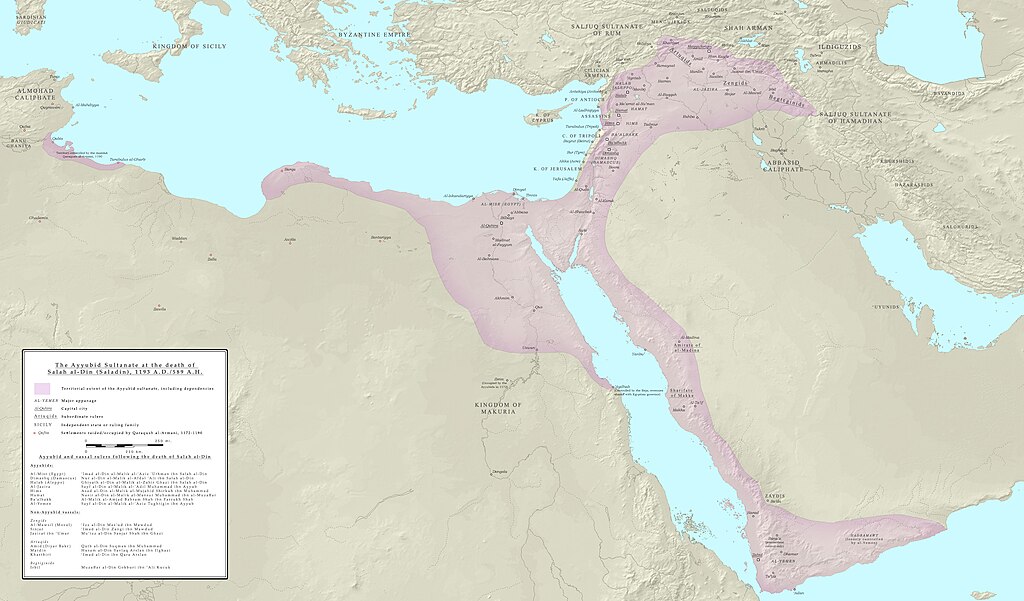
In 1226, Zaydi forces achieved a significant military victory over the Ayyubid army near Dhamar in Yemen, marking a major setback for Ayyubid authority during the final phase of their rule in the region. The defeat reflected the growing weakness of Ayyubid control in Yemen and the continuing resistance of local Yemeni political and religious movements against outside domination.
The Ayyubid dynasty, founded by Saladin in the late twelfth century, had expanded into Yemen beginning in 1174 as part of broader efforts to consolidate influence across the Arabian Peninsula and secure Red Sea trade routes. Under Ayyubid rule, important Yemeni cities such as Sana'a, Zabid, Aden, and Taiz became connected to the wider political and economic networks of the Ayyubid Empire, which stretched across Egypt, Syria, and parts of Arabia.
Despite military successes in coastal and urban regions, the Ayyubids faced persistent resistance in Yemen’s mountainous highlands. The Zaydi Imamate, rooted in northern Yemen and supported by tribal alliances, remained a powerful religious and political force. Zaydi leaders opposed external rule and repeatedly challenged Ayyubid attempts to impose centralized authority over the interior.
By the early thirteenth century, Ayyubid control in Yemen had weakened because of internal dynastic disputes, administrative difficulties, and local uprisings. The mountainous terrain and decentralized tribal structure of Yemen made long term military occupation increasingly difficult. In this context, Zaydi resistance movements gained momentum.
The battle near Dhamar in 1226 represented one of the most important setbacks suffered by Ayyubid forces during their Yemeni campaigns. Although detailed contemporary accounts are limited, the defeat weakened the remaining military position of the Ayyubids and accelerated the decline of their authority in the region. Dhamar itself occupied a strategically important location between Sana'a and southern Yemeni territories, making control of the area politically significant.
In the years following the defeat, Ayyubid influence in Yemen continued to collapse. Their authority was gradually replaced by the Rasulid dynasty, which emerged as the dominant power in Yemen during the mid thirteenth century. The Rasulids retained some administrative and military structures inherited from the Ayyubids while establishing a more independent Yemeni based state.
The Zaydi Imamate also survived the transition and remained a central force in northern Yemeni politics for centuries afterward.
Historical Significance
The defeat of the Ayyubid army at Dhamar in 1226 highlighted the resilience of Zaydi resistance and the difficulties faced by foreign dynasties attempting to govern Yemen’s highlands. The event also marked an important stage in the decline of Ayyubid rule and the political transformation that led to the rise of later Yemeni dynasties.
#mooflife
#MomentOfLife
#AyyubidDynasty
#Dhamar
#MilitaryHistory
#Yemen
#HistoricalEvents
Primary Reference
Ayyubid dynasty

Explore the Life Moments of
 AI Twin