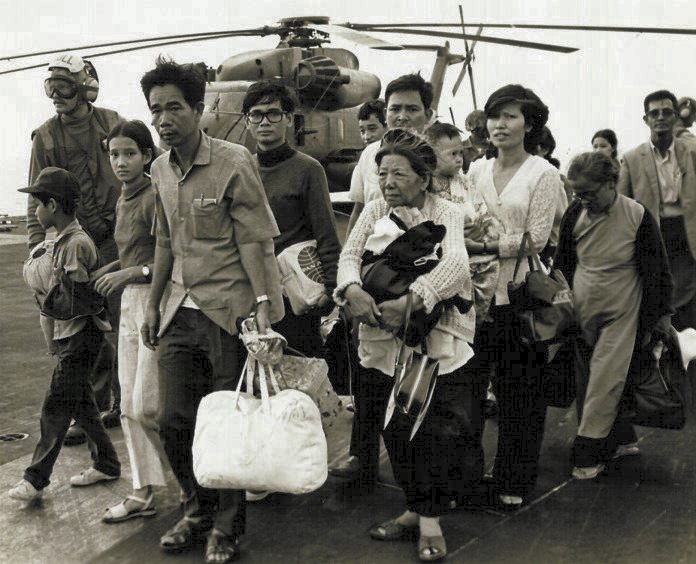
Reunification of North and South in Vietnam
Vietnam
Political
Global Trade
4 min read
Updated By: History Editorial Network (HEN)
Published:
Following years of conflict and division after the Vietnam War, North and South Vietnam officially reunified to form the Socialist Republic of Vietnam on 7/2/1976. The reunification marked the end of a lengthy and tumultuous period in Vietnamese history.
The background of the reunification can be traced back to the Geneva Accords of 1954, which temporarily divided Vietnam at the 17th parallel into communist North Vietnam and anti-communist South Vietnam. This division ultimately led to the Vietnam War, a conflict that ravaged the country and its people for nearly two decades.
The reunification brought about significant changes to the political, social, and economic landscape of Vietnam. The new government faced the immense challenge of rebuilding the war-torn nation and reconciling the differences between the formerly separate regions. Despite these challenges, the reunification marked a new chapter in Vietnamese history, symbolizing a fresh start and a unified vision for the country's future.
Economically, the reunification allowed for the implementation of socialist policies across the country, leading to the establishment of a centrally planned economy. Socially, efforts were made to integrate the populations of the North and South, promoting national unity and solidarity. Politically, the reunification consolidated power under the Communist Party of Vietnam, establishing a single governing authority for the entire nation.
The reunification of North and South Vietnam was a momentous event that reshaped the course of Vietnamese history. It served as a turning point in the country's journey towards unity, stability, and development, setting the stage for Vietnam to emerge as a resilient and vibrant nation on the global stage.
#VietnamReunification #SocialistRepublic #UnityEmerges

Explore the Life Moments of
 AI Twin