Venezuela’s Hydrocarbons Law Overhaul: National Assembly Approves Oil-Sector Opening to Private Operators
Caracas, Venezuela
'%3e%3cg id='c'%3e%3cg id='b'%3e%3cpath id='a' fill='%23fff' d='M0-5v5h3z' transform='rotate(18 0 -5)'/%3e%3cuse xlink:href='%23a' transform='scale(-1 1)'/%3e%3c/g%3e%3cuse xlink:href='%23b' transform='rotate(72)'/%3e%3c/g%3e%3cuse xlink:href='%23b' transform='rotate(-72)'/%3e%3cuse xlink:href='%23c' transform='rotate(144)'/%3e%3c/g%3e%3c/defs%3e%3cpath fill='%23cf142b' d='M0 0h180v120H0z'/%3e%3cpath fill='%2300247d' d='M0 0h180v80H0z'/%3e%3cpath fill='%23fc0' d='M0 0h180v40H0z'/%3e%3cg transform='translate(90 84)'%3e%3cg id='f'%3e%3cg id='e'%3e%3cuse xlink:href='%23d' transform='rotate(10)'/%3e%3cuse xlink:href='%23d' transform='rotate(30)'/%3e%3c/g%3e%3cuse xlink:href='%23e' transform='rotate(40)'/%3e%3c/g%3e%3cuse xlink:href='%23f' transform='rotate(-80)'/%3e%3c/g%3e%3c/svg%3e)
Economy
9 min read
Updated By: History Editorial Network (HEN)
Published:
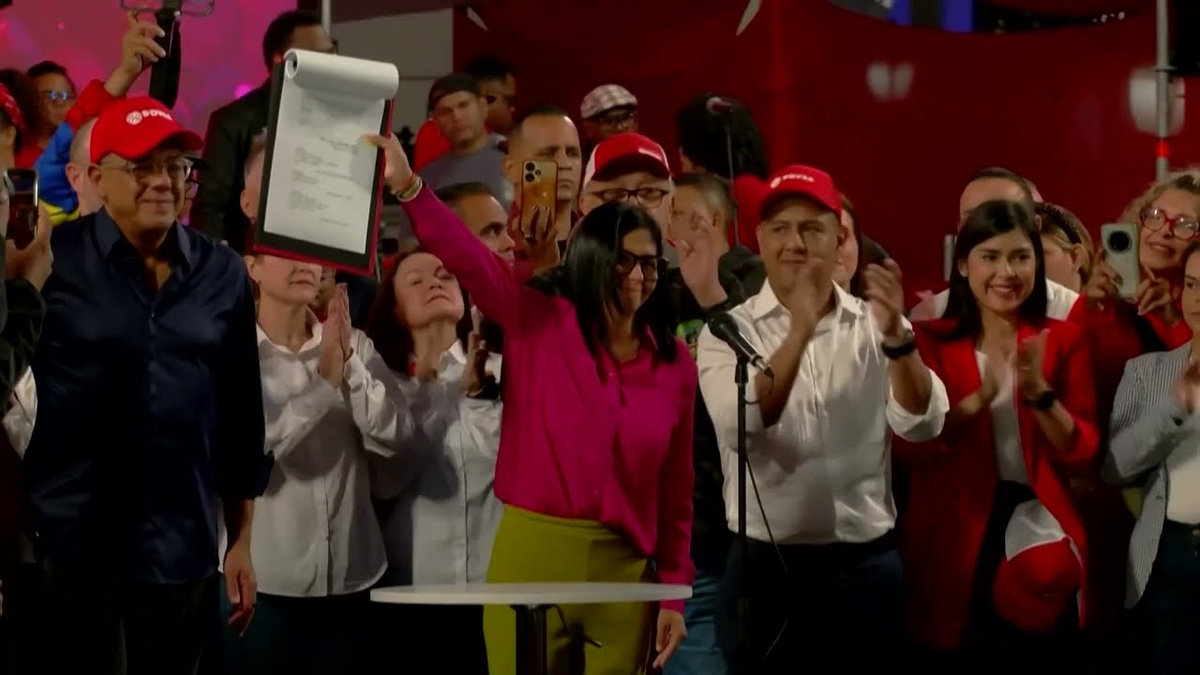
On 29-Jan-2026, Venezuela enacted a sweeping hydrocarbons law reform that breaks decades of state monopoly and gives private operators far greater autonomy to produce, export, and sell oil-part of a fast-tracked push to attract investment and lift output.
Venezuela’s legislature passed a fast-tracked reform of the country’s main oil law-described as a move to grant autonomy to private producers, enable new contract models, and make it easier to bring in foreign and domestic investment after years of strict state control.
Acting/Interim President Delcy Rodríguez signed the overhaul into law, according to reporting on the signing and the legislative action.
The biggest legal changes:
1) Monopoly broken; new ways to operate without mandatory PDVSA joint ventures
The reform breaks long-standing monopoly features and introduces contract pathways that allow companies to explore/produce/process/export crude without having to form joint ventures with Petróleos de Venezuela under certain models (often described as “production participation” style contracts).
2) Autonomy over oil sales and cash proceeds
A core shift is that private producers gain autonomy to commercialize output and receive cash proceeds, even in cases where they are minority partners in ventures-reducing PDVSA’s control over day-to-day operations and marketing under the revised framework.
3) Production-sharing model formalized
The reform formalizes a production-sharing approach that had been used previously but criticized for opacity-bringing the concept explicitly into the legal framework.
4) Fiscal terms: royalties and taxes become more flexible (with new “hydrocarbon tax” added)
Reporting highlighted multiple fiscal adjustments:
• A 30% royalty is maintained in the reformed structure, while the state gains flexibility to adjust competitiveness.
• The reform “sweetened” terms by removing some extra taxes, enabling income-tax reductions for energy projects, and introducing a new “hydrocarbon tax” to be regulated separately-creating both incentives and new uncertainty around total government take.
• Earlier drafts and reporting referenced the possibility of lowering royalty/tax burdens for special, high-investment projects.
5) Independent arbitration for disputes
The new framework allows contractual disputes to be resolved through independent arbitration, a long-standing demand from foreign companies wary of litigating in local courts.
6) Asset transfers and outsourcing become possible
Late-stage additions to the reform made it possible for authorities to approve asset transfers and outsourcing of oilfield operations, expanding options for restructuring and for bringing in operators/capital.
7) Governance shift: Oil ministry power expands; legislature oversight reduced
The reform shifts approval authority away from the legislature toward the executive/oil ministry-giving the ministry broad power to approve contracts and changes to terms, while proposals aimed at boosting transparency and limiting ministry powers were reported as rejected.
Timeline to document (tight, factual)
• Mid-Jan 2026: Delcy Rodríguez submits the reform proposal to lawmakers.
• 22-Jan-2026: Reform receives an initial legislative approval (“first debate” stage).
• 26-Jan-2026: Business/industry proposals discussed around PDVSA HQ (reported as part of the reform process).
• 29-Jan-2026: Final vote approves the reform; signing is reported the same day.
Why this mattered?
Venezuela’s oil output has been reported as having fallen sharply-from about 3 million b/d (Jan 2008) to roughly 963,000 b/d (Dec 2025)-and the reform was positioned as a bid to reverse decline by improving legal and commercial conditions for investment and operations.
Closely linked “companion moment” (same week): U.S. sanctions easing for oil trade:
• On 29-Jan-2026, the U.S. Treasury Office of Foreign Assets Control issued a broad general license that allows U.S. companies to buy/sell/transport/store/refine Venezuelan crude (while not lifting sanctions on production), and it excludes certain non-U.S. counterparties and non-commercial payment mechanisms.
• The sanctions move was reported as closely following the oil-law approval and tied to an initial 50 million barrel sales arrangement marketed by Vitol and Trafigura.
#law
Explore the Life Moments of
 AI Twin