Inclusion in Spanish Empire: Captaincy General of Venezuela
Royal decree issued in San Ildefonso, Spain; administrative center set in Caracas (colonial Venezuela), Spain
'%3e%3cg id='c'%3e%3cg id='b'%3e%3cpath id='a' fill='%23fff' d='M0-5v5h3z' transform='rotate(18 0 -5)'/%3e%3cuse xlink:href='%23a' transform='scale(-1 1)'/%3e%3c/g%3e%3cuse xlink:href='%23b' transform='rotate(72)'/%3e%3c/g%3e%3cuse xlink:href='%23b' transform='rotate(-72)'/%3e%3cuse xlink:href='%23c' transform='rotate(144)'/%3e%3c/g%3e%3c/defs%3e%3cpath fill='%23cf142b' d='M0 0h180v120H0z'/%3e%3cpath fill='%2300247d' d='M0 0h180v80H0z'/%3e%3cpath fill='%23fc0' d='M0 0h180v40H0z'/%3e%3cg transform='translate(90 84)'%3e%3cg id='f'%3e%3cg id='e'%3e%3cuse xlink:href='%23d' transform='rotate(10)'/%3e%3cuse xlink:href='%23d' transform='rotate(30)'/%3e%3c/g%3e%3cuse xlink:href='%23e' transform='rotate(40)'/%3e%3c/g%3e%3cuse xlink:href='%23f' transform='rotate(-80)'/%3e%3c/g%3e%3c/svg%3e)
Political
Economic
10 min read
Updated By: History Editorial Network (HEN)
Published:
Updated:
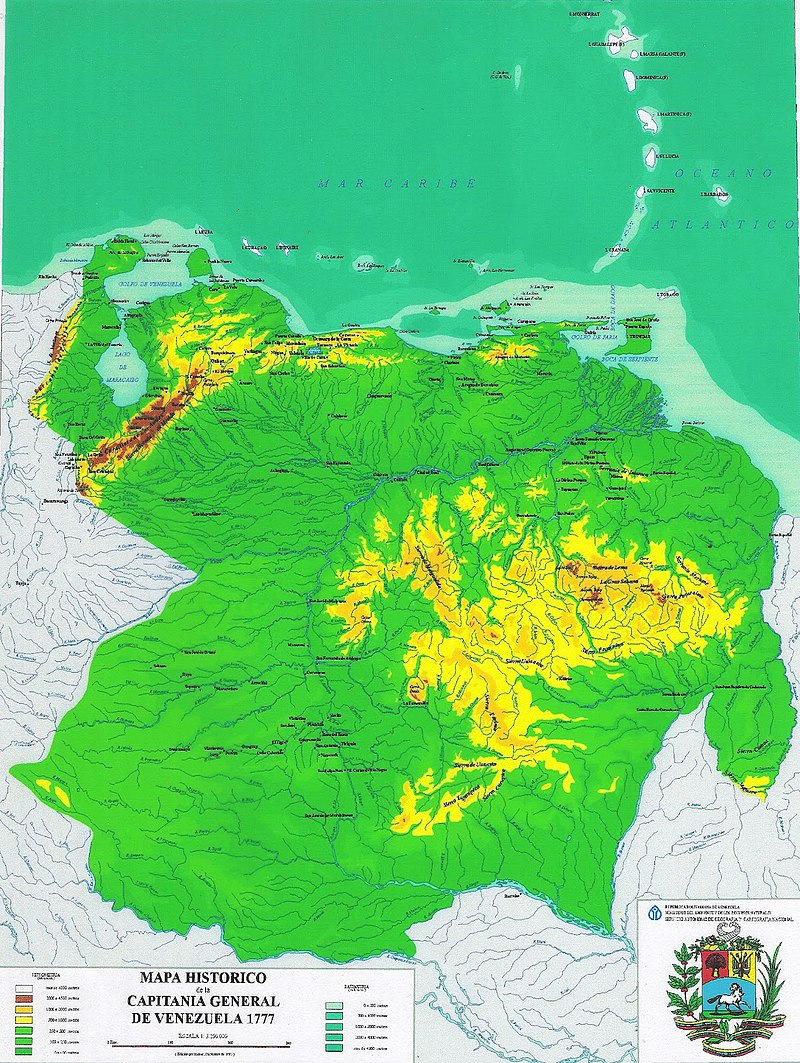
On 8-Sep-1777, Charles III issued a Royal Cédula in San Ildefonso creating the Captaincy General of Venezuela, shifting key provinces away from Viceroyalty of New Granada and making Caracas the closer administrative and military center. In 1777, Venezuela officially became part of the Captaincy General of Venezuela within the Spanish Empire. This administrative reorganization aimed to centralize control and enhance governance in the vast territories of Venezuela. The region had previously been under the jurisdiction of the Viceroyalty of New Granada, but the Spanish authorities decided to create a separate entity to streamline governance and improve efficiency.
In September 1777, the Spanish Crown formally reorganized how it governed its northern South American provinces by establishing the Captaincy General of Venezuela. The decree was framed as a practical fix to long delays and administrative friction caused by the great distance between these provinces and Santa Fe (Bogotá)-the capital of New Granada-where decisions and directives often arrived too late to be effective.
The Royal Cédula ordered the separation of Cumaná (Nueva Andalucía), Guayana, and Maracaibo, plus the islands of Trinidad and Margarita, from New Granada’s viceroyal administration and attached them “in governmental and military matters” to the Captaincy General of Venezuela. It also explicitly linked this political–military shift to the newer fiscal administration centered in Caracas, so the region’s governance, defense, and treasury oversight would operate more closely together.
The decree also changed judicial oversight to reduce fragmentation: it removed Maracaibo and Guayana from the jurisdiction of the Audiencia of Santa Fe and attached them to the Audiencia of Santo Domingo, aligning these territories under the same nearby captain general and intendancy so they could be “better governed” (as the decree states). Provincial governors were instructed to obey the captain general in Caracas for matters of royal service, government, and defense.
Historically, this reform is usually treated as part of the wider Bourbon-era administrative reforms-a push to streamline imperial control, strengthen defense, and make colonial administration more effective. By bringing scattered provinces under a single political and military command based in Caracas, the 1777 reorganization helped unify the territorial-administrative framework that later shaped the emergence of modern Venezuela.
The establishment of the Captaincy General of Venezuela had a significant impact on the region's political and economic landscape. It led to the implementation of new laws and regulations, as well as the appointment of local officials to oversee administration. The Spanish Empire sought to exploit Venezuela's abundant natural resources and agricultural potential more effectively, leading to increased trade and economic development in the region.
One of the key consequences of Venezuela becoming part of the Captaincy General was the consolidation of Spanish control over the territory. The Spanish authorities exerted more direct influence over local affairs, leading to tighter social and political control. This centralized governance structure also facilitated the spread of Spanish culture and institutions in Venezuela, shaping the region's identity for centuries to come.
Overall, the integration of Venezuela into the Captaincy General of Venezuela in 1777 marked a crucial turning point in the region's history. It represented a shift towards more centralized and efficient administration under Spanish colonial rule, with far-reaching consequences for Venezuela's development and identity.
Key Events of 1776 (Pre-1777):
• Creation of the Intendancy of Caracas: Established on December 8, 1776, by Minister of the Indies José de Gálvez, this new office (the Intendencia de Ejército y Real Hacienda) centralised fiscal and military supply management for several provinces.
• Provincial Inclusion: The 1776 Intendancy brought together the provinces of Venezuela (Caracas), Cumaná, Guayana, Maracaibo, Trinidad, and Margarita under a single financial authority based in Caracas.
• Shift in Jurisdiction: Prior to this, fiscal and judicial oversight was split; Maracaibo, Guayana, and Trinidad were supervised by the Audiencia (high court) in Bogotá, while the other provinces reported to Santo Domingo.
• Pre-1776 Status: Most of these territories were under the jurisdiction of the Viceroyalty of New Granada (re-established in 1739).
Key People (New Central Authorities)
• Luis de Unzaga: Appointed as the first Captain General of the unified territory. Previously the governor of Spanish Louisiana, he was brought in to establish the new political and military structure.
• José de Ábalos: Appointed as the first Intendant of the Army and Royal Treasury. He became the most powerful fiscal official, overseeing the finances and economic development of all integrated provinces.
#Captaincy-General-of-Venezuela
Primary Reference
Real Cédula de 1777
Explore the Life Moments of
 AI Twin