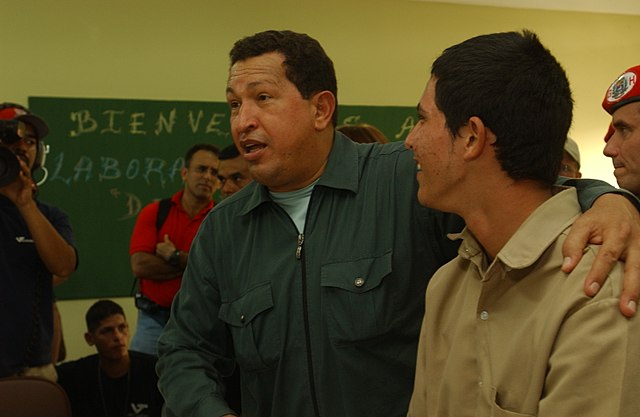
Hugo Chavez survives referendum vote
Venezuela
Political
4 min read
Updated By: History Editorial Network (HEN)
Published:
In August 2004, Hugo Chavez, the President of Venezuela, faced a recall referendum initiated by the opposition. The referendum aimed to remove him from office, citing concerns about his leadership style and policies.
Chavez, a polarizing figure known for his socialist ideology and anti-American stance, had been in power since 1999. His presidency brought significant changes to Venezuela, including the implementation of social programs aimed at reducing poverty and increasing access to education and healthcare. However, his critics accused him of authoritarianism and mismanagement of the economy.
Despite facing widespread criticism and mounting opposition, Chavez emerged victorious in the recall referendum. With a voter turnout of over 70%, he secured a majority of votes in his favor, allowing him to remain in office and continue his presidency for the remaining years of his term.
The outcome of the recall referendum had a profound impact on Venezuela's political landscape. Chavez's victory solidified his support base among the country's lower-income population, who benefited from his social programs. However, it also deepened the divide between his supporters and opponents, leading to increased political polarization in the country.
The referendum highlighted the strength of Venezuela's democratic institutions, as the recall process was carried out in a relatively transparent and peaceful manner. Despite the contentious nature of the campaign, the results were accepted by both sides, reaffirming the country's commitment to democratic principles.
Overall, Chavez's survival of the recall referendum marked a turning point in Venezuela's political history, shaping the future trajectory of the country and laying the groundwork for further challenges and developments in the years to come.
#HugoChavez #RecallReferendum #VenezuelaPolitics
Explore the Life Moments of
 AI Twin