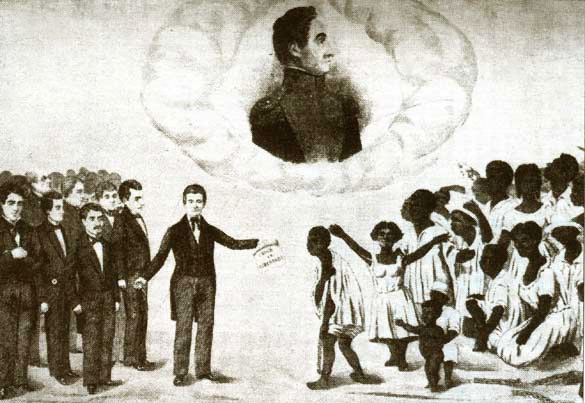
Abolishment of slavery in Venezuela
Venezuela

Political
Social
4 min read
Updated By: History Editorial Network (HEN)
Published:
In 1854, the abolition of slavery by the Venezuelan government marked a significant shift in the country's social structure. Prior to this decision, slavery had been deeply ingrained in Venezuelan society, with African slaves being used for labor on plantations and in households. The abolition was met with both resistance and support from different sectors of society.
The decision to abolish slavery was influenced by various factors, including pressure from abolitionist movements, changing global attitudes towards slavery, and the desire to modernize and align with international standards. The abolition had a lasting impact on Venezuela, leading to the gradual dismantling of the slave trade and the liberation of thousands of enslaved individuals.
Although the abolition of slavery represented a step towards greater equality and justice, its implementation was not without challenges. Former slaves faced discrimination and economic hardship, as they struggled to integrate into a society that had long marginalized them. The legacy of slavery continued to affect Venezuelan society for years to come, shaping issues of race, class, and social inequality.
Despite these challenges, the abolition of slavery in Venezuela remains a landmark moment in the country's history, symbolizing a commitment to human rights and progress. It serves as a reminder of the long and difficult journey towards freedom and equality for all individuals, regardless of their background.
#AbolitionOfSlavery #VenezuelanHistory #EqualityAndJustice
Explore the Life Moments of
 AI Twin