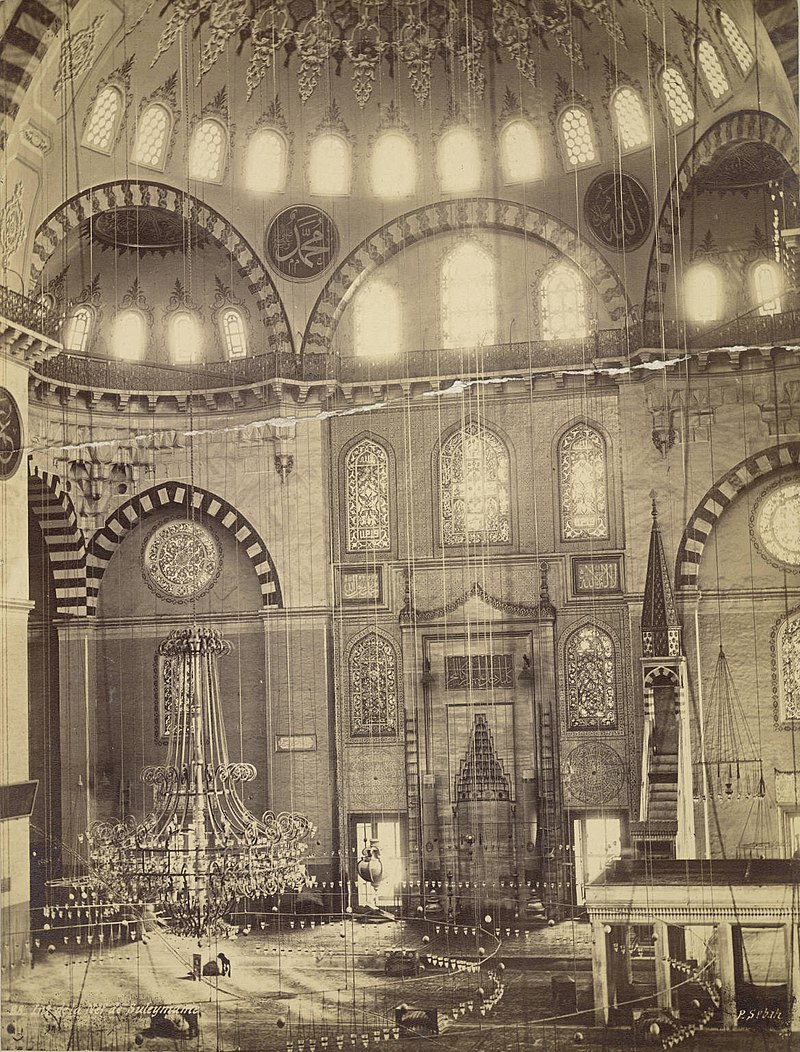
Architect Mimar Sinan designs Istanbul's Suleymaniye Mosque
Turkey
Cultural Heritage
4 min read
Updated By: History Editorial Network (HEN)
Published:
The construction of the Suleymaniye Mosque in Istanbul by architect Mimar Sinan marked a pivotal moment in Turkish history. Commissioned by Sultan Suleiman the Magnificent, the mosque was completed as part of a larger complex in Istanbul. Mimar Sinan, who was the chief architect in the Ottoman Empire, designed the mosque in a distinct Ottoman architectural style.
The mosque complex consisted of not just the mosque itself, but also a hospital, school, library, and bathhouse. This comprehensive approach to architecture was aimed at serving both the spiritual and social needs of the community. The grandeur of the mosque's dome and minarets, along with its intricate decorations and calligraphy, showcased the craftsmanship and artistry of the era.
The Suleymaniye Mosque became a symbol of the Ottoman Empire's power and influence, both domestically and internationally. Its strategic location overlooking the Golden Horn made it a prominent landmark in Istanbul's skyline. The mosque complex served as a hub of cultural, educational, and religious activities, fostering intellectual discourse and community engagement.
Mimar Sinan's architectural masterpiece not only left a lasting impact on Istanbul's skyline but also influenced subsequent mosque designs in the Ottoman Empire and beyond. The Suleymaniye Mosque continues to be a revered site for worshippers, tourists, and historians, attracting visitors from around the world to marvel at its beauty and historical significance.
#SuleymaniyeMosque #MimarSinan #OttomanArchitecture #Istanbul #CulturalHeritage #ArchitecturalMasterpiece #CommunityEngagement

Explore the Life Moments of
 AI Twin